Industry Source
Combined effects of acoustics and indoor air quality on calculation performance: a laboratory experiment and a lab-dilemma investigation
Published: September 25, 2026
View original sourceNews Summary
Frontiers in Built Environment published peer-reviewed original research on September 25, 2026 comparing a classroom-like laboratory experiment with a prior experiment in real classrooms. The authors studied 189 Grade VII and VIII students completing a calculation task. This is research in an educational setting, not a commercial-interior study, product assessment, lighting study or new design standard.
In the laboratory, the researchers compared quiet, playground noise, birdsong, and mechanical-ventilation conditions at 160 L/s and 200 L/s. Participants were assigned to better or poorer indoor-air-quality conditions. The article reports main effects for listening conditions that were strongly mediated by noise sensitivity, but no combined acoustics-and-IAQ effect on calculation performance under the laboratory conditions. That finding does not show that indoor air quality is unimportant; the authors identify limitations and context in their analysis.
The study also found that the laboratory and real-classroom results did not match, with pupils generally faster in the laboratory. The authors describe this difference as a lab-dilemma whose precise causes were not established. They note that laboratory rooms had eight students rather than classes of 14–26, and discuss pure-CO2 exposure and the between-subjects design as possible influences. The study does not demonstrate that a particular sound, ventilation rate, acoustic treatment or acoustic luminaire improves performance in another setting.
- Frontiers in Built Environment published the original research on September 25, 2026; it compared a classroom-like laboratory experiment with a prior real-classroom experiment using the same student panel and calculation task.
- The study involved 189 Grade VII and VIII students and examined five listening conditions—quiet, playground noise, birdsong, and mechanical ventilation at 160 L/s and 200 L/s—alongside better and poorer indoor-air-quality conditions.
- The authors report listening-condition effects that were strongly mediated by individual noise sensitivity; under the laboratory conditions, they did not observe a combined acoustics-and-IAQ effect on calculation performance.
- Laboratory and real-classroom findings did not align. The researchers call this a lab-dilemma and cite possible influences including smaller laboratory groups, pure-CO2 exposure and the study design; the source does not establish a product, room or workplace outcome.
FLOSEEK Interpretation
For FLOSEEK buyers, the practical message is to write the acoustic and indoor-environment brief as one operating scenario. Identify the activities, users and occupancy pattern; principal sound sources and receiver zones; speech, concentration and privacy needs; HVAC airflow and background-noise criteria; room geometry, finishes, ceiling services and daylight; lighting and visual-comfort targets; control modes; maintenance access; and the intended commissioning or measurement method. This lets acoustic, mechanical, lighting and interior decisions be assessed as one coordinated room system.
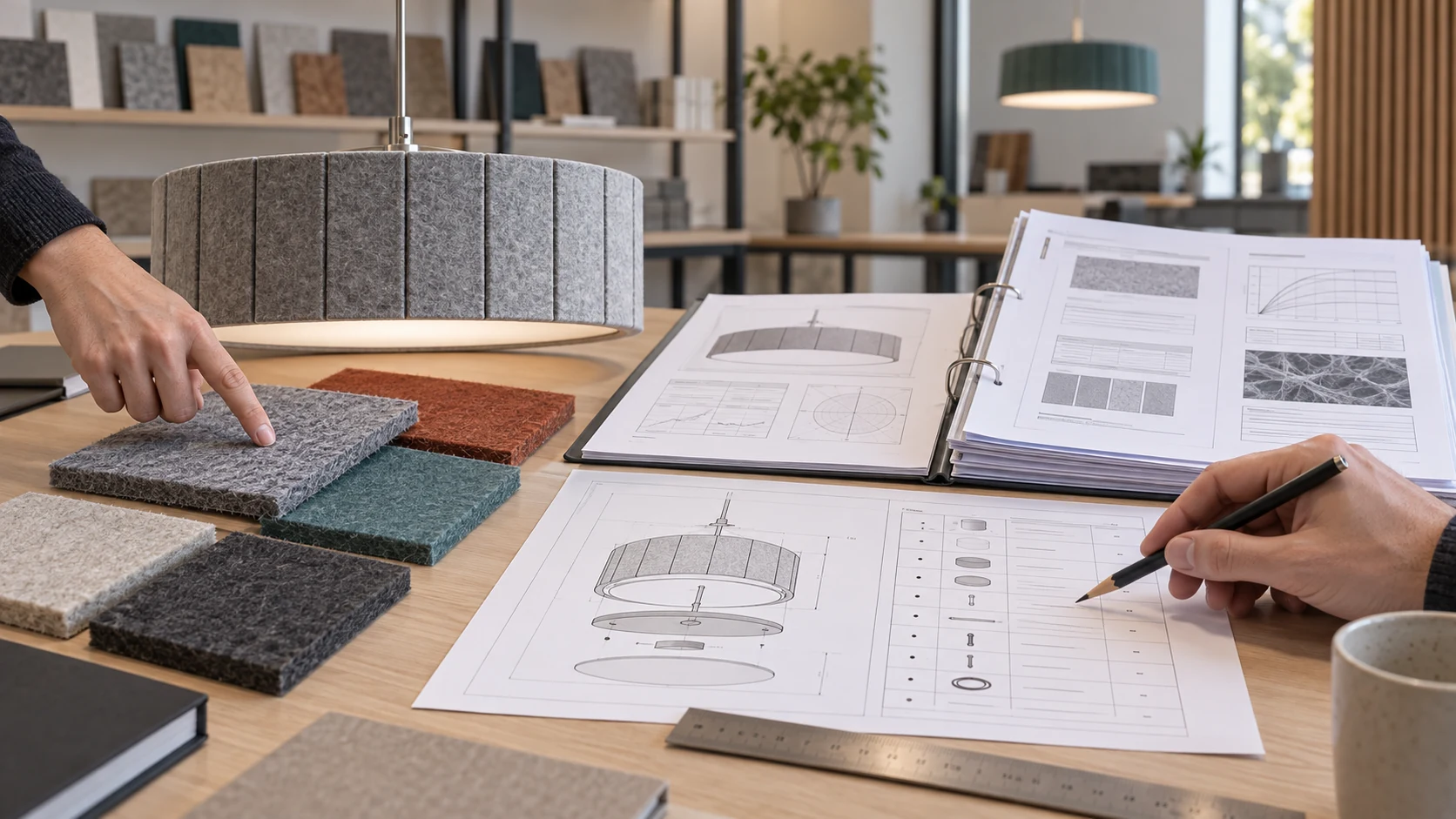
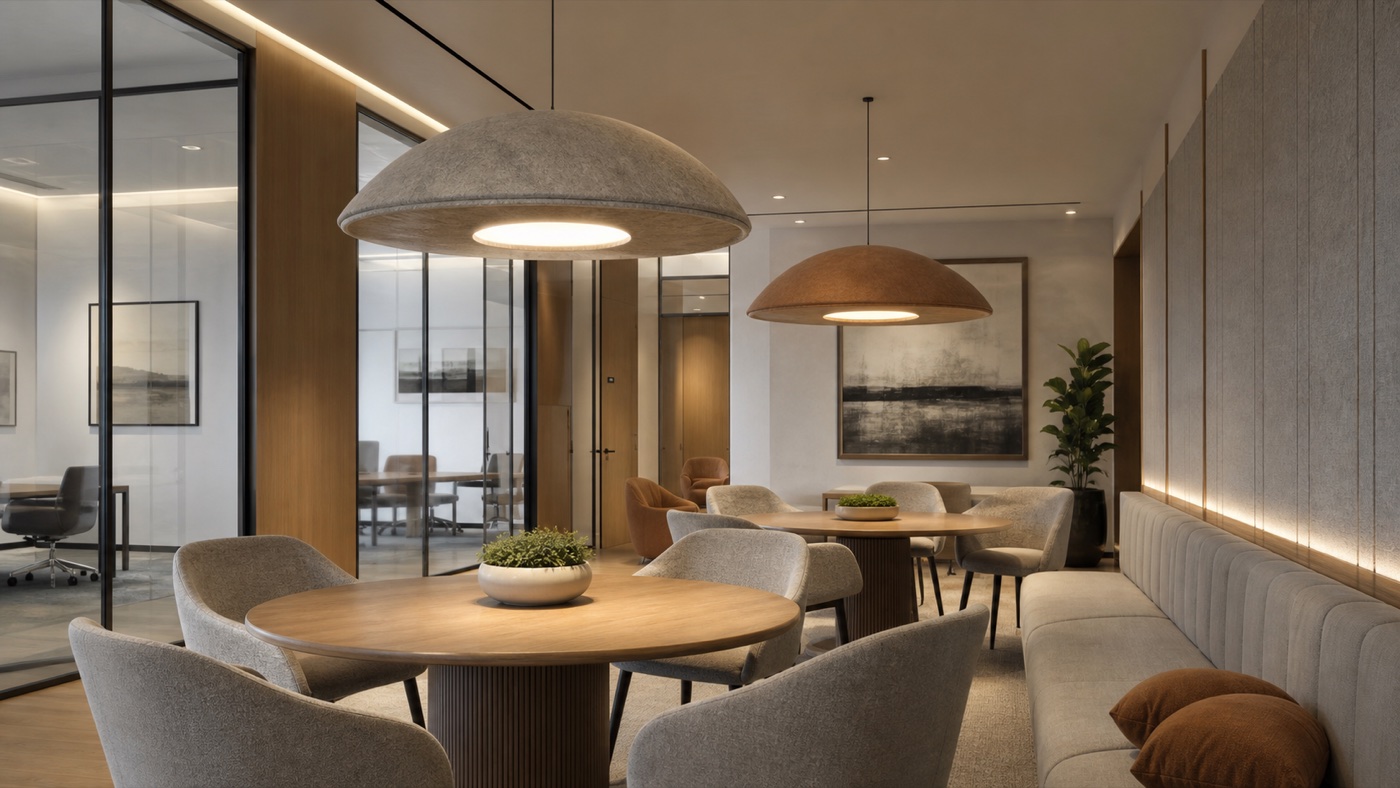
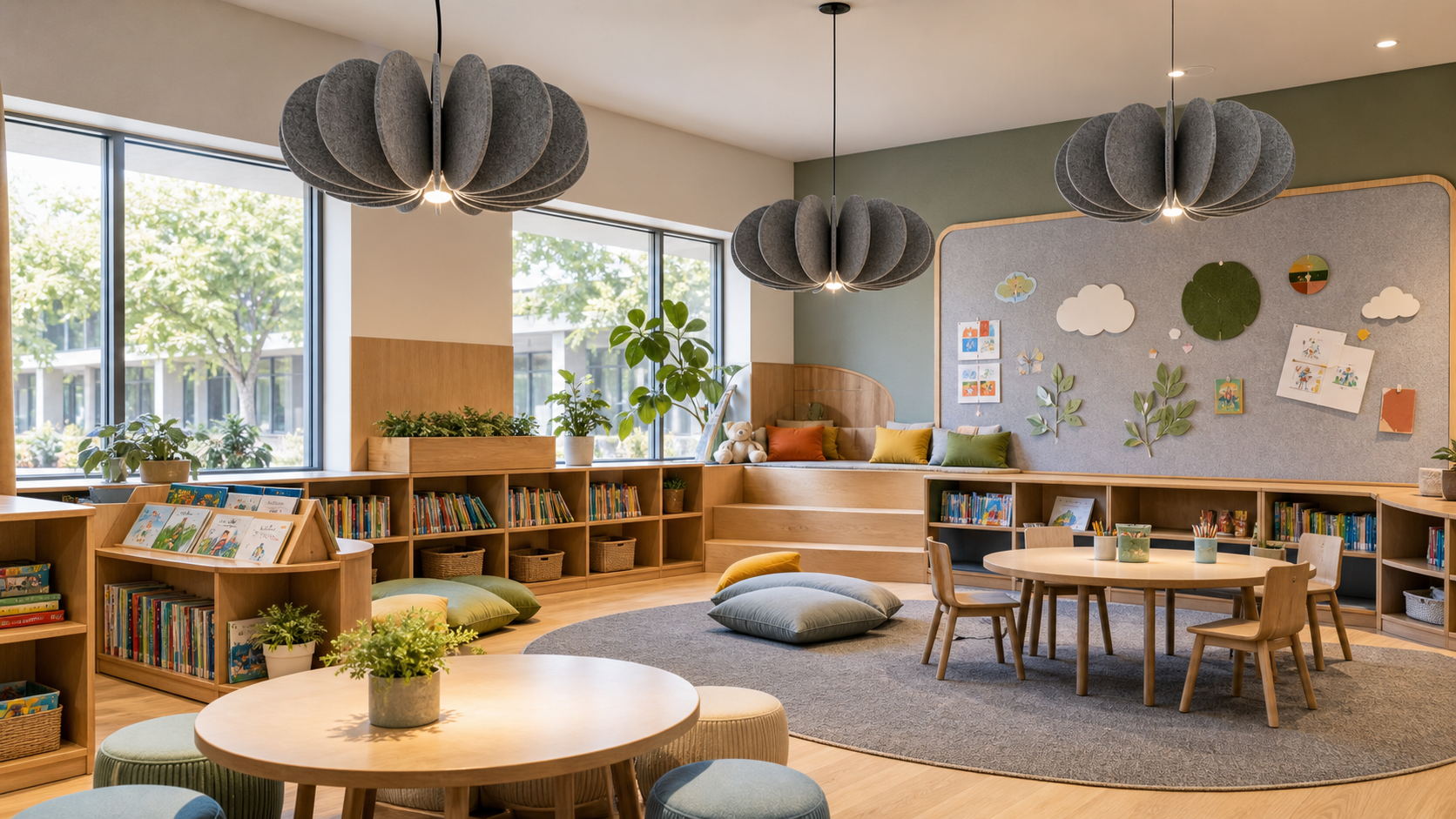
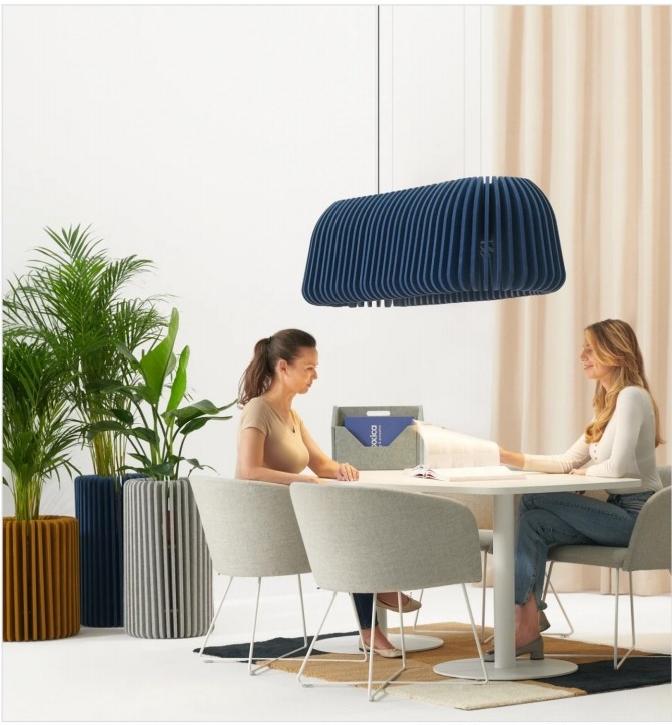
Acoustic lighting can provide illumination plus sound-absorbing surface in a ceiling zone, but this study does not test it or prove a productivity, wellbeing, ventilation, acoustic or lighting outcome. Ask for the selected configuration's acoustic-test evidence, photometry and glare information, electrical and controls data, dimensions, weight, suspension, fire or other applicable compliance documents, cleaning and maintenance requirements. The responsible project team should then validate the actual room against its own criteria rather than transfer results from this student study.
Impact on Acoustic Lighting
For suppliers, the study is a reason to make evidence boundaries explicit. Product documentation should identify its tested acoustic configuration and mounting condition, photometry and glare data where a luminaire is involved, electrical and suspension interfaces, finishes, maintenance and applicable compliance information. It should also distinguish those product attributes from predictions about an occupied room, where ventilation noise, occupancy, activities, layout and operating controls can change the result.
For B2B buyers, request a comparable package that ties each acoustic-lighting, conventional-lighting, HVAC and finish proposal to named zones and operating conditions. Include occupancy and activities, acoustic and lighting criteria, ventilation duty and background-noise expectations, service and access constraints, budgets, programme, and the calculation, commissioning or post-occupancy measurement process. Require bidders to state what evidence is product-specific and what still needs project-specific design or verification before handover.
Apply This Trend
Need acoustic lighting options for a current project?
Send drawings, room type, target quantity, PET felt color, CCT and dimming needs. FLOSEEK can recommend project-ready acoustic lighting options.