Industry Source
How Technology Is Shaping Commercial Lighting Design in 2026
Published: August 26, 2026
View original sourceNews Summary
Alcon Lighting’s August 26, 2026 outlook says commercial lighting is moving toward more personal and practical control. It highlights scene selection, task tuning, personal dimming and correlated-colour-temperature control delivered through interfaces occupants will actually use. The article frames the goal as an environment that can adapt to different activities without making the control system difficult to operate.
A second theme is interoperability. According to the article, commercial projects increasingly require luminaires, sensors and control interfaces to work across zones, manufacturers and platforms. It points to wireless mesh technologies as one route to flexible zoning, easier reconfiguration and less friction during commissioning, while emphasizing that the experience for users should remain simple.
The article also identifies reliable dimming, automatic controls and thoughtful defaults as part of the baseline for current commercial work. This is a supplier's market perspective, not a substitute for applicable energy codes, controls design, lighting calculations or project commissioning. Its value is in translating broad technology trends into questions a buyer can ask before the electrical and ceiling packages are locked.
- Alcon Lighting published its commercial-lighting outlook on August 26, 2026.
- The article describes user-level scene selection, task tuning, personal dimming and CCT control as increasingly important in commercial spaces.
- It argues that interoperability across luminaires, sensors and control platforms is becoming a project requirement rather than a differentiator.
- The report also treats intuitive presets, smooth low-end dimming and energy-code-aligned controls as practical design priorities.
FLOSEEK Interpretation
For FLOSEEK, the key point is that an acoustic-lighting specification needs an operational brief as well as a visual and acoustic one. For every office, meeting, reception or collaboration zone, define who needs control, the intended scenes, dimming range, colour-temperature approach, sensor behaviour, handover responsibilities and the controls protocol. A fixture can offer tunability or dimming, but the project only benefits when those functions are coordinated with the controls system and easy for occupants to use.
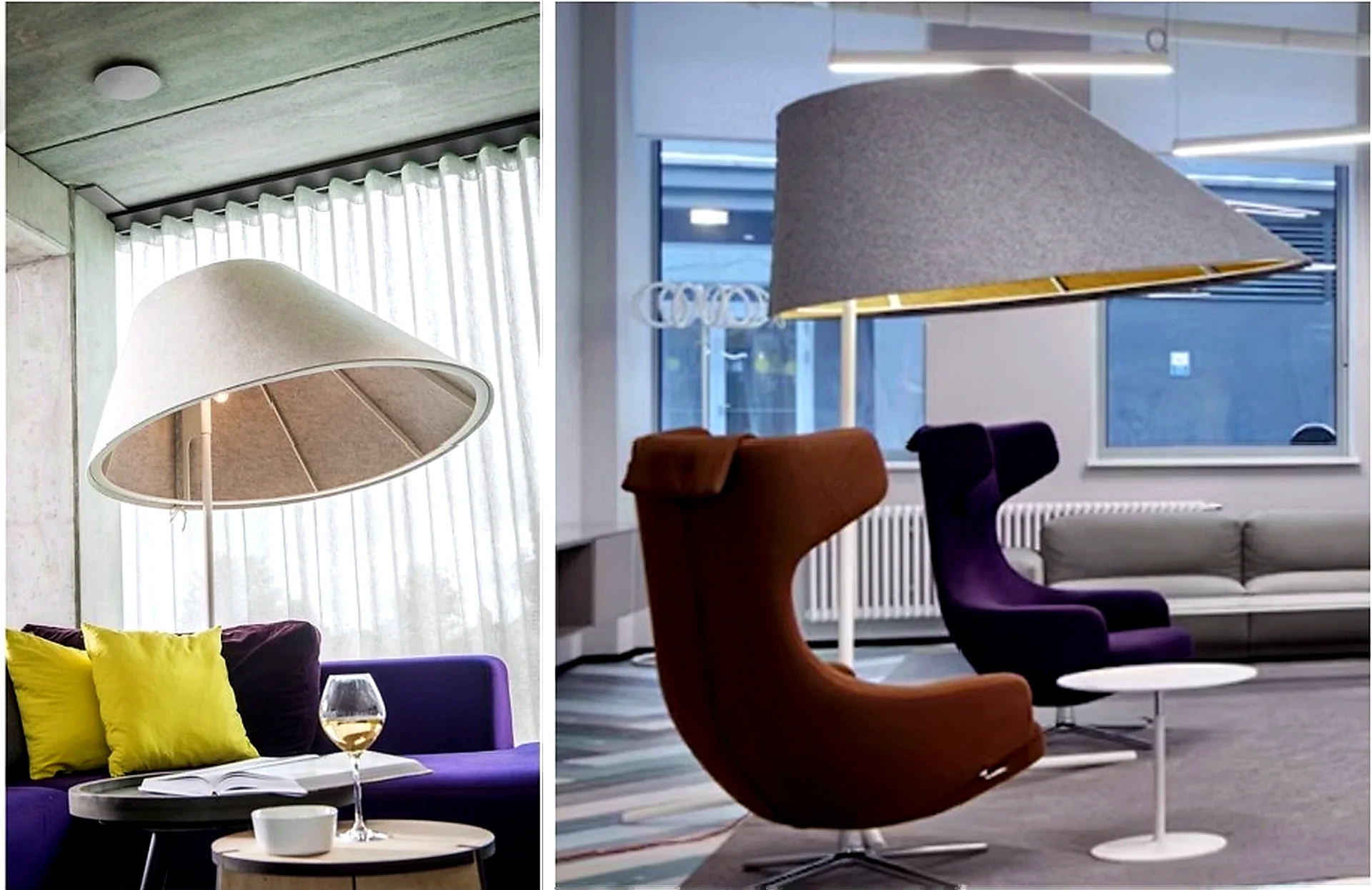
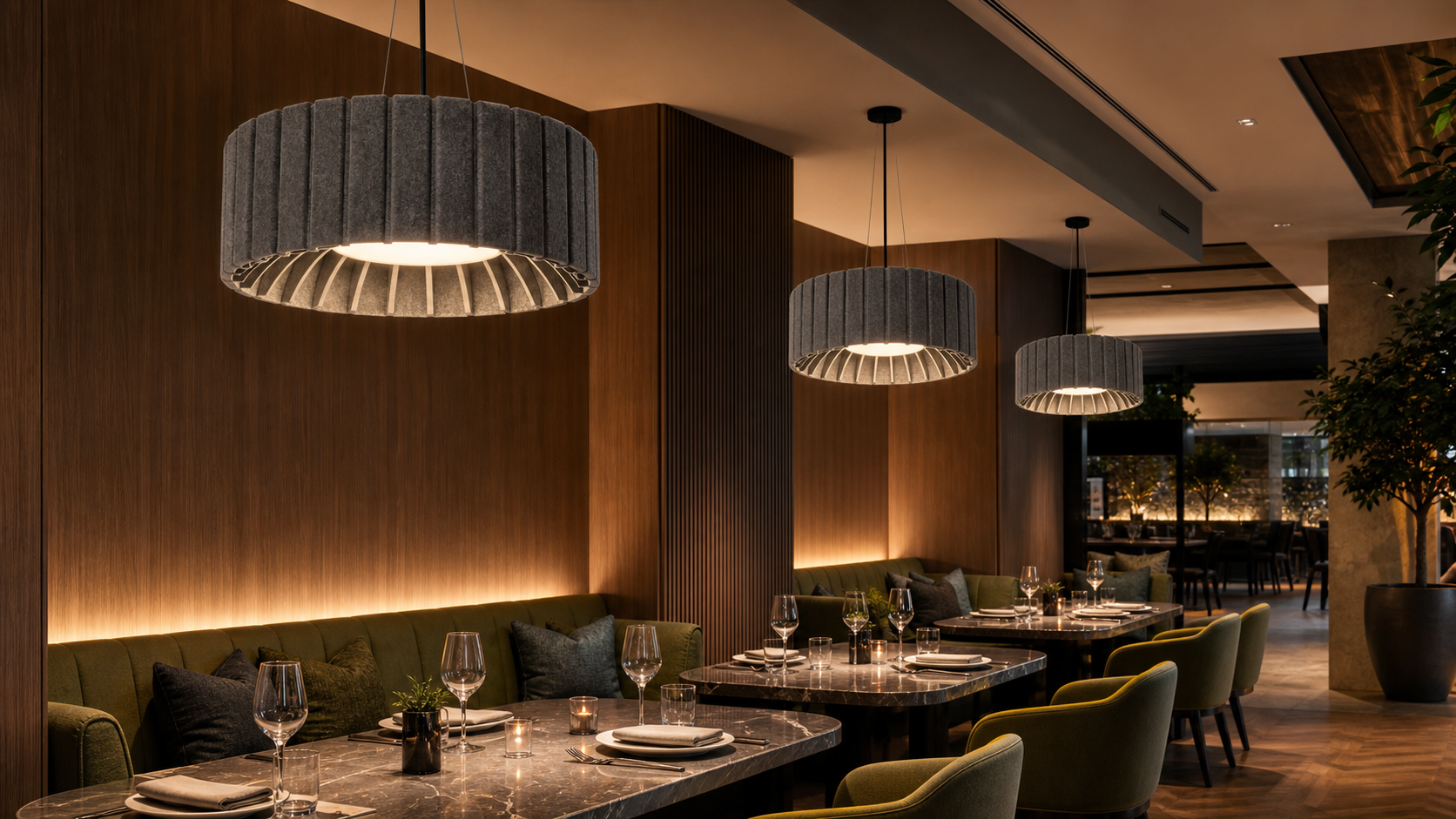
Acoustic lighting is especially suited to adaptable commercial zones because its suspended placement can add light and sound-absorbing surface in the same ceiling area. Its acoustic contribution still depends on room volume, hard finishes, ceiling height, fixture coverage and the wider treatment strategy. Teams should set an agreed room-acoustic objective, then coordinate acoustic luminaires with other wall or ceiling treatments rather than assuming a controls-enabled fixture resolves reverberation or speech privacy by itself.
Impact on Acoustic Lighting
For suppliers, the news raises the value of specification-ready controls evidence alongside photometry and acoustic test data. Provide the supported dimming and control options, driver and protocol compatibility, CCT choices, sensor and emergency options, commissioning constraints, suspension details and maintenance access. Make clear which combinations have been tested or supported, and which require project-level coordination, so the acoustic-lighting package can be priced and commissioned without late surprises.
For B2B buyers, bring the lighting designer, acoustic consultant, electrical engineer, interior team and controls integrator together before reflected-ceiling layouts are fixed. Ask for a zone-by-zone schedule covering target illumination, glare, acoustic intent, control scenes, user overrides, sensors, network ownership and acceptance testing. That gives the team a better chance of delivering a workplace that sounds comfortable, looks coherent and remains simple to operate after handover.
Apply This Trend
Need acoustic lighting options for a current project?
Send drawings, room type, target quantity, PET felt color, CCT and dimming needs. FLOSEEK can recommend project-ready acoustic lighting options.