Industry Source
This London Café's Softly Glowing Ceiling Holds the Cure to the Gloomiest Days — It's the Lighting Idea to Steal That Brings the Sunshine Indoors
Published: August 19, 2026
View original sourceNews Summary
Livingetc reported on August 19, 2026 that Cup of Joy, a new 168 m² specialty coffee shop at 28 Blandford Street in Marylebone, London, was designed by EBBA Architects to create a sense of calm and delight through material and light. The two-storey interior draws on the brand’s Istanbul roots with clay plaster, Portland stone, timber, oak and other warm, textured finishes.
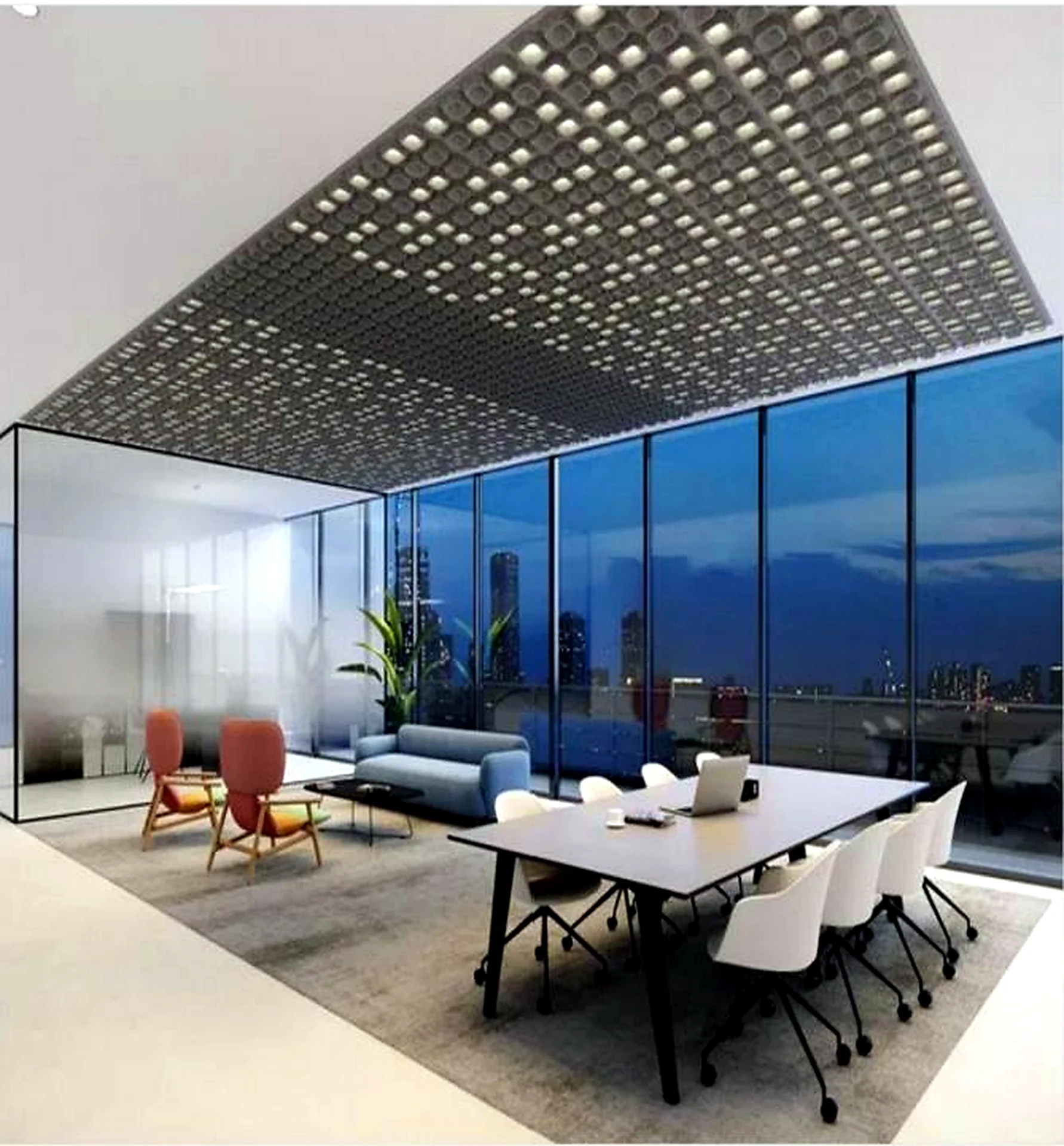
The central lighting move is a paneled ceiling of timber and opaque glass. EBBA Architects told Livingetc that this plane distributes light evenly across the room, avoiding the harsh directionality associated with conventional hospitality lighting. The article also describes pendant neon, EBBA’s Pulse paper lanterns, Frandsen sconces and a lower-level illuminated porthole window as additional layers in the spatial sequence.
The report is a design feature, not a tested acoustic case study: it does not provide reverberation data, absorption coefficients, room-acoustic targets or lighting calculations. Its practical value for commercial buyers is the project’s ceiling-first approach to making a compact hospitality space feel warm, legible and intentionally lit.
- Livingetc published its report on Cup of Joy, a London specialty café designed by EBBA Architects, on August 19, 2026.
- The 168 m², two-storey café uses clay plaster, Portland stone, timber and oak to create a calmer, warm-toned hospitality interior.
- Its timber-and-opaque-glass paneled ceiling distributes light evenly rather than relying on the more directional character of conventional hospitality lighting.
- The project layers the ceiling treatment with pendant neon, paper lanterns, sconces and a lower-floor illuminated porthole window; the source makes no acoustic-performance claim.
FLOSEEK Interpretation
FLOSEEK reads the project as a strong example of why hospitality ceiling planning should begin with the desired experience rather than fixture selection alone. A broad diffused light plane can help reduce the perceived contrast between bright sources and darker seating areas, while warmer layered lighting gives tables, circulation and display moments their own character. The final luminance, glare and maintenance strategy still need to be engineered for the actual venue.
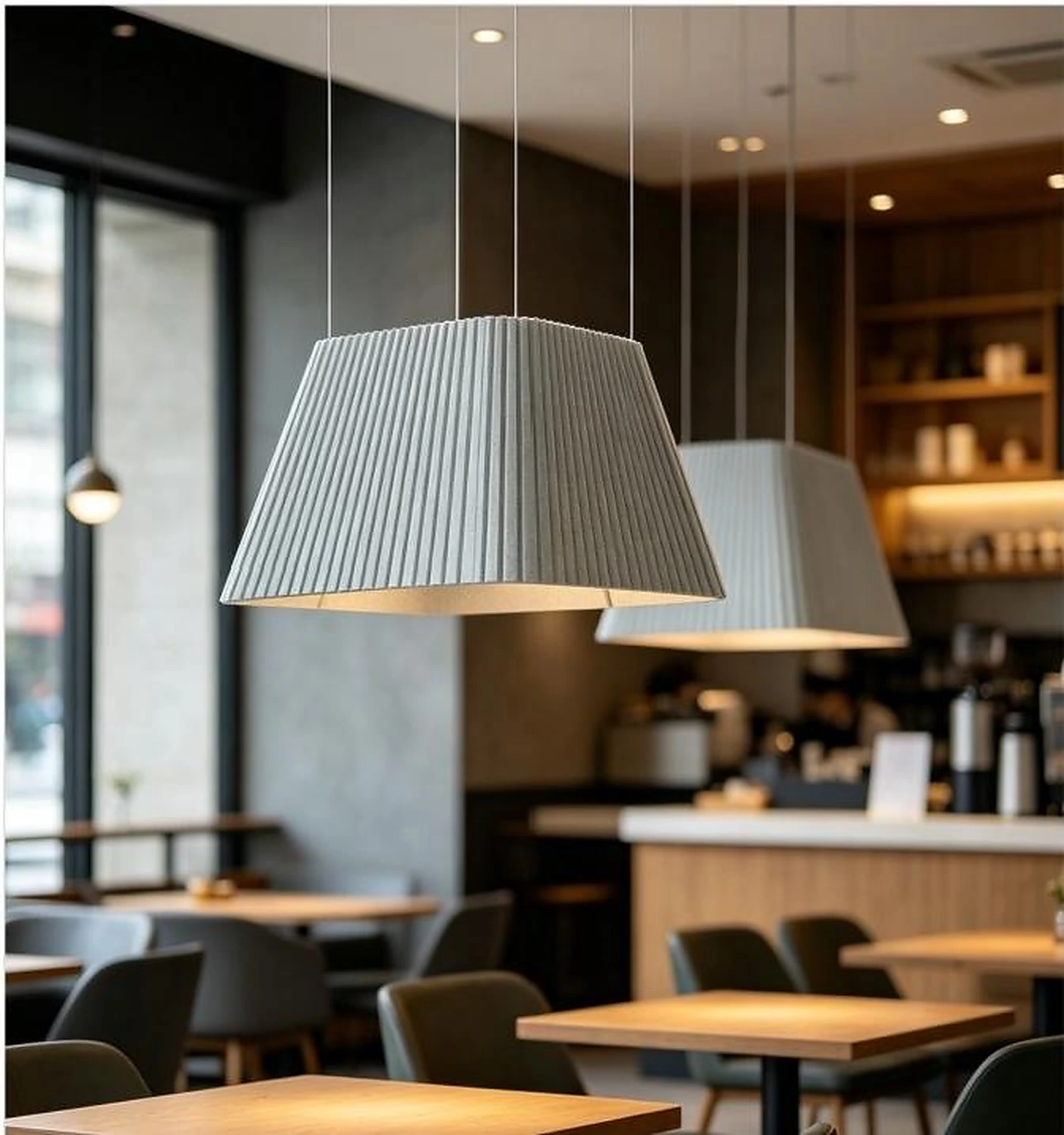
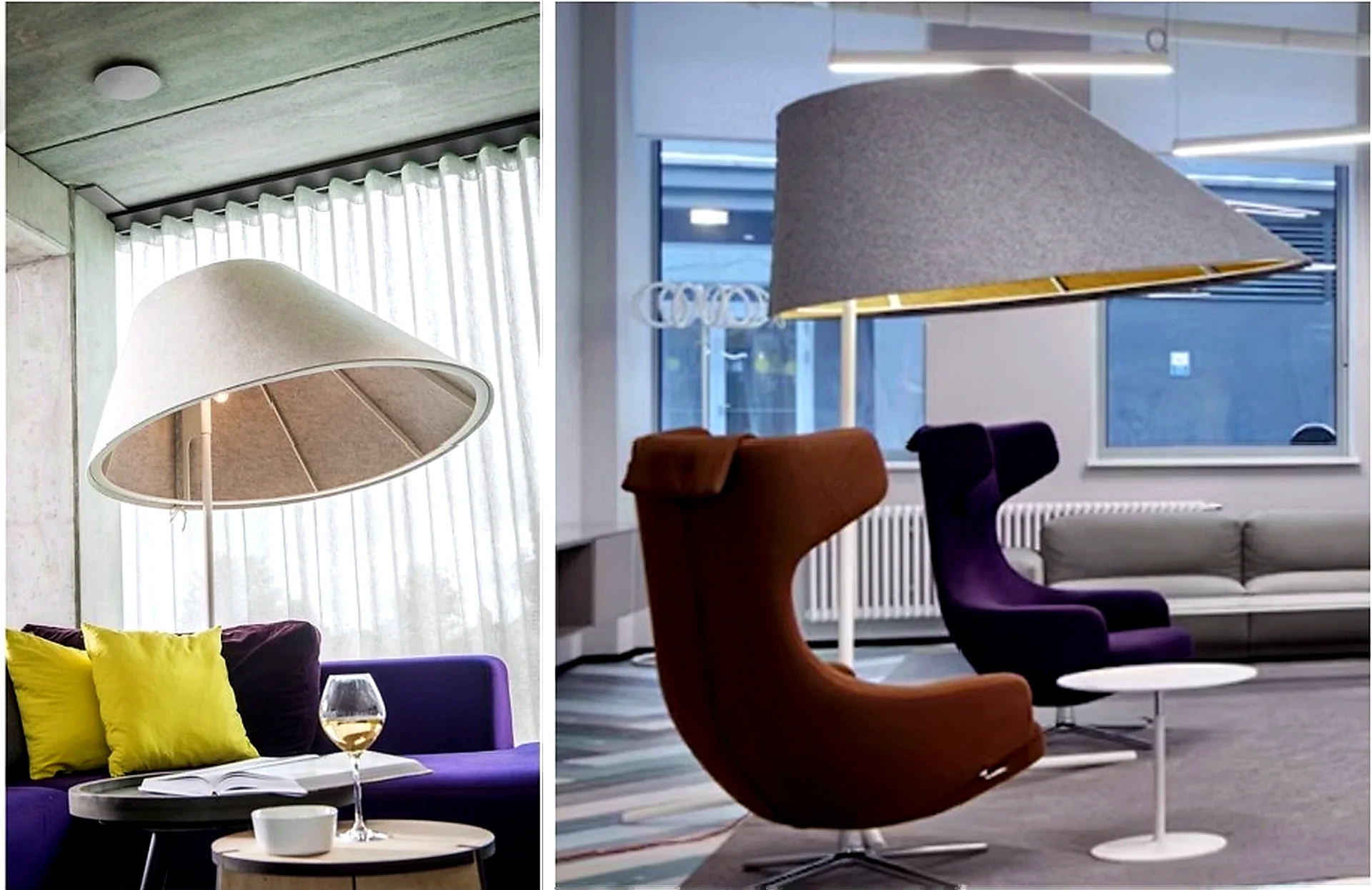
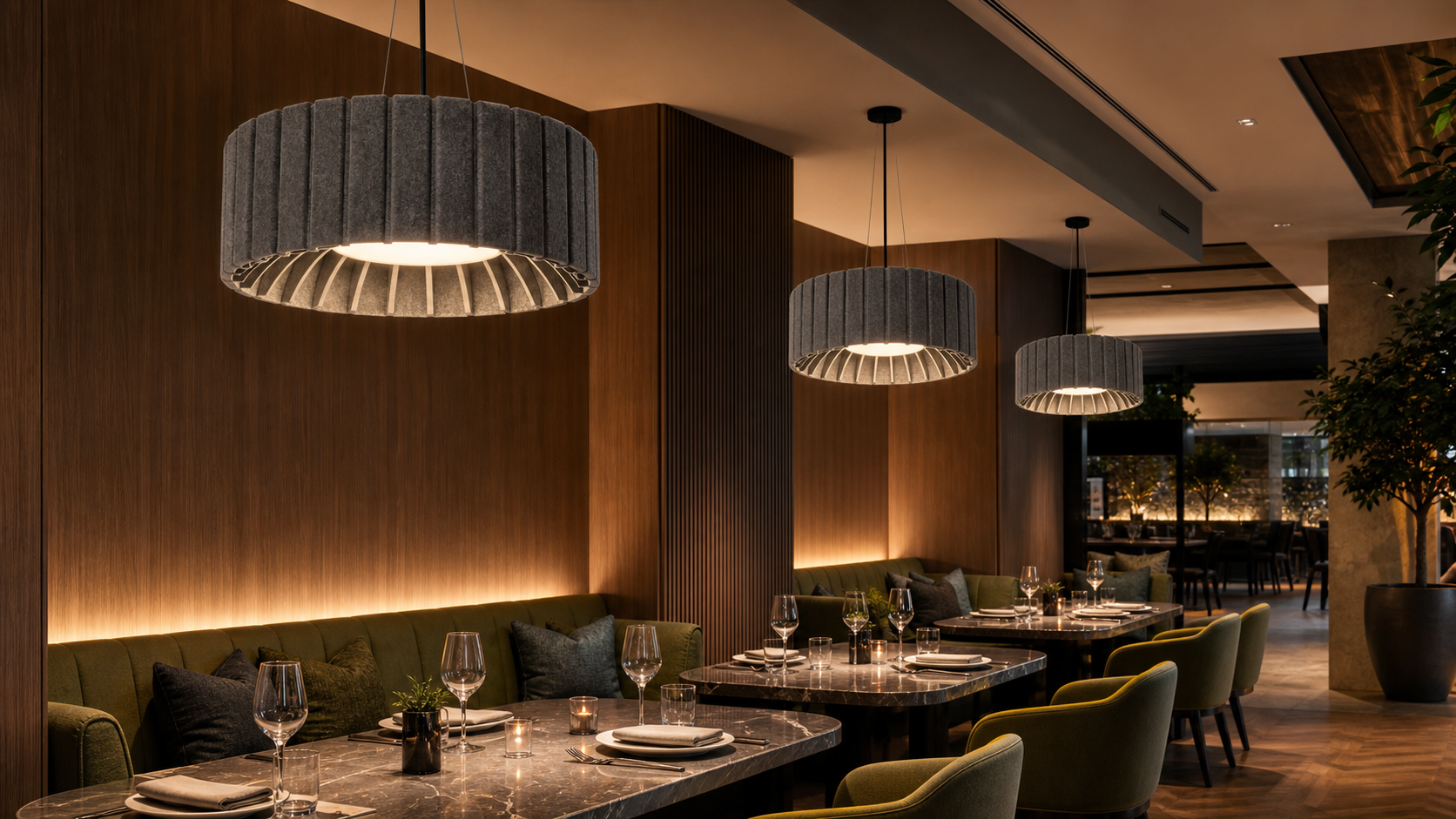
For acoustic lighting, the analogous opportunity is integration: an acoustic pendant or linear system can provide illumination while adding absorptive surface where hard finishes and active conversation make reverberation a concern. It is not a substitute for a glass lightbox, nor does visual diffusion itself establish acoustic performance. Room volume, seating density, music, kitchen noise, surface finishes and speech-intelligibility needs should determine whether fixtures are paired with wall or ceiling absorption elsewhere.
Impact on Acoustic Lighting
For acoustic-lighting suppliers, the takeaway is to support a complete hospitality ceiling narrative. Project teams need photometry, CCT and dimming options, glare information, suspension details, felt colour and texture choices, cleaning guidance and clearly bounded acoustic evidence. Layout support should show how illuminated absorptive elements work with decorative pendants, illuminated planes and service coordination rather than competing with them.
For B2B buyers, put atmosphere and acoustics in the same early brief: expected occupancy and music level, conversation and privacy needs, hard and soft finishes, ceiling height and services, target light levels, colour temperature, control scenes, cleaning requirements and operating hours. That gives the lighting and acoustic teams enough information to create a layered hospitality scheme that feels comfortable as well as visually distinctive.
Apply This Trend
Need acoustic lighting options for a current project?
Send drawings, room type, target quantity, PET felt color, CCT and dimming needs. FLOSEEK can recommend project-ready acoustic lighting options.