Industry Source
News Summary
Haworth Europe published a July 20, 2026 article arguing that workplace noise has become more acute as office patterns settle after the first wave of hybrid work. The article says Haworth's global Evolving Workplace Study found noise to be the number-one challenge facing organizations, with the problem intensified by smaller real estate footprints and more people using offices at the same time.
The article identifies several sources of acoustic complexity. Collaboration zones, focus areas and small-group spaces can create tension when loud and quiet uses are placed too close together. Video calls add another layer of speech noise, while dense floorplates increase ambient chatter and make it harder for people to recover focus.
Haworth's response is not to make offices silent. It recommends planning around real activities, giving employees choice and control over where they work, communicating the intent of each area, using barriers or buffers between sound conditions, and adding dedicated acoustic solutions such as absorptive surfaces, noise-reducing partitions and sound masking where needed.
- Haworth Europe published The Growing Challenge of Workplace Noise on July 20, 2026.
- The article says Haworth's global Evolving Workplace Study identified noise as the number-one challenge facing organizations.
- It connects the issue to hybrid-work stabilization, shrinking real estate footprints, higher worker density, video calls and poorly planned adjacencies.
- Haworth recommends activity-based planning, employee choice and control, clearer space intent, barriers and buffers, and dedicated acoustic solutions.
FLOSEEK Interpretation
FLOSEEK reads this as a strong buyer-side signal for acoustic lighting. The modern office has to support buzz, meetings, focus work, calls and informal collaboration in one compact footprint, so acoustic planning needs to be visible in the lighting plan, ceiling plan and furniture layout from the beginning.
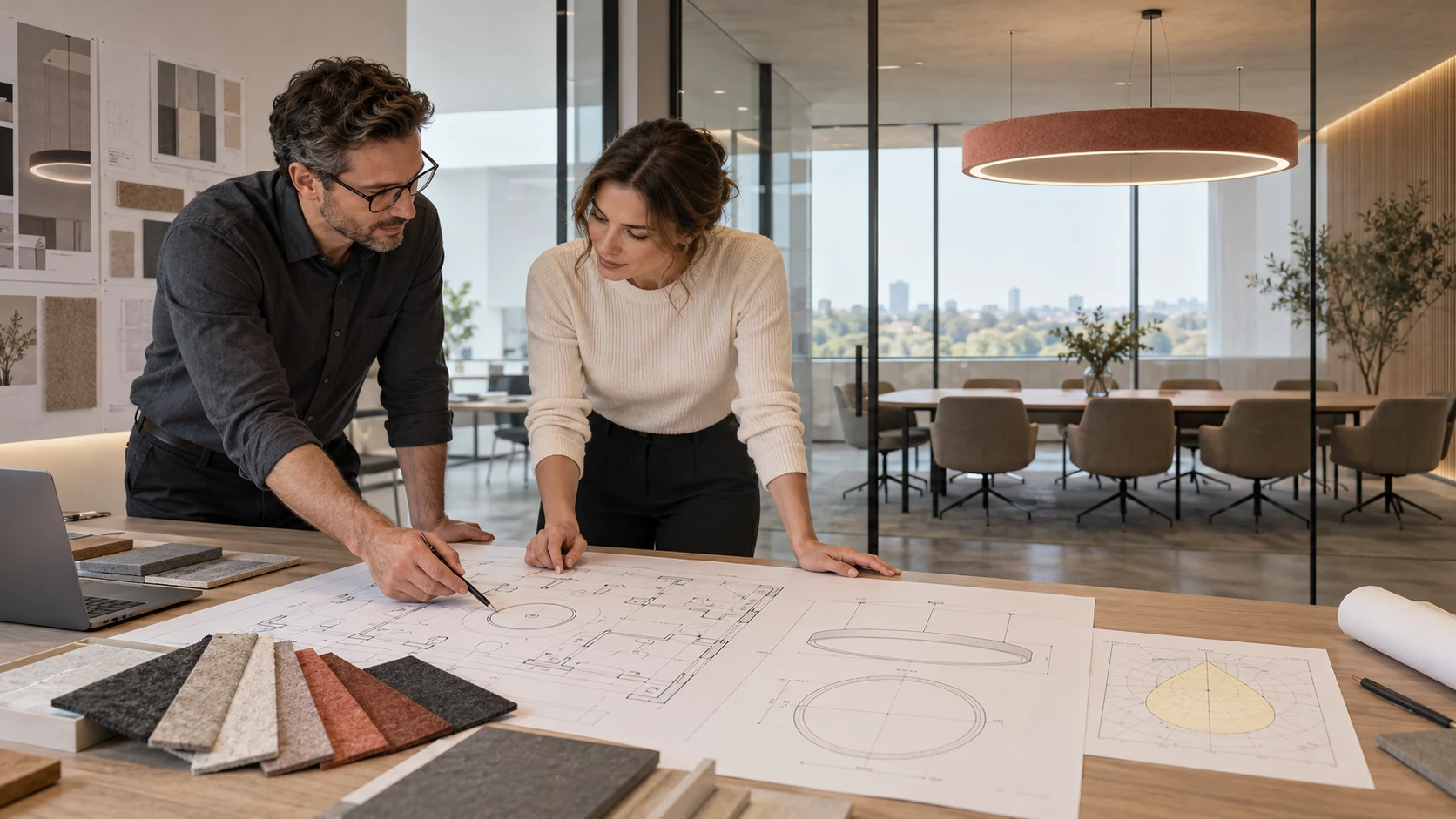
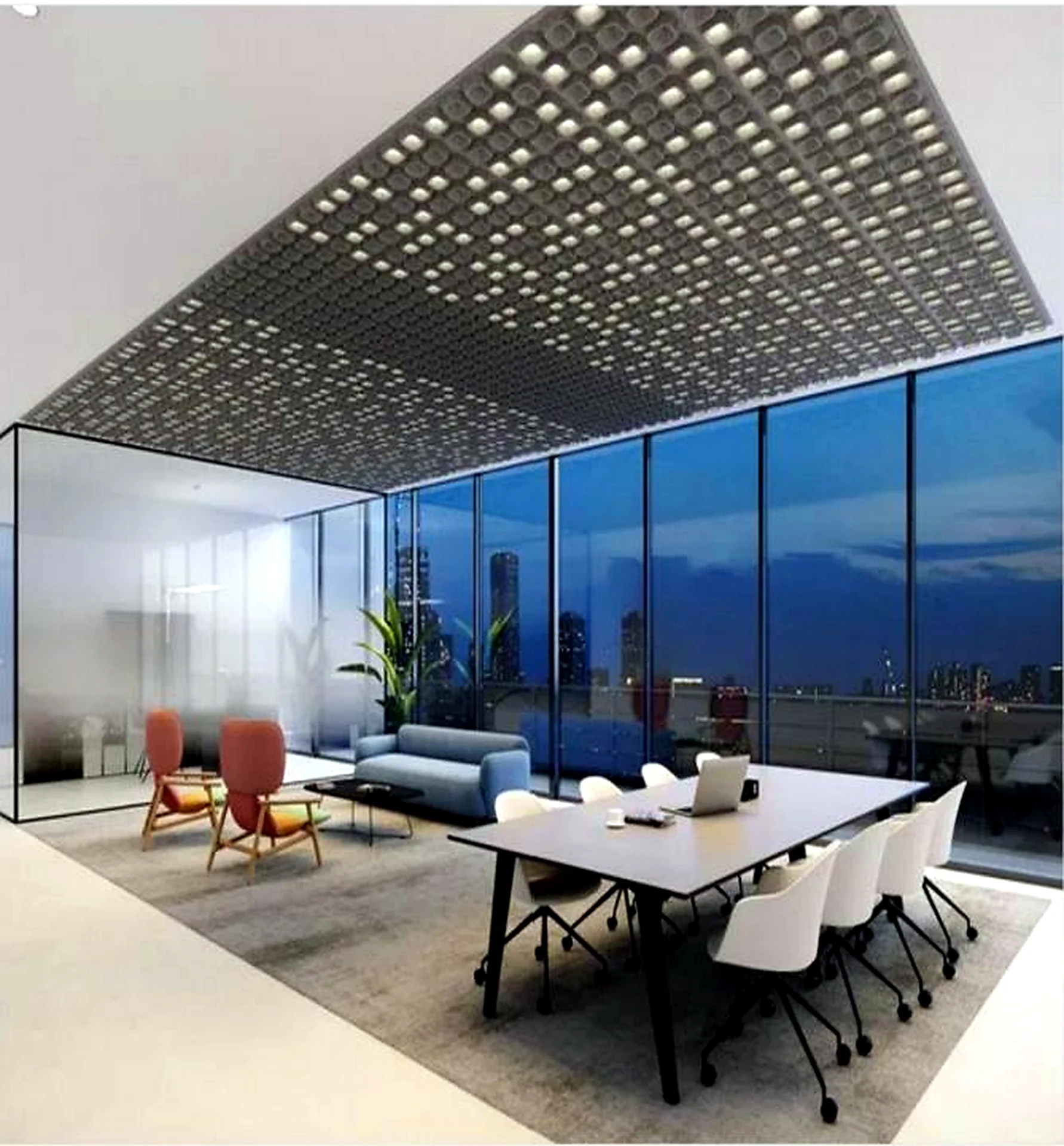
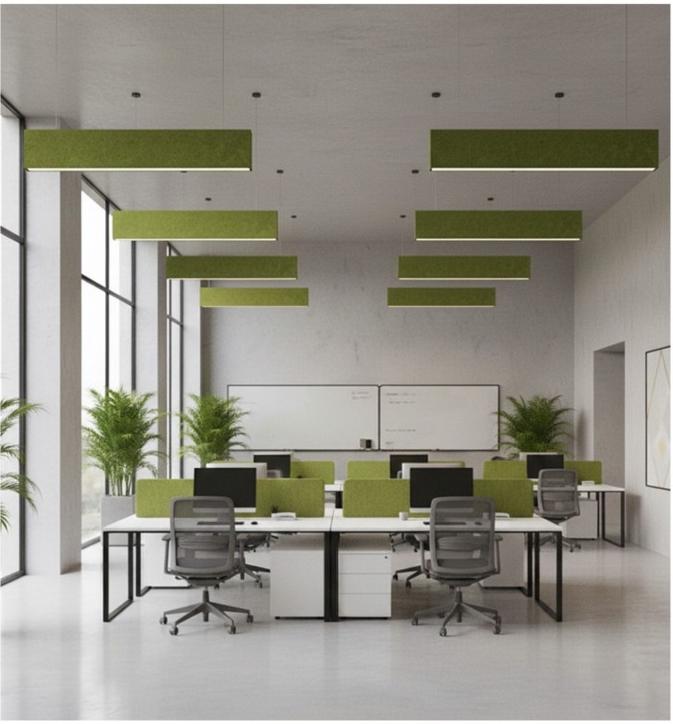
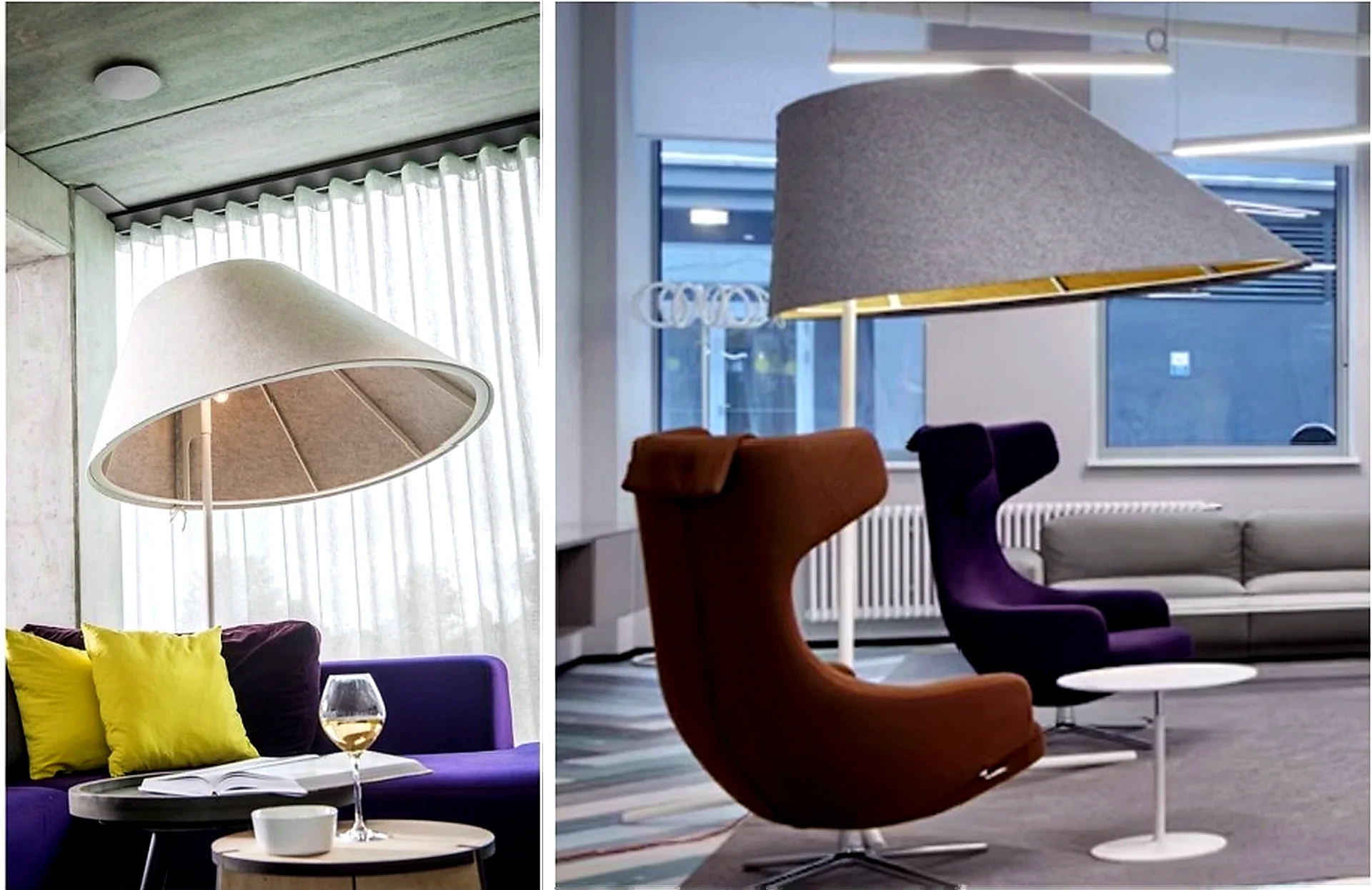
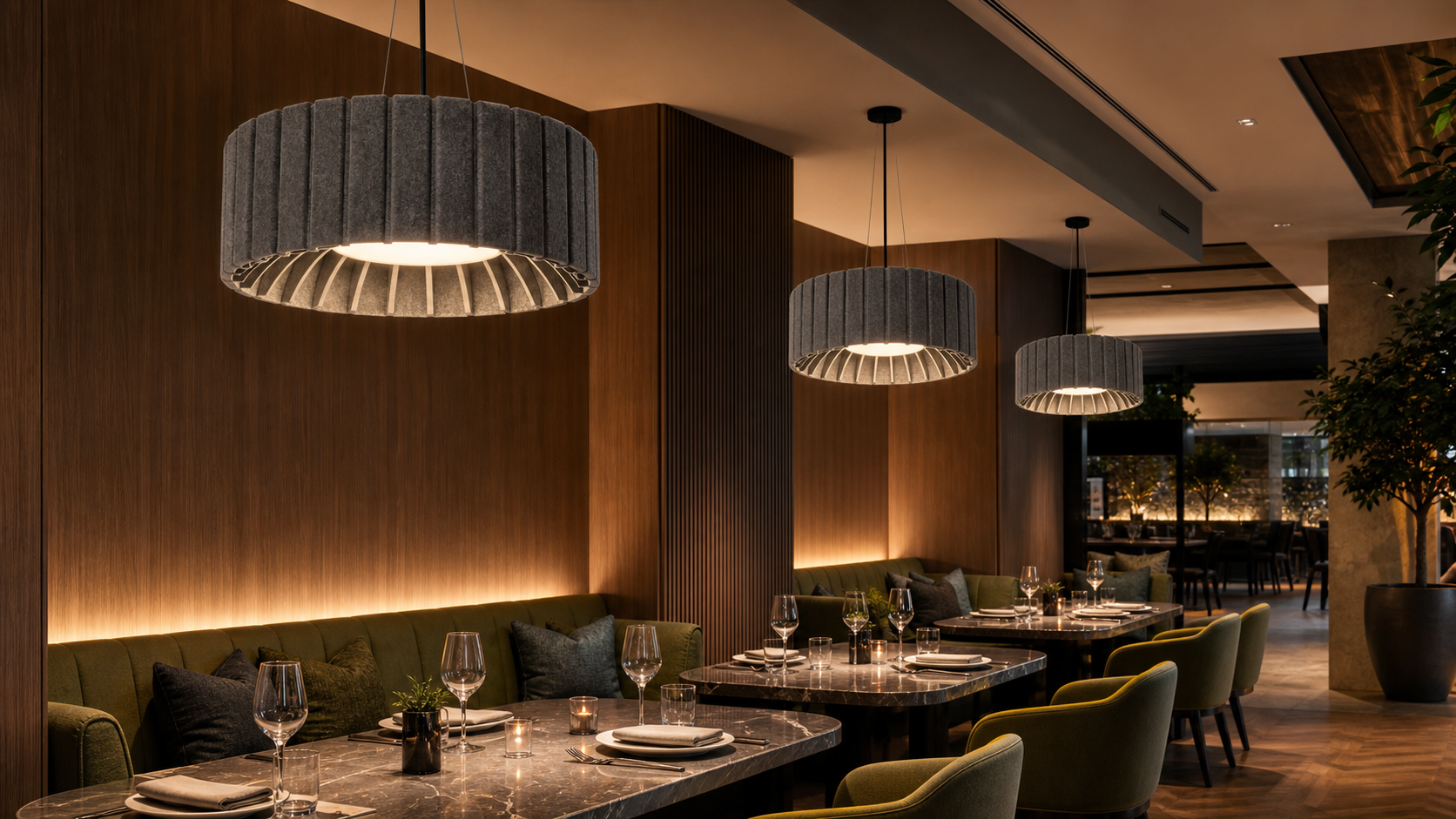
PET felt acoustic lighting fits this brief when it is treated as a zonal tool rather than a decorative pendant selected late. Linear fixtures over benching, absorptive pendants over meeting tables and softened lighting above collaboration settings can help mark activity zones while adding useful absorptive surface close to where speech noise is generated.
Impact on Acoustic Lighting
For acoustic lighting suppliers, Haworth's article raises the value of application documentation. Buyers need more than fixture dimensions and wattage; they need guidance on where absorptive lighting belongs, how it works with partitions and pods, how suspension height affects the room, and how lighting controls support different work modes.
For B2B project buyers, the impact is a clearer office-acoustics brief. Before requesting acoustic lighting, teams should map loud and quiet adjacencies, call-heavy zones, meeting tables, focus rooms, ceiling heights, desired CCT, dimming needs and felt color expectations so sound comfort and visual comfort are specified together.
Apply This Trend
Need acoustic lighting options for a current project?
Send drawings, room type, target quantity, PET felt color, CCT and dimming needs. FLOSEEK can recommend project-ready acoustic lighting options.