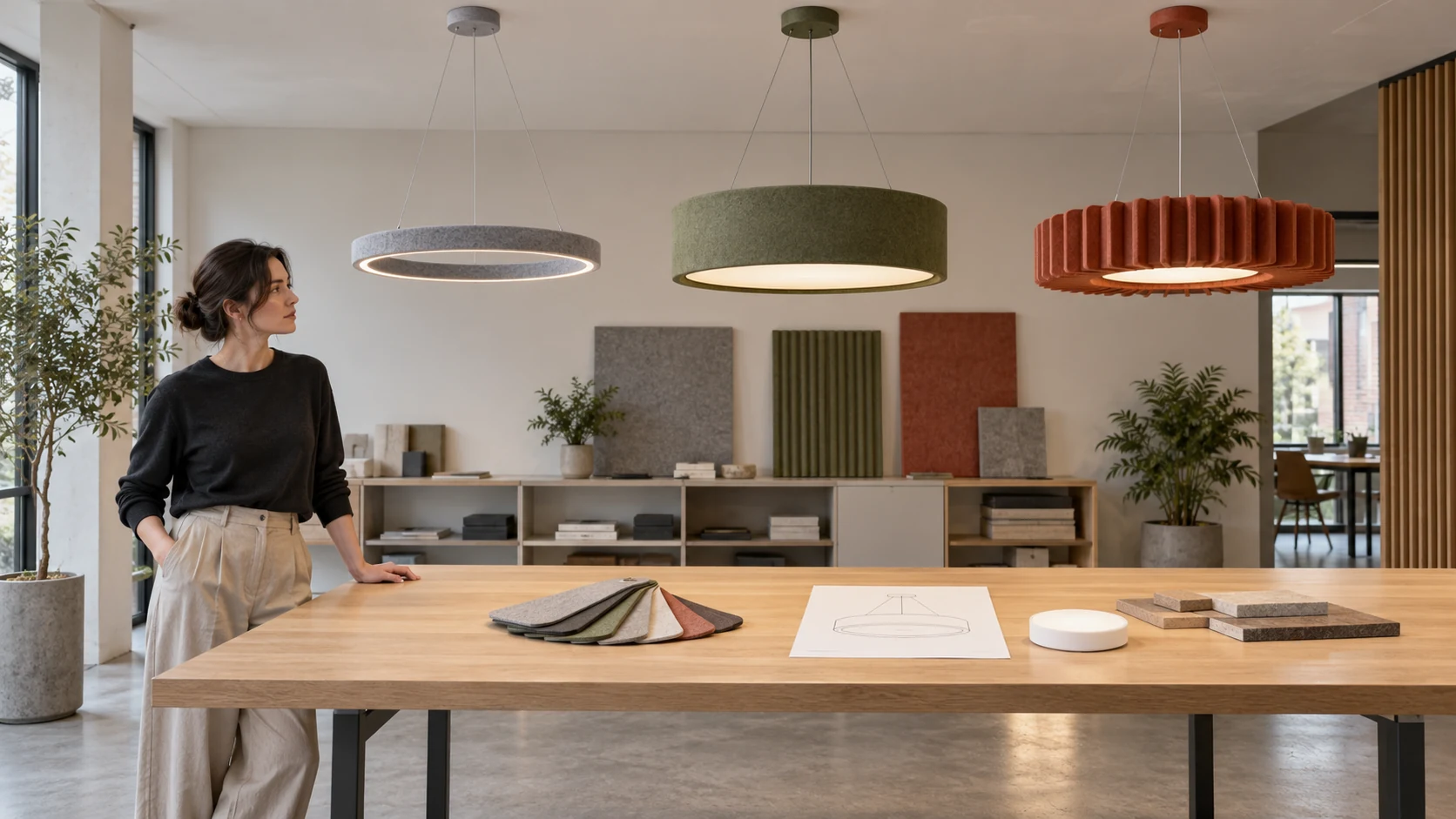

Industry Source
Meyer Sound Celebrates 20 Years of Constellation: Flexible Acoustics Serve Performance Venues, Classrooms, Hospitality Spaces, and More
Published: October 28, 2026
View original sourceNews Summary
Meyer Sound published “Meyer Sound Celebrates 20 Years of Constellation” on October 28, 2026. The manufacturer marks two decades since the first installation at UC Berkeley’s Zellerbach Hall and presents the Constellation Acoustic Suite, which groups the platform’s stated capabilities into seven applications. Meyer Sound says Constellation installations now total more than 175 systems in 31 countries.
According to the announcement, microphones, digital signal processing and distributed loudspeakers work with the room’s existing acoustic character. The seven applications include Perform for music venues, Stage for musicians’ communication, Elevate for voice lift, Unite for audience connection, Focus for localized clarity and sound masking, Ignite for crowd energy, and Create for studios and post-production. The source specifically positions Focus for boardrooms, classrooms and hospitality spaces, while Elevate is aimed at lecture halls, government meeting halls and houses of worship.
Meyer Sound also cites current and upgraded installations, including National Sawdust, Zellerbach Hall, Stockholm’s Avicii Arena, the University of Copenhagen’s Maersk Tower and Örebro University. These are manufacturer statements about a proprietary electronic system, not a room-acoustic specification. The article does not publish the selected rooms’ baseline conditions, absorption and isolation design, acoustic measurements, audio coverage, latency, operating modes, cost, installation scope or user-outcome data needed to assess a particular project.
- Meyer Sound published the 20-year Constellation update on October 28, 2026, introducing the Constellation Acoustic Suite as seven named applications drawn from its installed-base experience.
- The company says its system uses microphones, digital signal processing and distributed loudspeakers to shape a room’s reverberant character, and reports more than 175 systems in 31 countries.
- The named applications include Perform for music venues, Elevate for voice lift in lecture and meeting halls, and Focus for localized clarity and sound masking in boardrooms, classrooms and hospitality spaces.
- The announcement describes the system’s intended roles and selected installations, but does not provide room-by-room acoustic targets, measurements, costs, commissioning criteria, architectural treatment scope or comparative results for a buyer’s proposed project.
FLOSEEK Interpretation
For FLOSEEK buyers, the practical takeaway is to distinguish fixed room performance from changeable operating modes. A boardroom, training room or hospitality venue may need different speech conditions for presentations, video calls, group discussion and events, but the base envelope still needs appropriate control of reverberation, noise intrusion, privacy and reflections. Begin with room use, occupancy, talker and listener positions, AV workflow, hard-surface area, mechanical noise and the activities likely to occur in each mode.
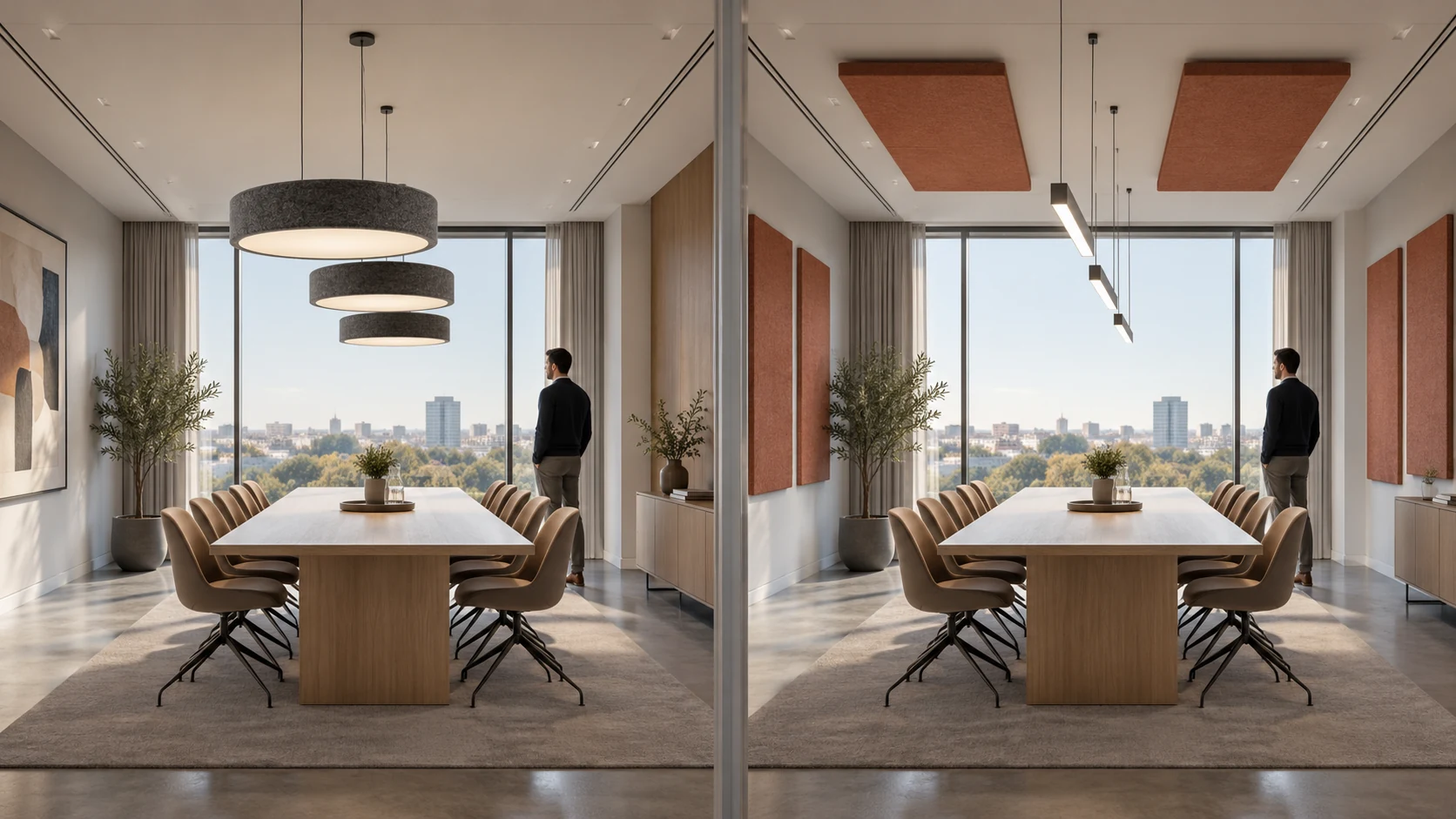
Electronic enhancement should be evaluated as part of an integrated acoustic, AV and ceiling strategy—not as a late equipment add-on. Request the proposed system architecture, loudspeaker and microphone locations, coverage model, latency, control modes, commissioning plan, fail-safe behavior, maintenance responsibilities and measurable acceptance criteria. In spaces using acoustic lighting, coordinate these requirements with absorber coverage, luminaire photometry and glare, power and data routes, HVAC, sprinklers, sensors, access and future service so that visual, acoustic and operational performance remain compatible.
Impact on Acoustic Lighting
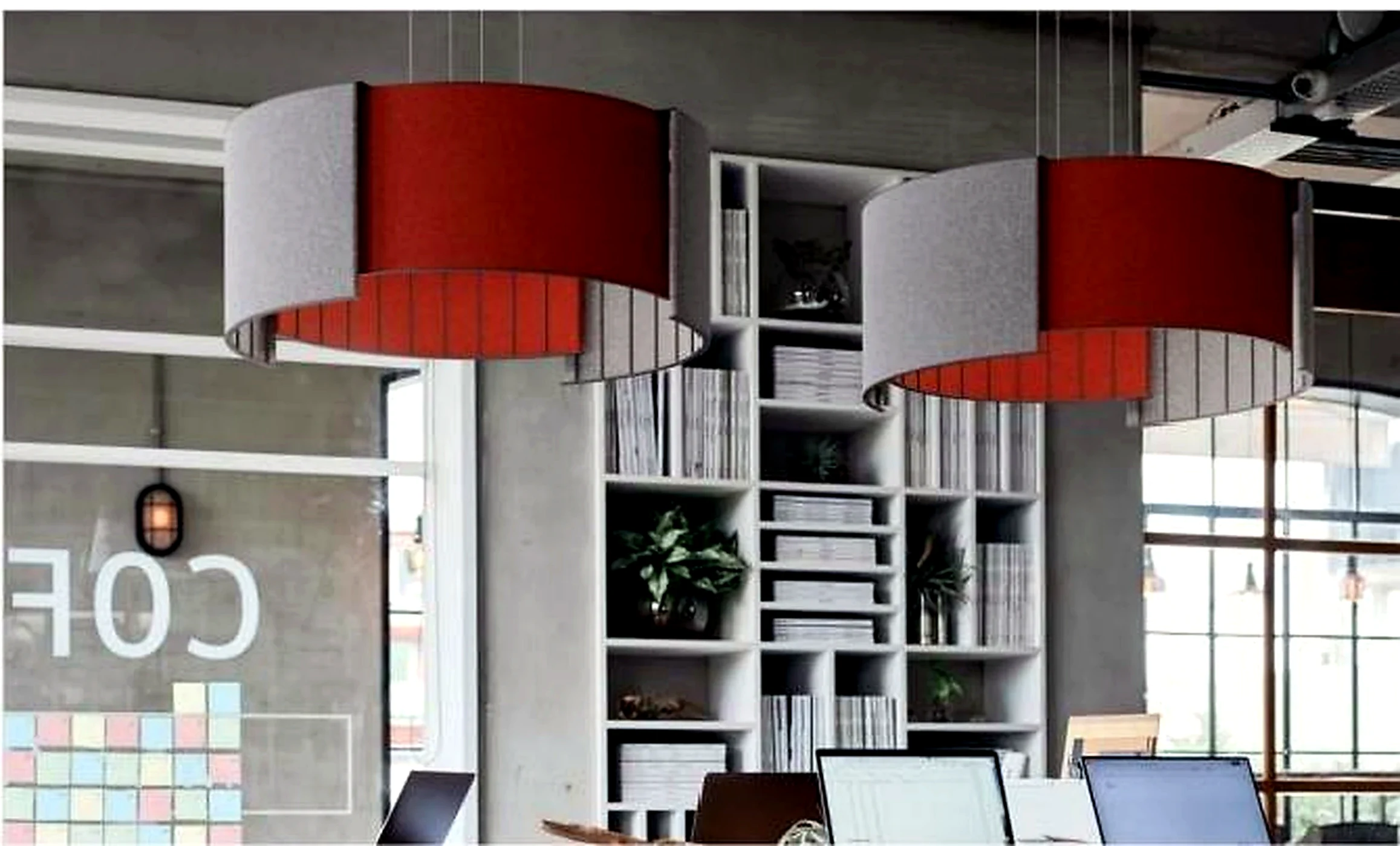
For acoustic-lighting and fit-out suppliers, the announcement reinforces that clients may evaluate ceilings and interiors against multiple sound-use modes rather than a single static condition. Product submittals should state the tested acoustic performance of the actual absorber and mounting configuration, while clearly separating those results from the capabilities of any AV or electronic-acoustics system. Reflected-ceiling plans should show where luminaires, acoustic elements, loudspeakers, microphones, services and access panels sit together.
For B2B project teams, specify responsibility across disciplines before deciding whether variable acoustics are warranted. Assign acoustic targets and measurement methods, AV design, lighting calculations and controls, ceiling coordination, mock-ups, commissioning, facilities training and handover records. This makes adaptable technology a deliberate addition to a well-performing room, while keeping speech comfort, visual quality, serviceability and lifecycle accountability visible in the procurement decision.
Apply This Trend
Need acoustic lighting options for a current project?
Send drawings, room type, target quantity, PET felt color, CCT and dimming needs. FLOSEEK can recommend project-ready acoustic lighting options.