Industry Source
From lab to building: the challenge of implementing sustainable acoustic absorbing materials
Published: July 28, 2026
View original sourceNews Summary
npj Acoustics published an open-access paper examining why sustainable acoustic absorbing materials have not moved into mainstream building use as quickly as research activity suggests. The authors note growing interest in recycled textiles, natural fibres, mycelium, agricultural waste and other lower-impact materials, but argue that many promising ideas remain in labs, startups or prototype installations.
The paper highlights a practical evidence gap. Many studies measure sound absorption without enough theoretical explanation, pore-structure characterisation, commercial-product benchmarking or clear thickness comparisons. The authors therefore propose a 12-step procedure covering target frequency range, manufacturable thickness, flow resistivity optimisation, pore design, sample production, ISO testing, model fitting and comparison with existing commercial absorbers.
Beyond lab testing, the article also points to real adoption barriers: scaling production, meeting fire and building standards, controlling cost, proving sustainability through LCA or EPD work, and earning confidence from architects, acousticians, clients and other professionals.
- npj Acoustics published the open-access article on July 28, 2026.
- The authors reviewed why many sustainable acoustic absorbers remain limited to laboratories, startups or prototype installations.
- The paper identifies testing gaps, weak benchmarking, production scale-up, building standards, cost, LCA, EPD and client acceptance as adoption barriers.
- It proposes a 12-step procedure for designing, testing, modelling, benchmarking and reporting sustainable sound-absorbing materials.
FLOSEEK Interpretation
FLOSEEK reads this as a reminder that sustainable acoustic claims need to become more project-ready. Buyers may like the idea of recycled or natural sound-absorbing materials, but commercial projects still require clear performance logic, consistent manufacturing, safety compliance, documentation and realistic comparison with known solutions.
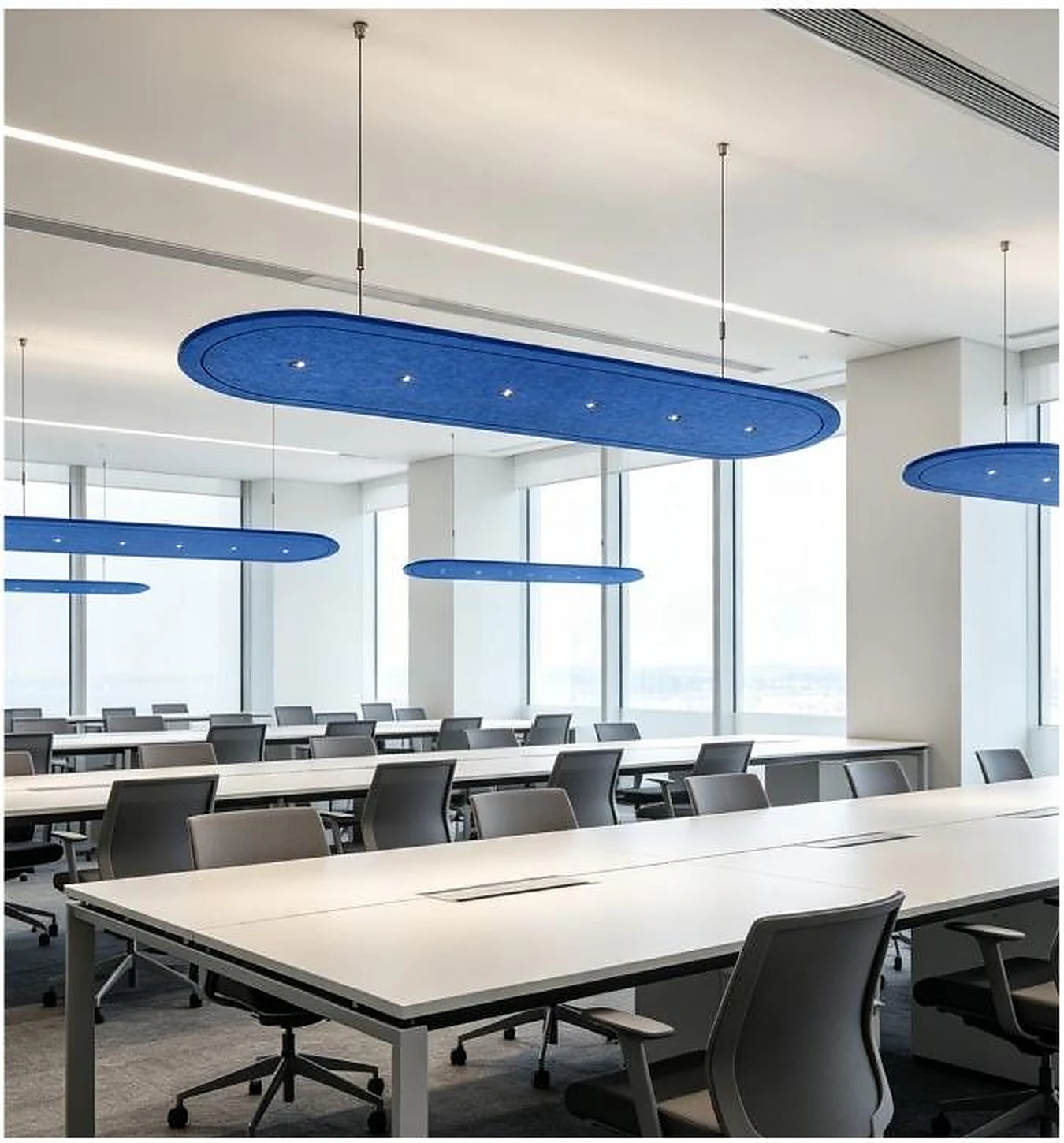
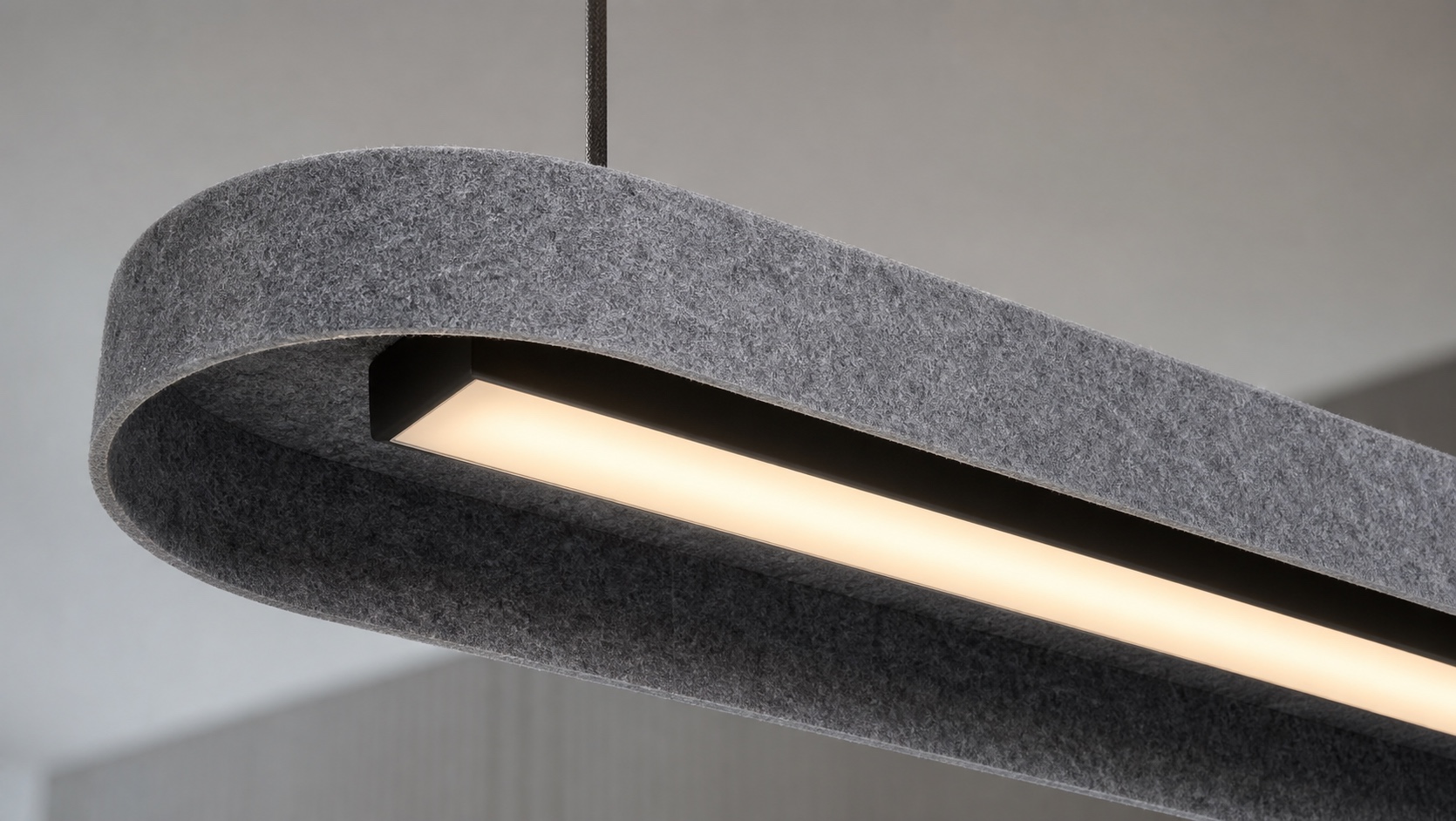
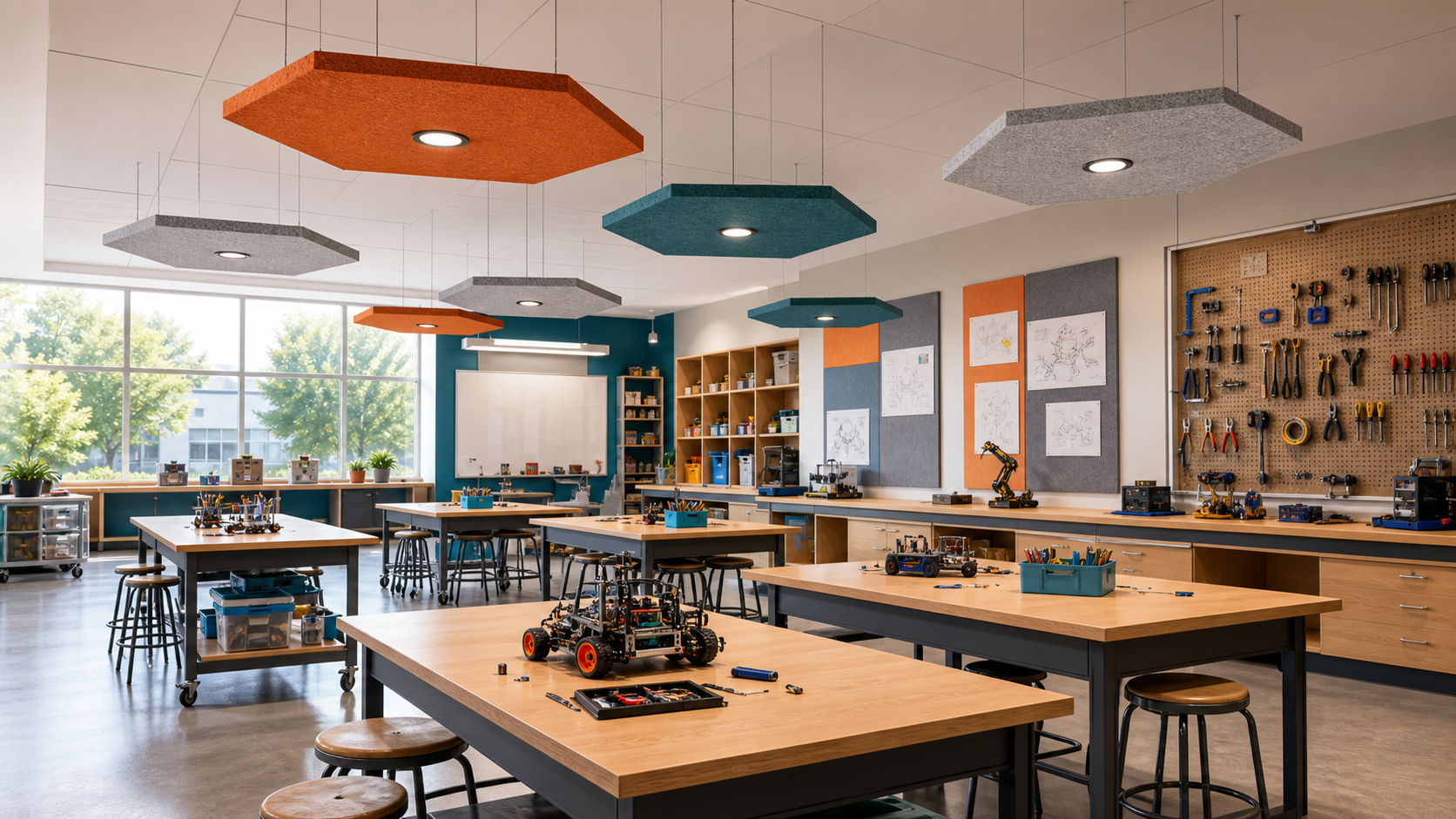
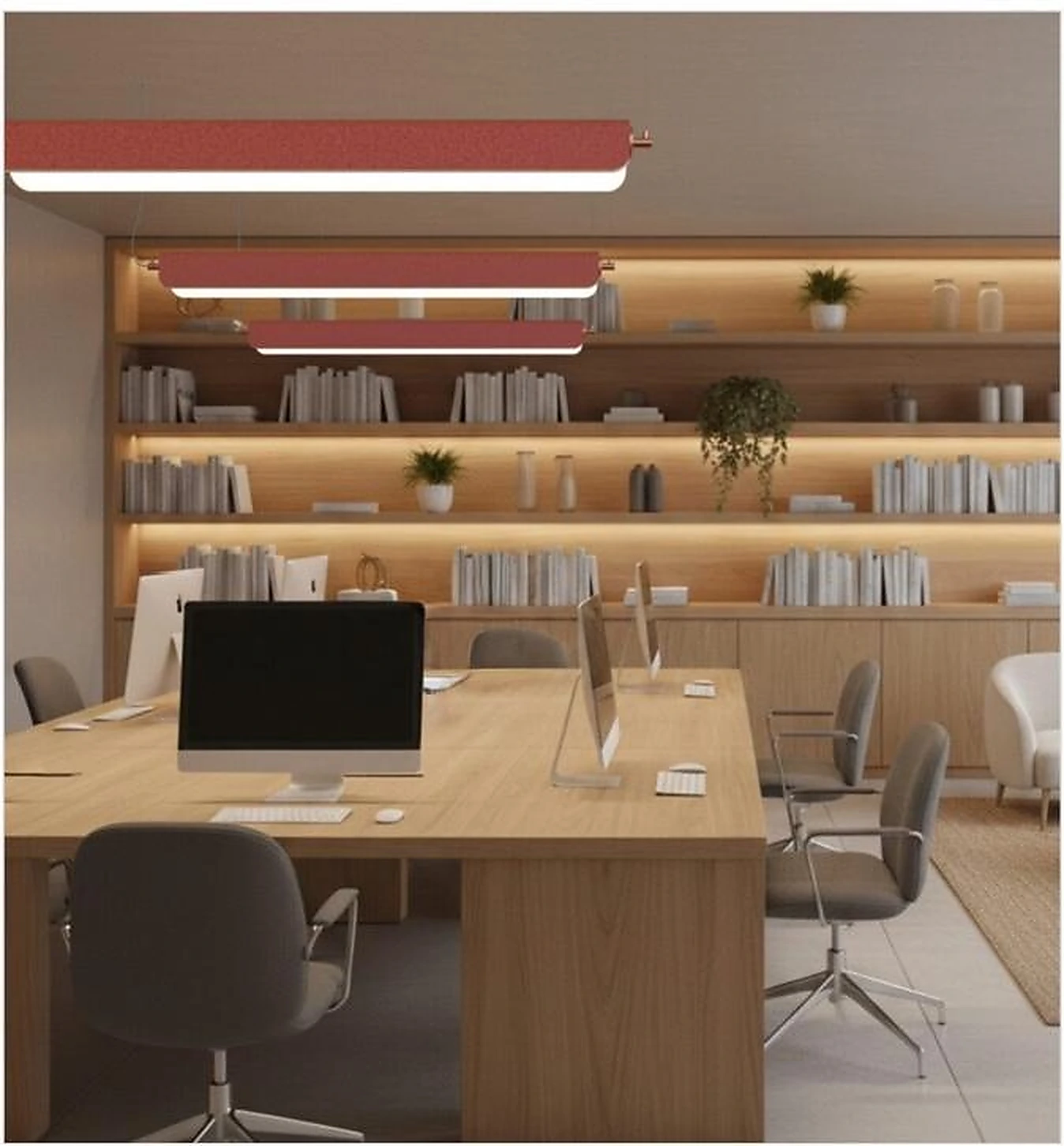
For PET felt acoustic lighting, the lesson is especially relevant. A fixture is not only a lamp and not only an absorber; it is a ceiling or pendant product that must satisfy visual design, lighting performance, acoustic intent, installation practicality and material expectations at the same time.
Impact on Acoustic Lighting
For acoustic lighting suppliers, the impact is a higher documentation bar. Product teams should be ready to explain material composition, acoustic purpose, test context, fixture thickness or surface area, light output, CCT, driver options, mounting method and project limitations in a way that specifiers can trust.
For B2B project buyers, this paper supports a more disciplined RFQ process. Teams should ask suppliers for application guidance, comparable acoustic evidence, lighting specifications, fire or compliance documents where relevant, sample approval and installation details before treating a sustainable acoustic fixture as building-ready.
Apply This Trend
Need acoustic lighting options for a current project?
Send drawings, room type, target quantity, PET felt color, CCT and dimming needs. FLOSEEK can recommend project-ready acoustic lighting options.