Industry Source
Groundbreaking binder reduces the life cycle embodied carbon of Troldtekt® acoustic panels by 46%
Published: September 3, 2026
View original sourceNews Summary
Troldtekt announced on September 3, 2026 that it has introduced Troldtekt LEC, a lower-embodied-carbon binder for its wood-wool acoustic panels. The manufacturer says the new option delivers 46% lower life-cycle embodied carbon than its traditional white-cement-based panels and 15% lower than its FUTURECEM™ option. It describes the binder as patent pending and developed with IKON, Kingspan Group’s innovation centre.
According to the company, the binder replaces traditional cement with a mix of mineral raw materials and recycled by-products. Troldtekt says panels made with the LEC binder contain 25% secondary material, retain the acoustic, durability and fire-performance standards associated with its current panels, and are offered in a light greige tone as well as unpainted or painted versions. The LEC option is currently available in Denmark and Germany.
This is a supplier announcement, not an independent product comparison, installed-project result or whole-building carbon assessment. The reported reduction is a comparison within Troldtekt’s stated product range and assumptions; the announcement does not provide project-specific quantities, transport, installation waste, room-acoustic measurements, lighting data or a final building life-cycle calculation. Buyers should use the applicable product documentation and project methodology when comparing alternatives.
- Troldtekt published its LEC binder announcement on September 3, 2026.
- The manufacturer says its wood-wool acoustic panels with the new LEC binder have 46% lower life-cycle embodied carbon than its white-cement-based panels and 15% lower than panels based on FUTURECEM™.
- Troldtekt says the patent-pending mineral binder uses proven mineral raw materials and recycled by-products, with secondary material making up 25% of panels made with it.
- The company says the LEC version is available in Denmark and Germany and retains the acoustic, durability and fire-performance standards of its existing panels.
FLOSEEK Interpretation
For FLOSEEK, this is a reminder to bring embodied-carbon evidence into the acoustic-finish brief early, rather than treating it as a late substitution exercise. Record the room use, acoustic objective, available wall and ceiling area, finish palette, module and joint layout, substrate and fixing requirements, fire and cleaning needs, programme, delivery geography and the carbon assessment method the project expects. Then request the version-specific environmental and technical documentation needed for a like-for-like comparison.
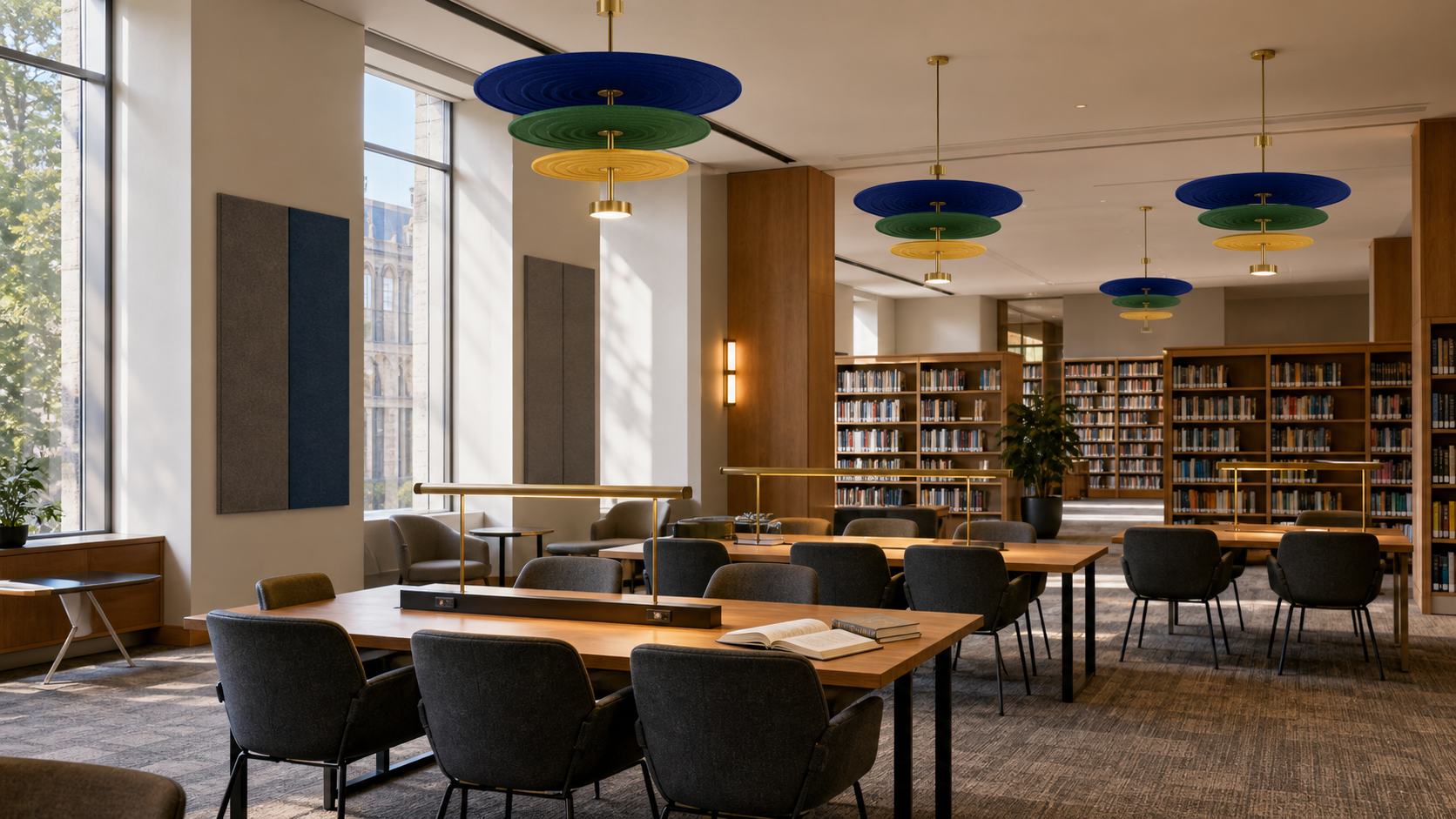
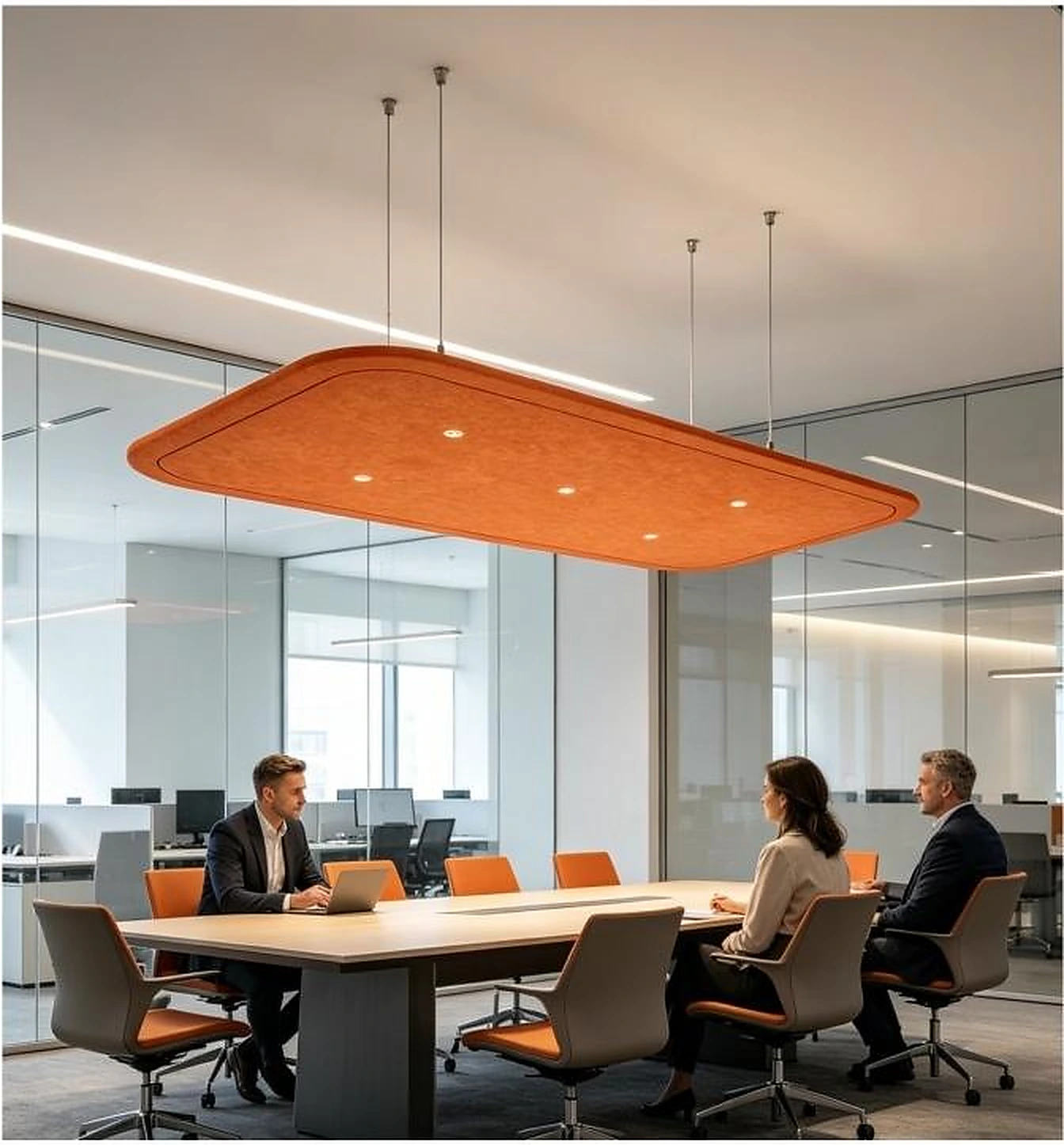
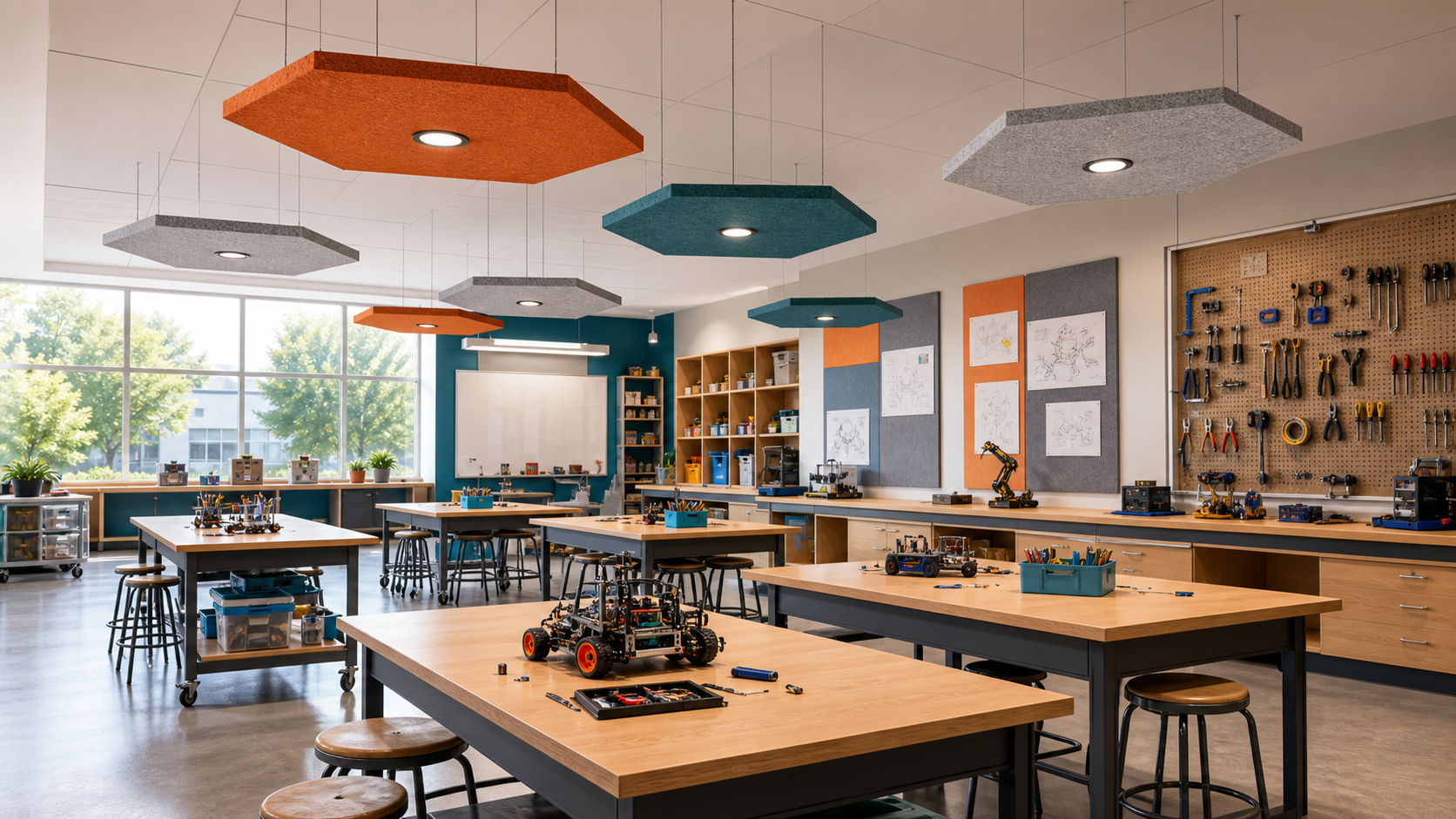
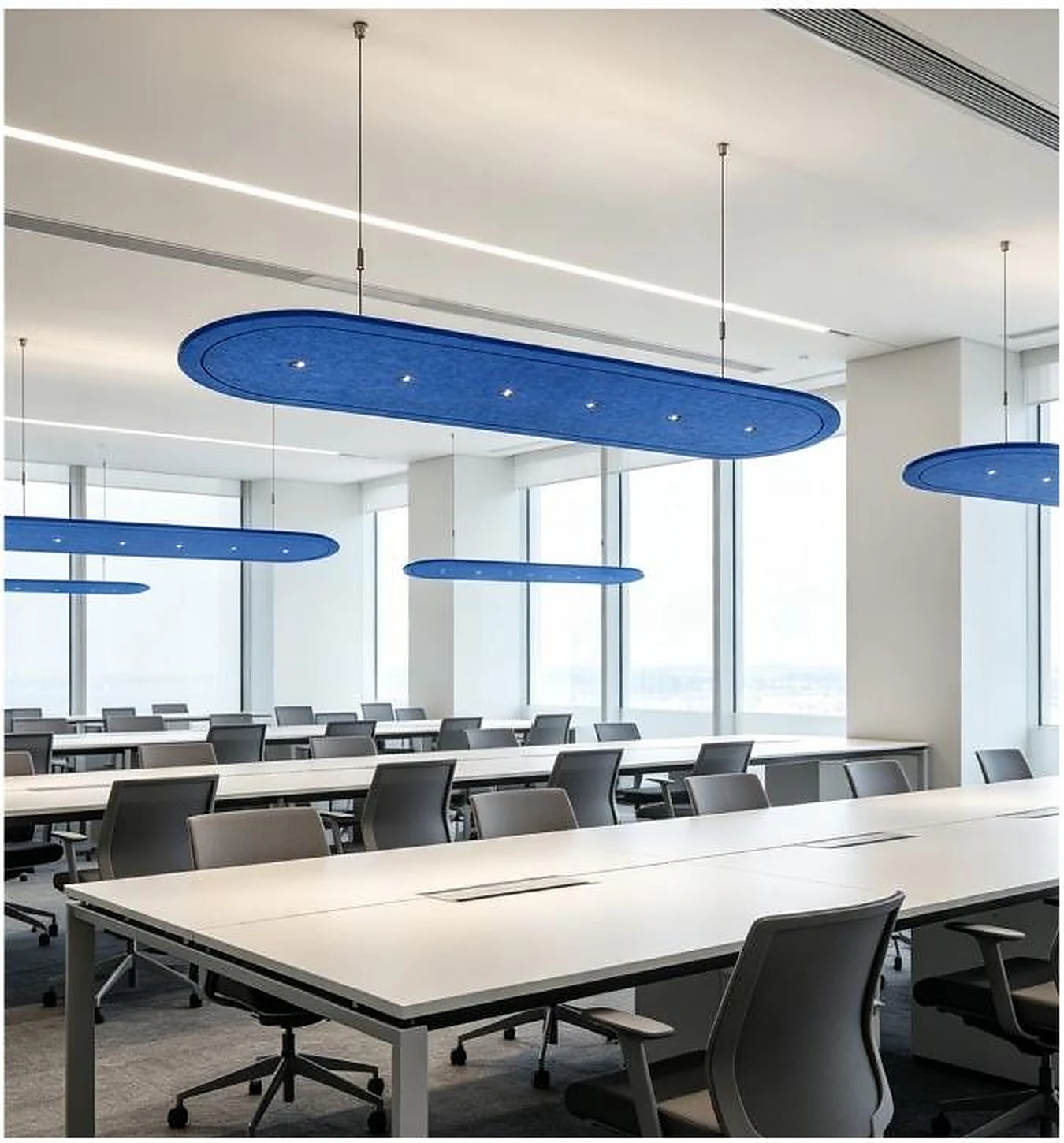
Acoustic lighting can add illumination and sound-absorbing surface in the same ceiling zone, but its material and electrical components must be assessed on their own documented basis. Coordinate acoustic panels, luminaires, HVAC, sprinklers, access panels and suspension points on one reflected-ceiling and services plan. Confirm product-specific acoustic data, photometry, glare, controls, mounting loads, maintenance access and the relevant environmental documentation before treating a concept as a performance package.
Impact on Acoustic Lighting
For suppliers, a lower-carbon product claim is most useful when it arrives with clear comparison boundaries and specification information. Provide the relevant environmental declarations or calculation basis, product version, manufacture and availability region, finish options, acoustic test data, fire documentation where applicable, dimensions, weights, fixing details, lead times and maintenance guidance. For acoustic-lighting schemes, pair that evidence with photometry, glare, dimming, electrical and suspension information so design teams can coordinate adjacent systems without gaps.
For B2B buyers, ask each acoustic and lighting supplier to identify the precise product configuration being compared and the evidence behind its carbon figure. Include the room’s acoustic and lighting requirements, expected quantities and waste allowance, ceiling and service constraints, finish and maintenance criteria, delivery location, programme and project carbon methodology in the tender. That makes it easier to assess a lower-carbon acoustic-panel option alongside acoustic lighting and the other coordinated elements of a commercial interior.
Apply This Trend
Need acoustic lighting options for a current project?
Send drawings, room type, target quantity, PET felt color, CCT and dimming needs. FLOSEEK can recommend project-ready acoustic lighting options.