Industry Source
Vetrospace at Orgatec 2026: Office pods don’t need to be sweatboxes.
Published: October 1, 2026
View original sourceNews Summary
Vetrospace published an October 1, 2026 announcement for its ORGATEC 2026 programme in Cologne, scheduled for October 27–30. The Finnish office-pod manufacturer says it will demonstrate Cognitive Air™, its approach to CO₂-controlled ventilation, filtration and airflow, alongside talks and customer-project discussions. This is a supplier’s event notice and product-positioning material, not an independent evaluation of office booths or a completed-project performance report.
The programme includes two October 29 sessions on acoustic performance of office booths, led by Dr. Valtteri Hongisto of Turku University of Applied Sciences’ Acoustics Laboratory. Vetrospace says the sessions will explain speech-level reduction, A+ to D office-booth classifications and how to interpret ISO 23351 results. The company also says the presentation will introduce ISO 23351-2:2026 for testing acoustic performance outside laboratory conditions in real workplace environments; the event page itself does not reproduce the standard or publish a test method or result.
Vetrospace frames the stand around the relationship between acoustic privacy and conditions inside compact workspaces, particularly air quality and thermal comfort. It does not identify a tested booth variant, occupant load, measurement duration, sound sources, background noise, ventilation duty, temperature range, lighting conditions, controls sequence or independent before-and-after evidence. Buyers should therefore treat the announcement as a prompt to ask better specification and verification questions, not as proof of a result in another workplace.
- Vetrospace published its ORGATEC 2026 programme on October 1, 2026. The company says it will exhibit in Cologne from October 27–30 and demonstrate its Cognitive Air™ approach to CO₂-controlled ventilation, filtration and airflow in office pods.
- The announcement lists two October 29 sessions by Dr. Valtteri Hongisto of Turku University of Applied Sciences’ Acoustics Laboratory on interpreting ISO 23351 office-booth acoustic performance, including speech-level reduction and the A+ to D classifications.
- Vetrospace says the presentation will introduce ISO 23351-2:2026, which it describes as enabling acoustic performance to be tested outside the laboratory in real workplace environments. The page does not publish a standard text, test report, field result, booth configuration or independently verified outcome.
- The exhibitor says its stand will include live demonstrations and customer-project discussions. It does not provide measured acoustic, air-quality, thermal, lighting, energy, occupancy, installation, pricing or availability data for a specific commercial project.
FLOSEEK Interpretation
For FLOSEEK buyers, the timely issue is to prevent an office pod from being specified as a single ‘privacy’ item. Define the intended conversations and focus work, occupancy and duration, speech-privacy objective, nearby noise and HVAC conditions, ceiling and services constraints, ventilation and thermal criteria, daylight and lighting needs, power and controls, accessibility, cleaning, maintenance and the approval method. This turns a compact enclosure into a coordinated workplace element rather than a standalone furniture purchase.
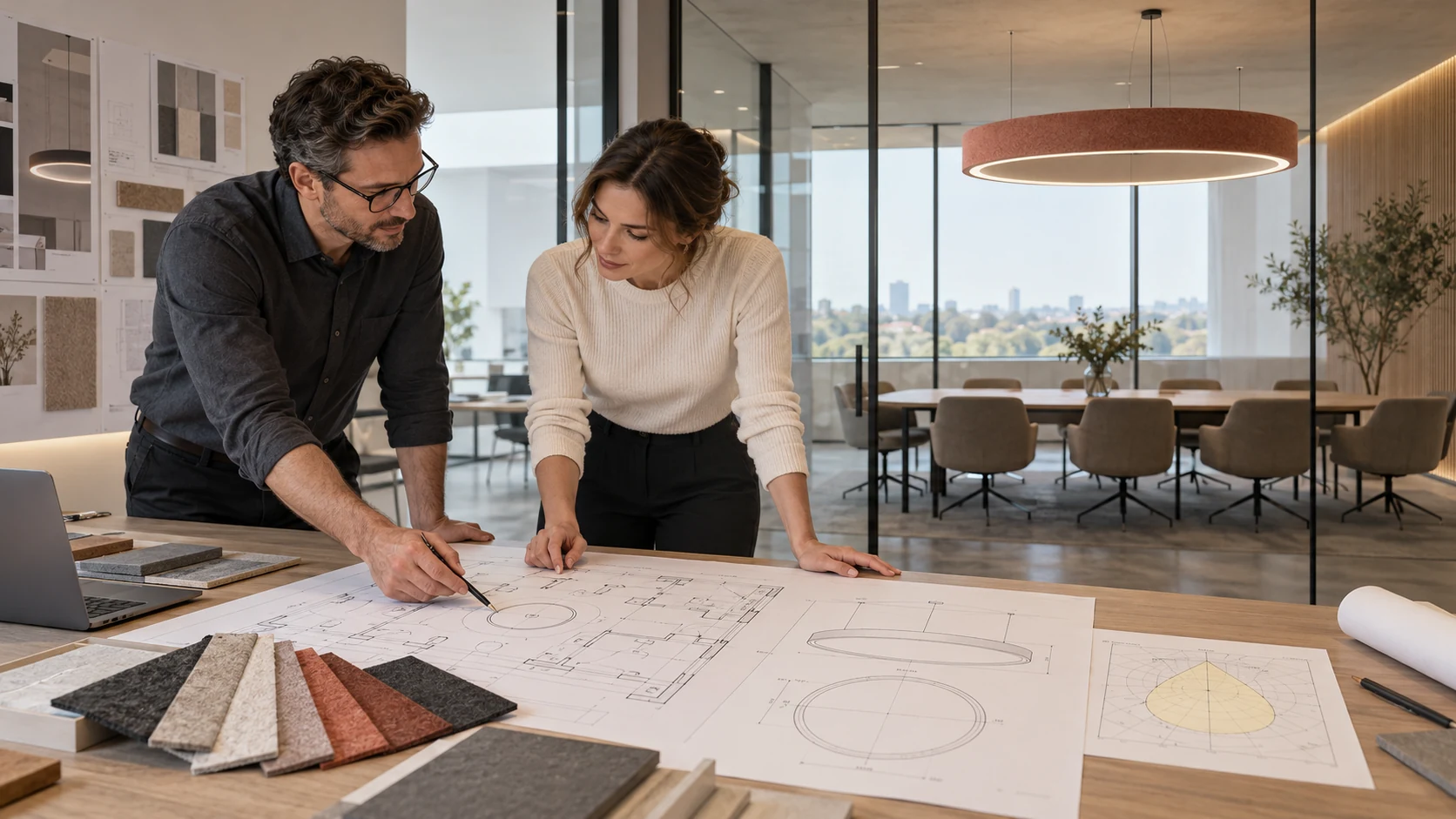
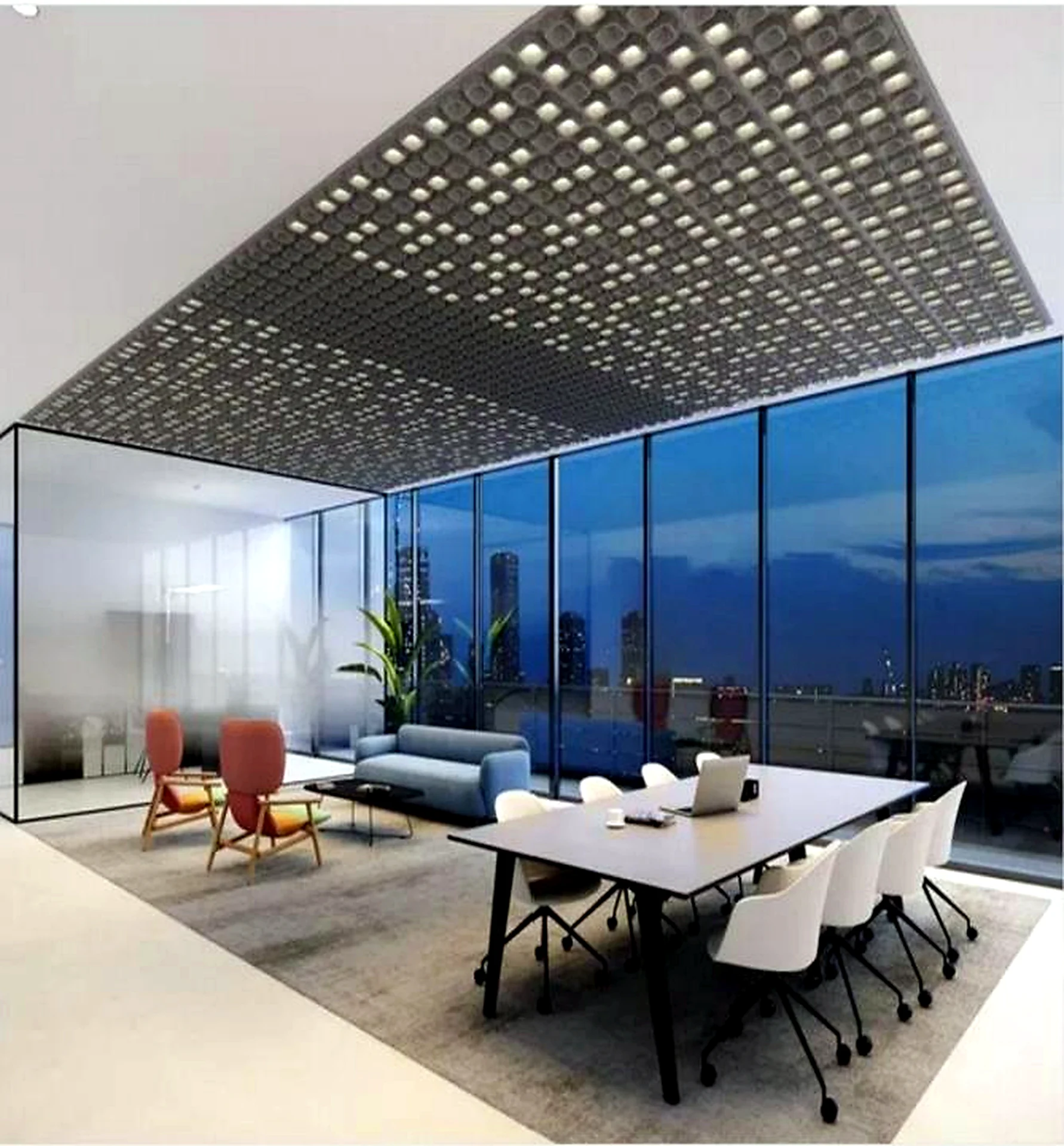
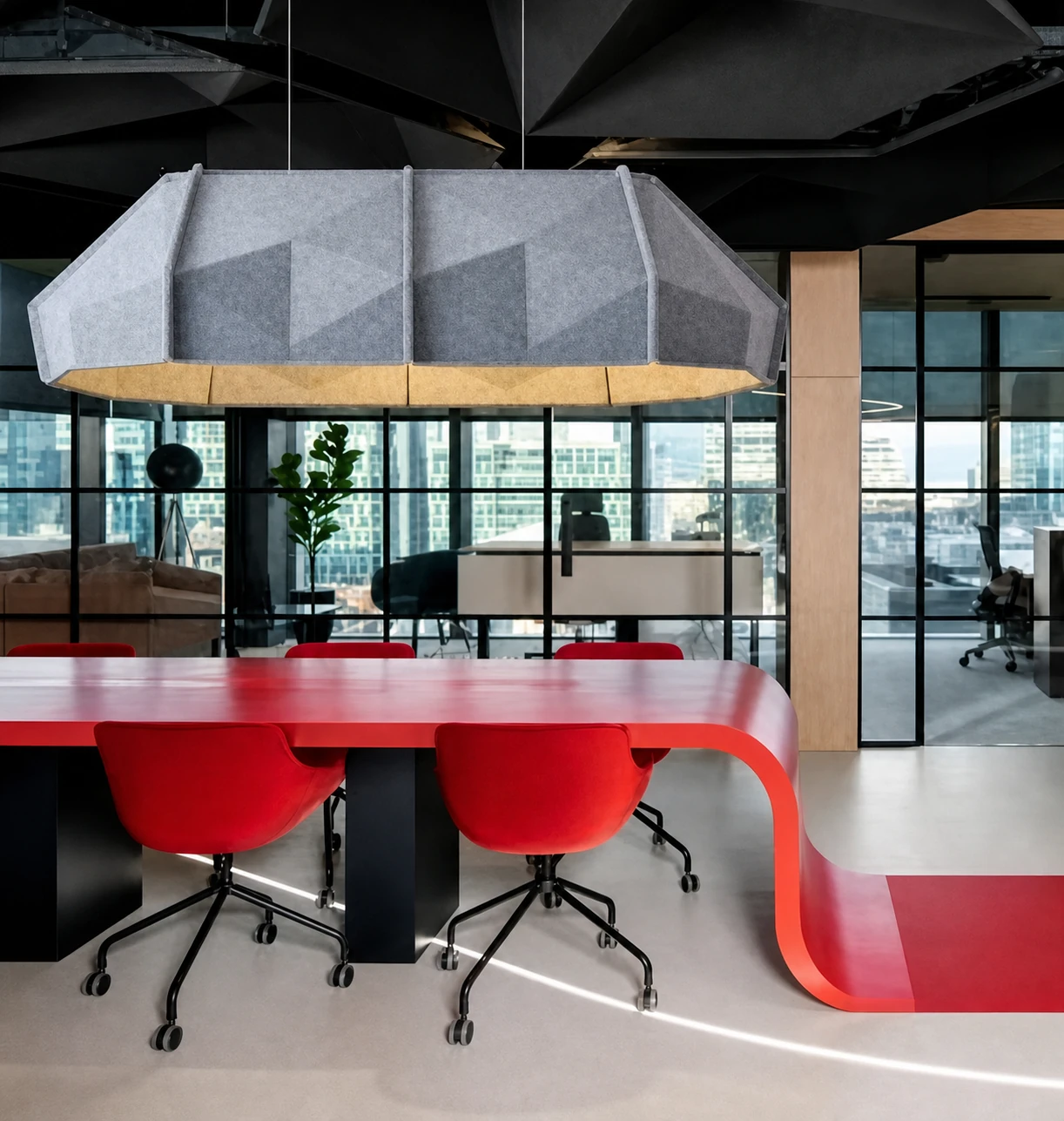
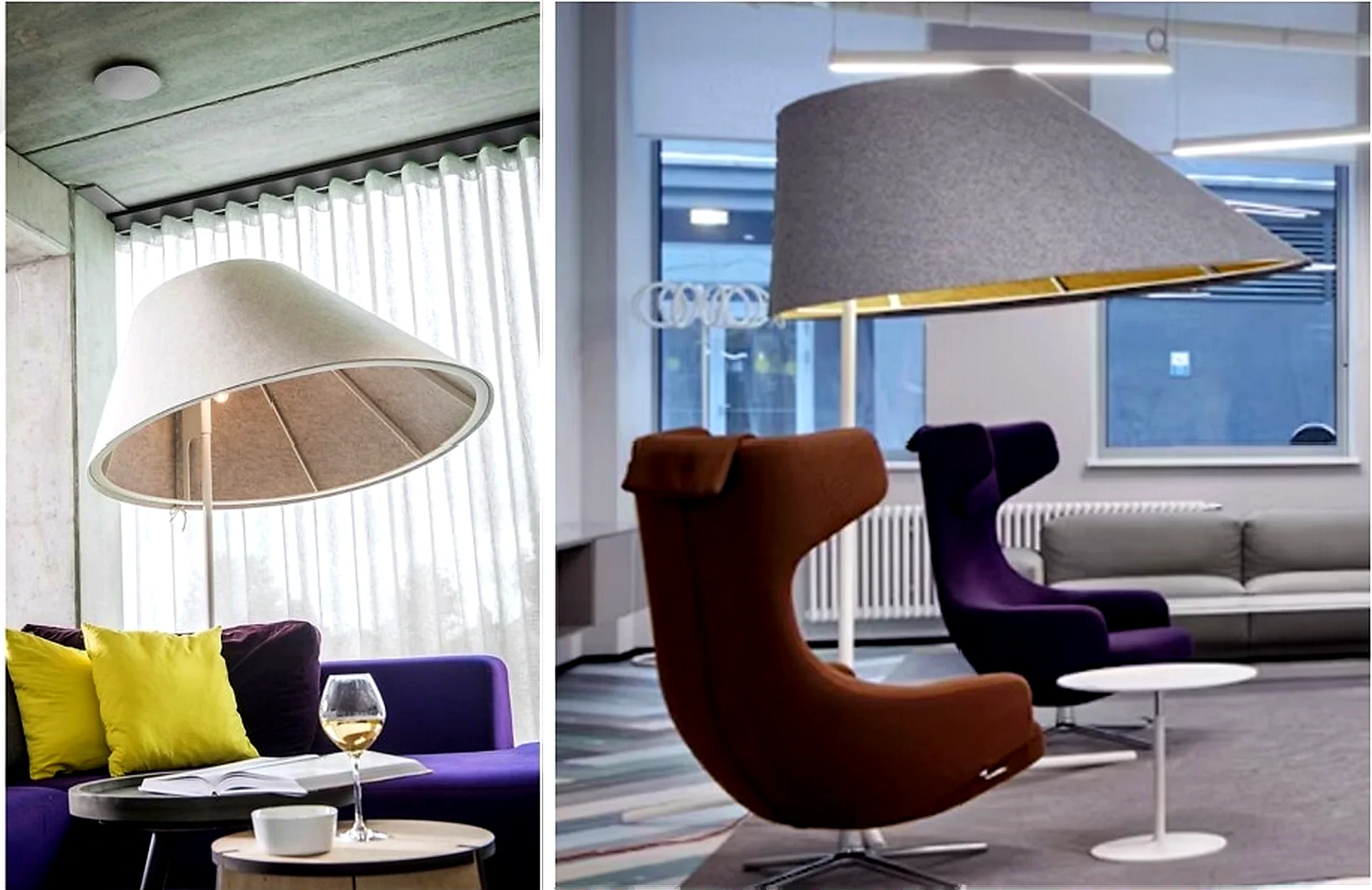
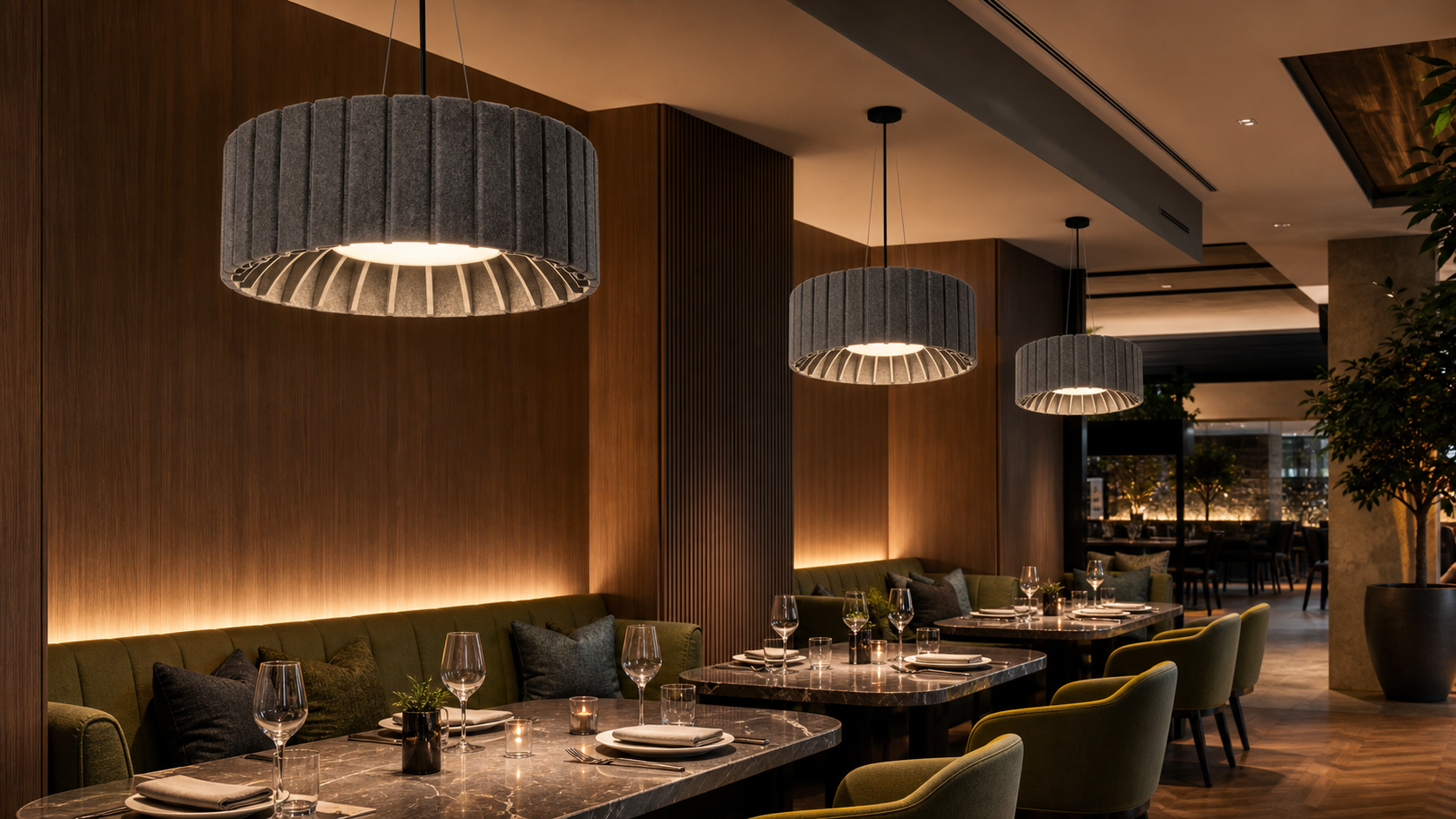
An acoustic luminaire can add absorptive surface and illumination around a pod zone, but this announcement neither evaluates lighting nor proves an acoustic-lighting, air-quality, comfort or work-performance outcome. Ask separately for the chosen booth’s configuration-specific acoustic evidence and test conditions, ventilation and thermal documentation, plus the luminaire’s acoustic-test report, photometry, glare information, mounting, electrical and controls data. The responsible project team should check those inputs against the actual room and then agree a commissioning or field-verification plan.
Impact on Acoustic Lighting
For suppliers, the programme highlights the value of test results that are interpretable at the point of purchase. Submittals should name the exact booth configuration, acoustic metric and test condition, intended occupancy and ventilation basis, electrical and controls needs, dimensions, loads, access and service requirements, finishes, cleaning and maintenance. When an acoustic-lighting element is proposed, keep its tested absorber assembly and mounting condition distinct from its photometry and glare documentation, and do not turn product data into a blanket workplace prediction.
For B2B buyers, request a side-by-side package for office pods, surrounding acoustic treatment and lighting. It should state the zone use, privacy and background-noise criteria, occupancy and operating time, air and thermal targets, room geometry, services and access restrictions, light and visual-comfort objectives, budget, programme and acceptance process. Require every bidder to distinguish manufacturer claims, standard-based product results and the project-specific calculations or measurements still needed before handover.
Apply This Trend
Need acoustic lighting options for a current project?
Send drawings, room type, target quantity, PET felt color, CCT and dimming needs. FLOSEEK can recommend project-ready acoustic lighting options.