Quick answer
Acoustic lighting helps control reflected sound already inside a room. Soundproofing helps reduce sound travelling between spaces.
They solve different problems. Neither is a replacement for the other.
| If your problem is… | You are mainly dealing with… | Start by looking at… |
|---|---|---|
| The room sounds echoey or harsh. | Sound is reflecting inside the room. | Acoustic lighting, panels, baffles, softer finishes. |
| Guests cannot hear each other at a restaurant table. | Speech and activity noise are building up in the dining room. | Room-acoustic treatment; ceiling-based acoustic lighting can help. |
| A video call sounds hollow in the meeting room. | Hard surfaces are reflecting voices and loudspeaker sound. | Absorption near the table plus a suitable AV setup. |
| We can hear people through the wall. | Sound is crossing a building boundary. | Sound insulation: wall, ceiling void, door, glazing and seals. |
| Sound leaks under the door. | Air leakage is carrying sound. | Door set, threshold and perimeter sealing. |
| Traffic, bass or machinery enters the room. | Sound or vibration is entering through the building envelope. | Glazing, structure, mechanical and vibration-control measures. |
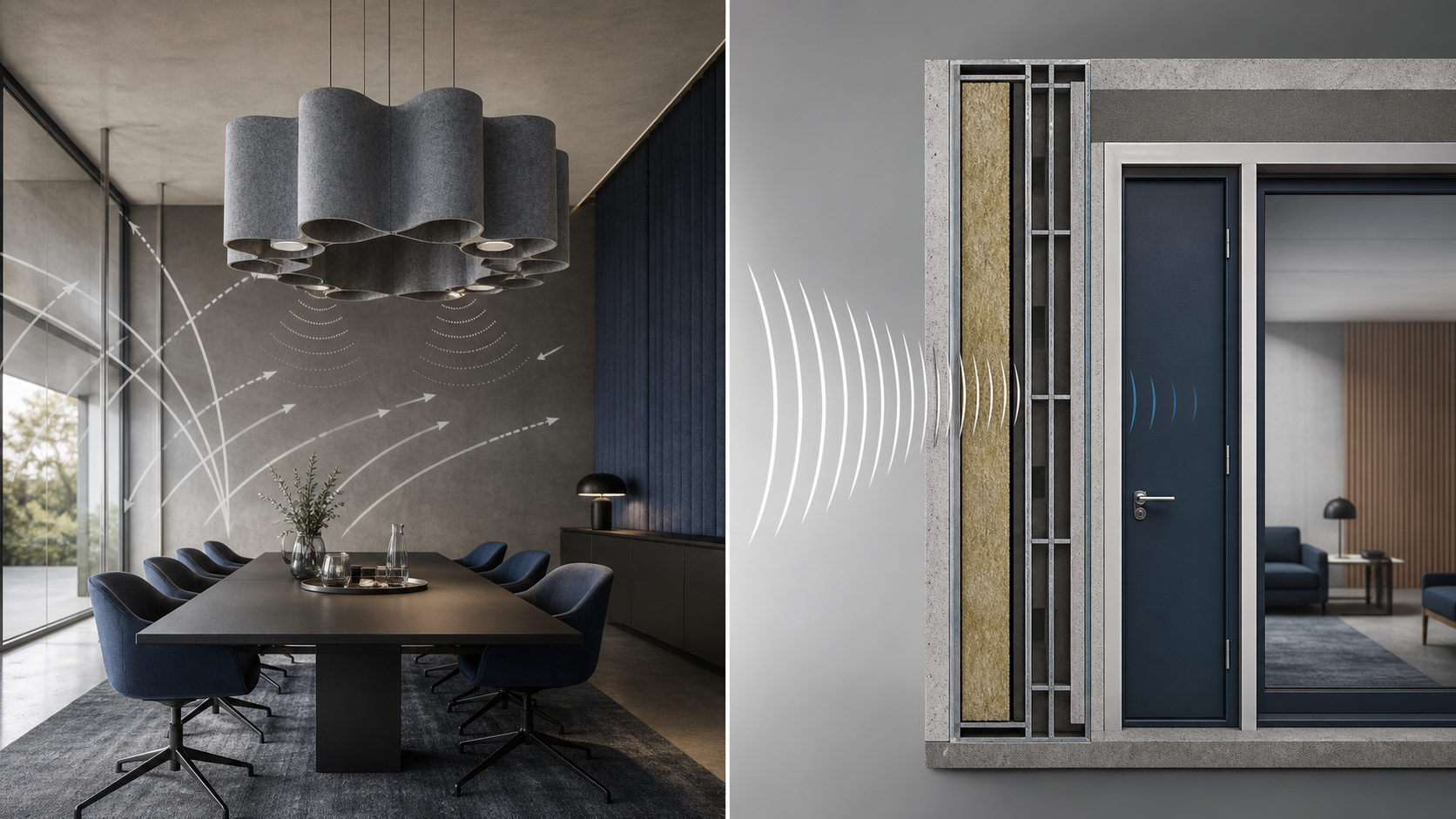
Acoustic lighting is like putting soft towels inside a room: it catches some of the sound that would keep bouncing around. Soundproofing is like improving the walls, doors and windows: it makes the room boundary harder for sound to pass through.
A towel can soften an echo. It cannot stop someone outside hearing through an open doorway. That single distinction prevents a lot of costly, disappointing specifications.
What acoustic lighting actually does
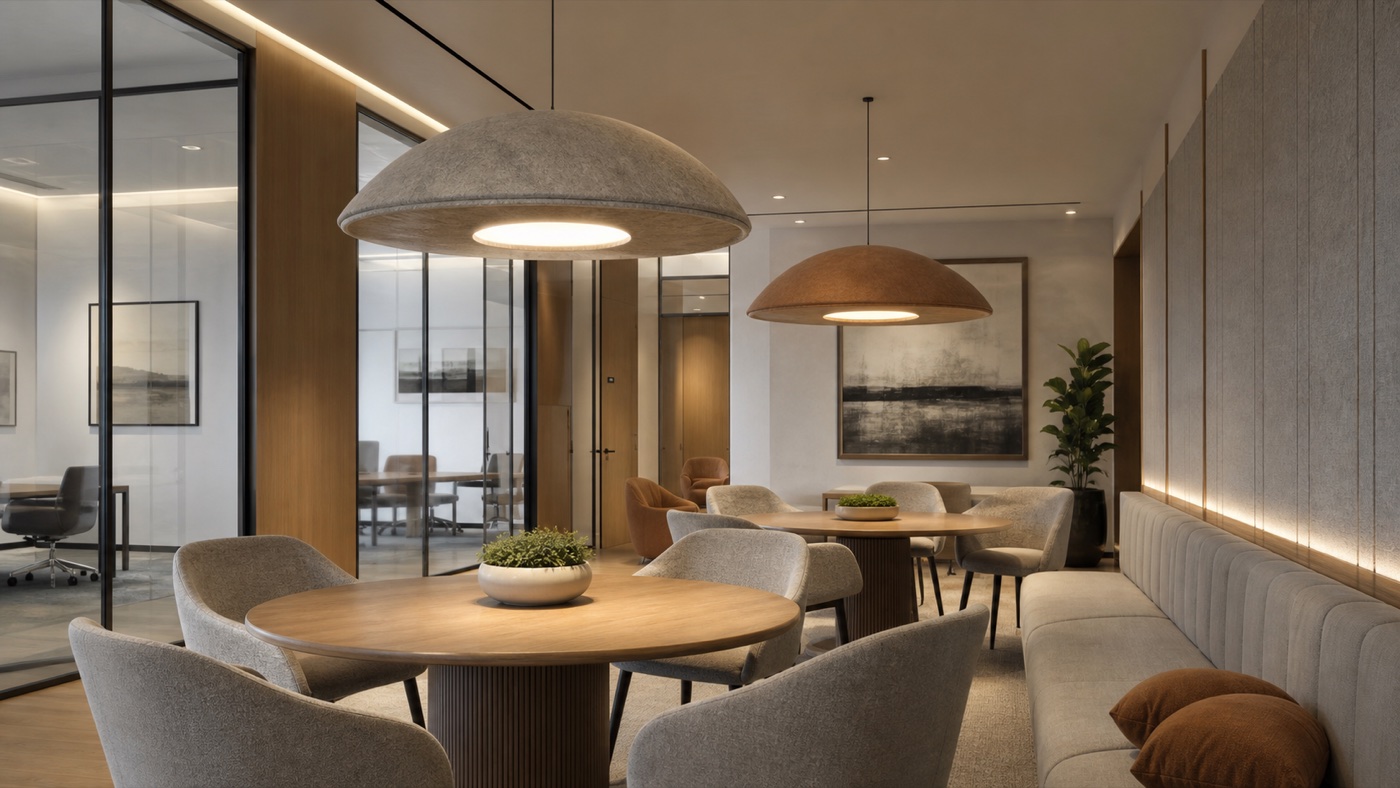
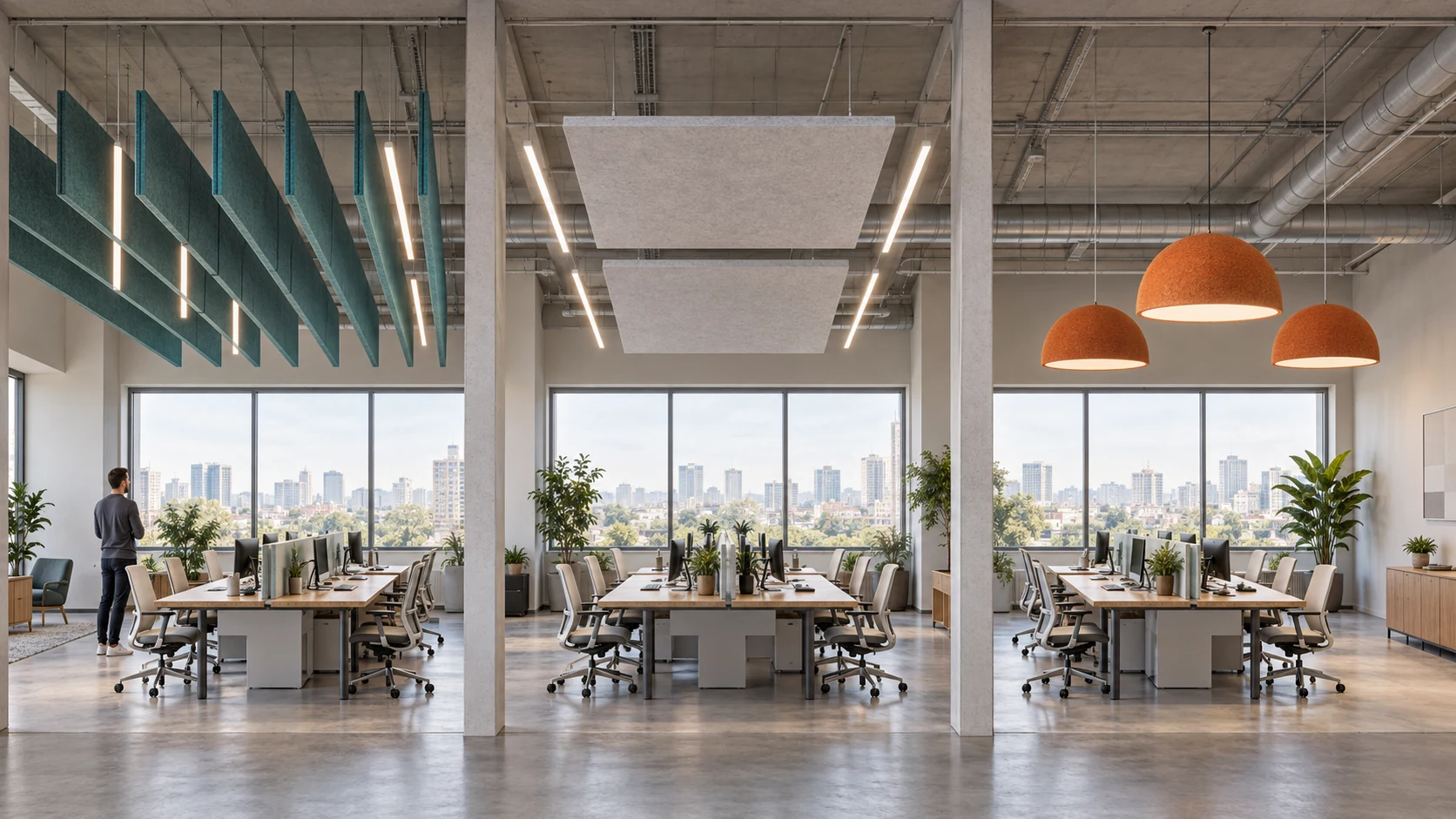
Acoustic lighting combines an LED fixture with exposed sound-absorbing material, often PET felt. The lighting system illuminates the space; the felt body, baffle or panel adds a soft surface in the ceiling zone.
In a hard room, sound does not disappear the moment somebody stops talking. It ricochets from glass, concrete, tile, tables and exposed ceilings. Those delayed reflections make voices less clear and make a busy space feel louder than it should.
Think of the room as a squash court. Hard surfaces keep the ball in play. Absorptive material gives it somewhere to lose energy.
A well-planned acoustic lighting installation can contribute to:
- less sharp echo and harshness;
- clearer face-to-face conversation at normal speaking levels;
- more comfortable sound around desks, dining tables and meeting areas;
- a calmer overall room character without giving up ceiling lighting.
It does not create silence, and its benefit depends on the room volume, existing finishes, total absorptive area and fixture placement. The U.S. General Services Administration notes that reverberation time is related to both a room’s volume and its total sound absorption.
What acoustic lighting cannot do
Acoustic lighting should not be sold as a soundproofing product. It cannot reliably stop sound travelling:
- through a lightweight partition;
- above a wall through a shared ceiling void;
- through an unsealed door or service opening;
- through glazing, ducts, floors or structural connections;
- from an adjacent tenant, street or machine room.
If normal conversation travels from Room A to Room B, the central problem is a transmission path in the building. Pendant lights can make Room A less reverberant. They cannot rebuild the wall between the rooms.
Sound absorption vs sound insulation: the essential difference
Sound absorption controls sound inside the room
Sound absorption is about what happens after a voice, chair movement, plate or loudspeaker sound has entered the room. Acoustic lighting, wall panels, ceiling baffles and ceiling clouds, carpets and curtains all help reduce reflections. Their shared job is to shorten the sound’s “tail” in the room.
Sound insulation limits sound between rooms
Sound insulation is about the boundary. Typical measures include heavier or layered walls, insulation inside partitions, decoupled assemblies, sealed penetrations, acoustic doors, upgraded glazing and vibration isolation for equipment.
Sound behaves a little like water: it finds the easiest route. A high-performing wall still disappoints if sound simply travels around it through a door gap, duct or ceiling void.
Start with the sound path, not the product name
The word “acoustic” covers a wide territory: absorption, insulation, reverberation, speech privacy, vibration and sound masking. That is why a product-first conversation often goes wrong.
Where is the unwanted sound coming from, and where is it going?
If it is bouncing around the same room, acoustic lighting may be relevant. If it is crossing a wall, door, window, ceiling or floor, soundproofing should lead the discussion.
Restaurant example: the same venue can have two different problems
A busy restaurant often has tile or polished concrete, glass, hard tables, an exposed ceiling, many voices and tableware noise. When guests say, “We cannot hear the person across the table,” the problem is usually internal reflections and crowd noise building up in the dining room.
In that situation, ceiling-based acoustic lighting can be a useful part of the treatment: it adds absorption above occupied tables without taking up customer floor area or scarce wall space. For a wider treatment plan, see our restaurant and hospitality applications.

Now change the complaint: “Residents upstairs can hear the music late at night.” That is mainly transmission. The project may need a review of ceiling construction, structure-borne vibration, loudspeaker placement, gaps and ductwork. The restaurant is the same; the solution is not.
Meeting rooms: better calls and better confidentiality are separate goals
Problem one: the room sounds hollow
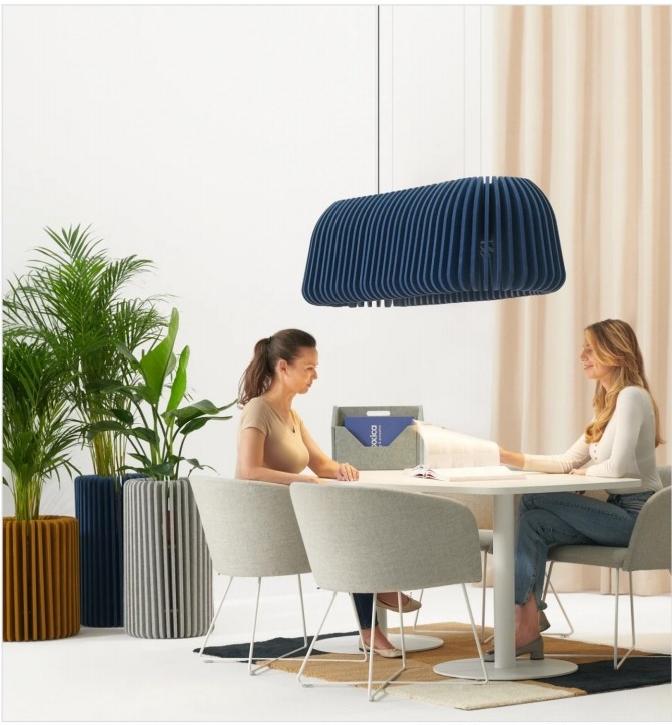
Glass walls, a hard table and an exposed ceiling can create strong reflections. Acoustic lighting above the table can add a softer surface where lighting is already needed. This may help speech sound less sharp on calls, alongside sensible microphone and loudspeaker placement.
Problem two: people outside can understand the conversation
This is a speech-privacy and transmission issue. It may require better glass, door seals, a higher partition, treatment above the partition or sound masking. An acoustic pendant can help the room feel calmer, but it cannot guarantee confidentiality.
For ceiling-zone product ideas, explore office and meeting room applications and the guide to acoustic pendant lighting for offices and meeting rooms.
Acoustic lighting and speech privacy are not the same thing
Reducing reverberation can make an open office feel less noisy. That does not automatically make distant conversations private. In fact, clearer speech nearby can sometimes be easier to understand.
Speech privacy normally comes from a combination of distance, workstation layout, barriers, absorption, suitable background sound, sound masking and enclosed rooms with adequate insulation.
The GSA describes sound masking as controlled, low-level background sound that makes ordinary conversation less intelligible to casual listeners. It is a separate tool from absorption. For an open-plan office, acoustic lighting can be one useful layer, not a stand-alone privacy promise.
Where acoustic lighting is most useful
Acoustic lighting is particularly useful when a project needs both light and absorption in the same ceiling area.
- open offices and coworking spaces with hard worktops, glass and exposed ceilings;
- meeting rooms, especially above the table where lighting is needed anyway;
- restaurants and cafés with busy dining zones but limited free wall area;
- classrooms, libraries and learning commons where speech comfort matters;
- hotel lobbies, receptions and lounges with large hard decorative surfaces.
A linear acoustic light often follows a workstation or classroom layout. A decorative pendant can define a meeting table, reception point or dining zone. Product shape is secondary to the bigger question: how much useful absorptive area is being placed in the room, and where?
Where soundproofing should come first
Prioritise sound insulation or building-envelope work when the main complaint is:
- “I can hear the next room.”
- “Sound leaks under the door.”
- “Traffic noise comes through the window.”
- “Music is disturbing the tenant above.”
- “This meeting room is not confidential.”
- “The mechanical room can be heard in the office.”
- “The floor or structure vibrates when the equipment runs.”
A soundproofing solution is often only as good as its weakest gap. When this is the issue, involve an acoustic consultant, architect or building specialist to inspect the full path, not just the visible wall.
Can a project need both?
Yes. Many commercial interiors need a room-acoustic plan and a sound-insulation plan.
A training room, for example, may need:
- absorption in the room for clearer speech and less echo;
- a wall, ceiling or door upgrade for room-to-room isolation;
- quiet, well-planned HVAC so ducts do not become a shortcut for sound;
- layout or sound masking where speech privacy is important.
It is not “acoustic lighting or soundproofing.” It is using each tool for the job it was designed to do.
What to ask before specifying acoustic lighting
Before approving a PET felt acoustic light for a project, clarify:
- Where is the unwanted sound coming from, and where is it going?
- Is the main complaint echo, speech comfort, video calls, privacy or external noise?
- Which hard surfaces dominate: glass, concrete, tile, timber, metal or an exposed ceiling?
- What are the room size, ceiling height and planned fixture positions?
- Is there a reverberation-time target or a consultant’s acoustic brief?
- Has the complete product been tested, or only a flat sample of felt?
- What lighting performance is required: lumen output, CCT, CRI, glare control and dimming?
- Which fire-related, electrical or project documents are required for the destination market?
For material and document questions, read the PET felt acoustic material lighting guide. For a practical product-selection checklist, see how to choose PET felt acoustic pendant lights.
The honest conclusion
Acoustic lighting can make a room sound better by reducing part of the reflected sound already inside it. It does not soundproof the room.
If a space is echoey, harsh or tiring because of hard finishes and busy activity, acoustic pendant or linear lighting can be a practical part of the treatment plan. If sound is passing through walls, doors, windows, ceilings or service gaps, the project needs sound-insulation measures.
The most successful projects avoid “acoustic” as a vague promise. They identify the sound path first, then combine lighting, absorption, layout, masking and construction where each is genuinely needed.
FAQ
Can acoustic lighting block noise from a neighbour?
No. Acoustic lighting mainly reduces reflected sound inside the room. Noise from a neighbour normally needs better wall, ceiling, door, glazing or sealing performance.
Is PET felt acoustic lighting soundproof?
No. PET felt can provide an absorptive surface, but an acoustic pendant light is not a soundproof barrier between rooms.
Can acoustic lighting make a restaurant quieter?
It can help reduce echo and reflected activity noise inside the dining area, especially when it is one part of a properly sized treatment plan. It will not stop noise travelling to another floor or neighbouring property by itself.
Can acoustic pendant lights improve Zoom or Teams calls?
They can reduce some room reflections around a meeting area, which may make speech sound less harsh. Microphone type, speaker placement, room size and overall treatment still matter.
Does acoustic lighting provide speech privacy in an open office?
Not on its own. It can reduce reverberation, but speech privacy also depends on distance, layout, workstation barriers, background sound, sound masking and enclosed rooms.
Should I use acoustic lighting or acoustic panels?
They often work well together. Acoustic lighting is useful when lighting and absorption are needed in the same ceiling zone. Panels, baffles or ceiling clouds may be needed when the room requires more absorbing area.
Not sure which acoustic problem you are solving?
Send room dimensions, ceiling height, drawings or photos, surface materials, lighting layout and the exact noise complaint. We can help determine whether acoustic lighting is appropriate or whether the project needs a sound-insulation specialist first.
Related reading and product pages
- What Is Acoustic Pendant Lighting? PET Felt Lights Explained
- How to Choose PET Felt Acoustic Pendant Lights
- Acoustic Lighting vs Acoustic Panels
- Acoustic Pendant Lighting for Open Offices and Meeting Rooms
- PET Felt Acoustic Material Lighting Guide
- Acoustic Pendant Lights
- Acoustic Linear Lights
- Office and Meeting Room Applications
- Restaurant and Hospitality Applications
- Custom Acoustic Lighting Solutions
Specify with the real sound problem in mind
Planning a commercial acoustic lighting project?
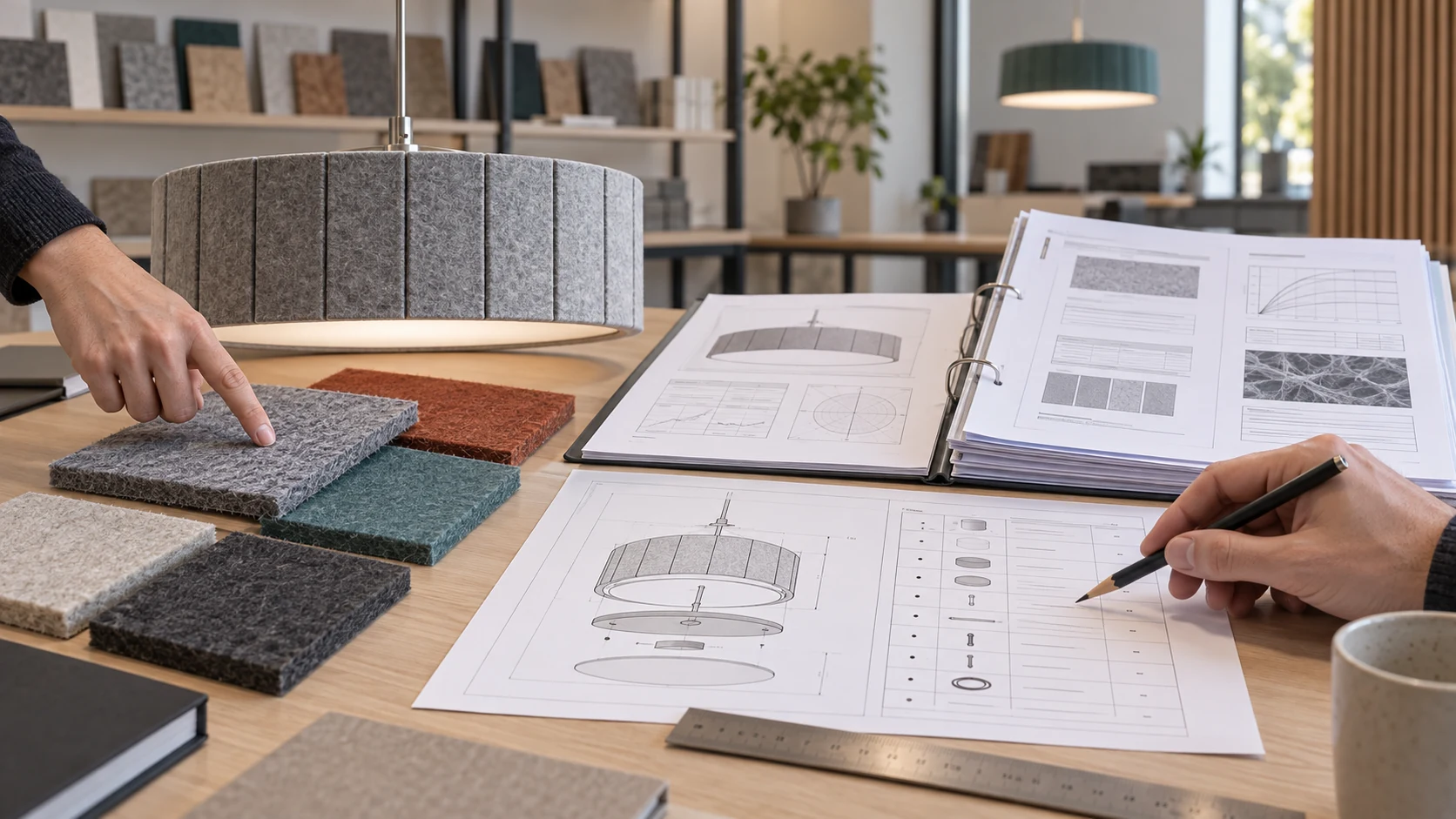
Share the room type, ceiling height, project drawings, lighting requirements and the exact acoustic concern. We can recommend appropriate PET felt acoustic lighting options and explain where wider acoustic treatment is likely to be needed.