Quick Answer
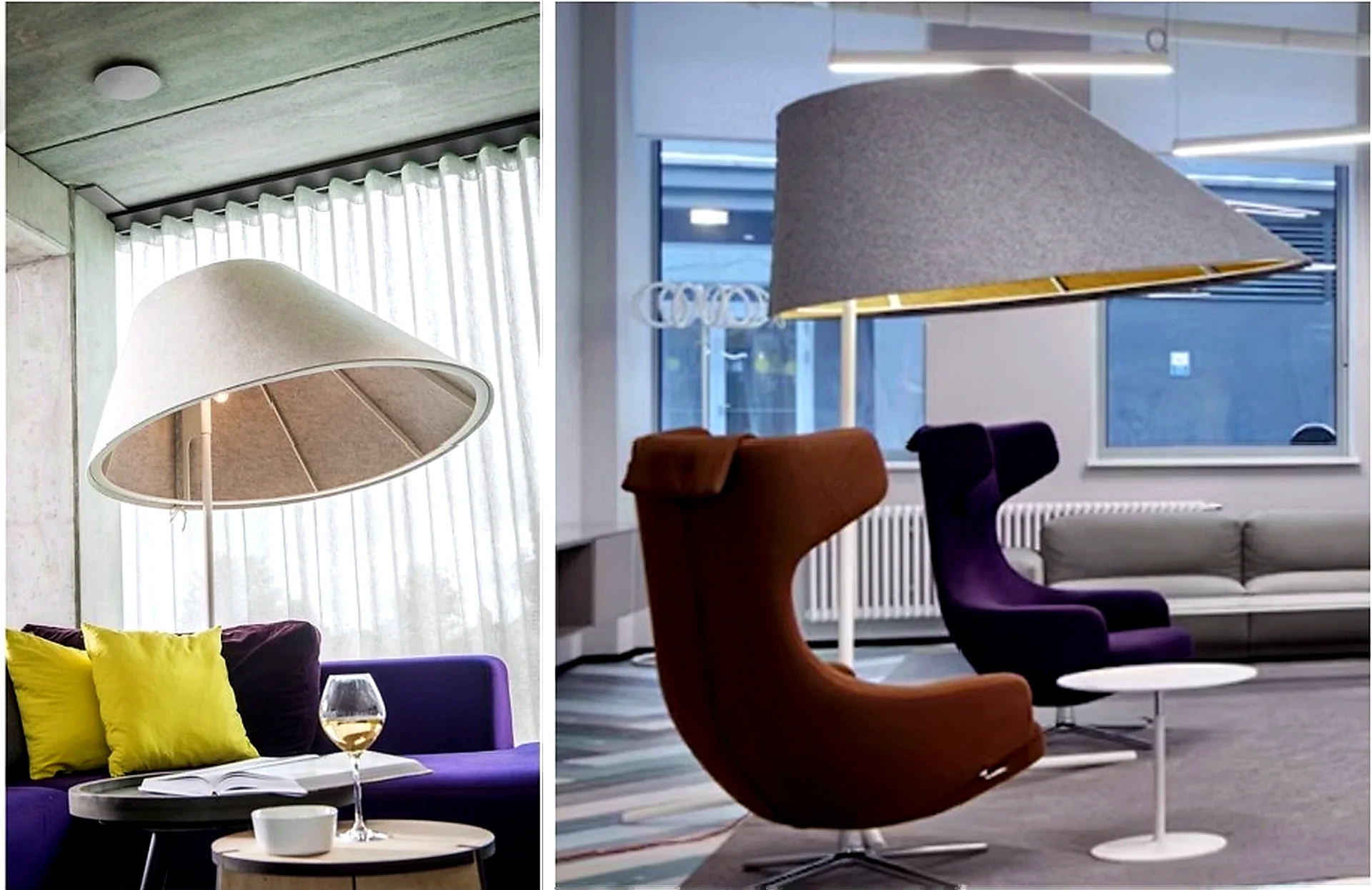
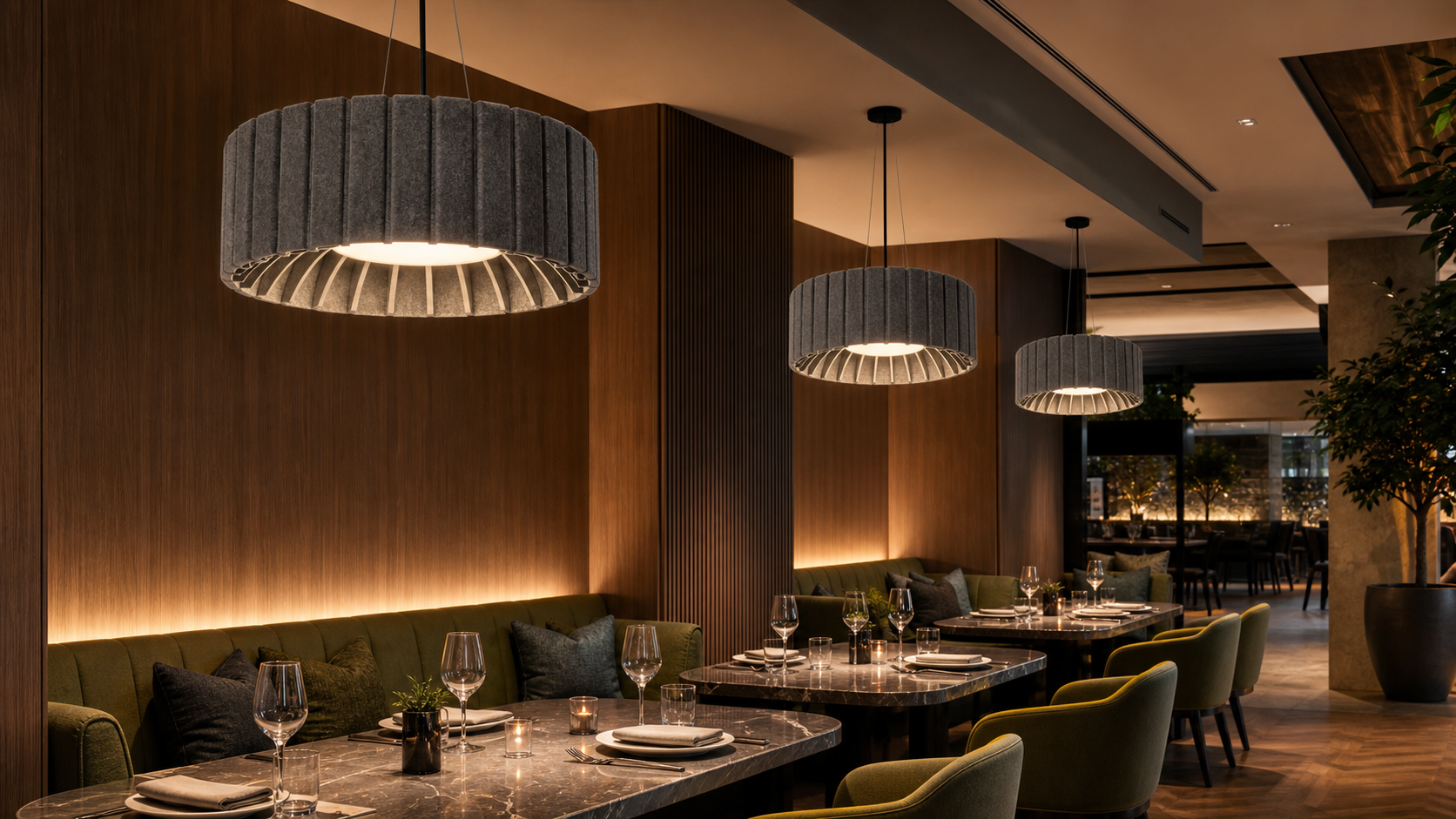
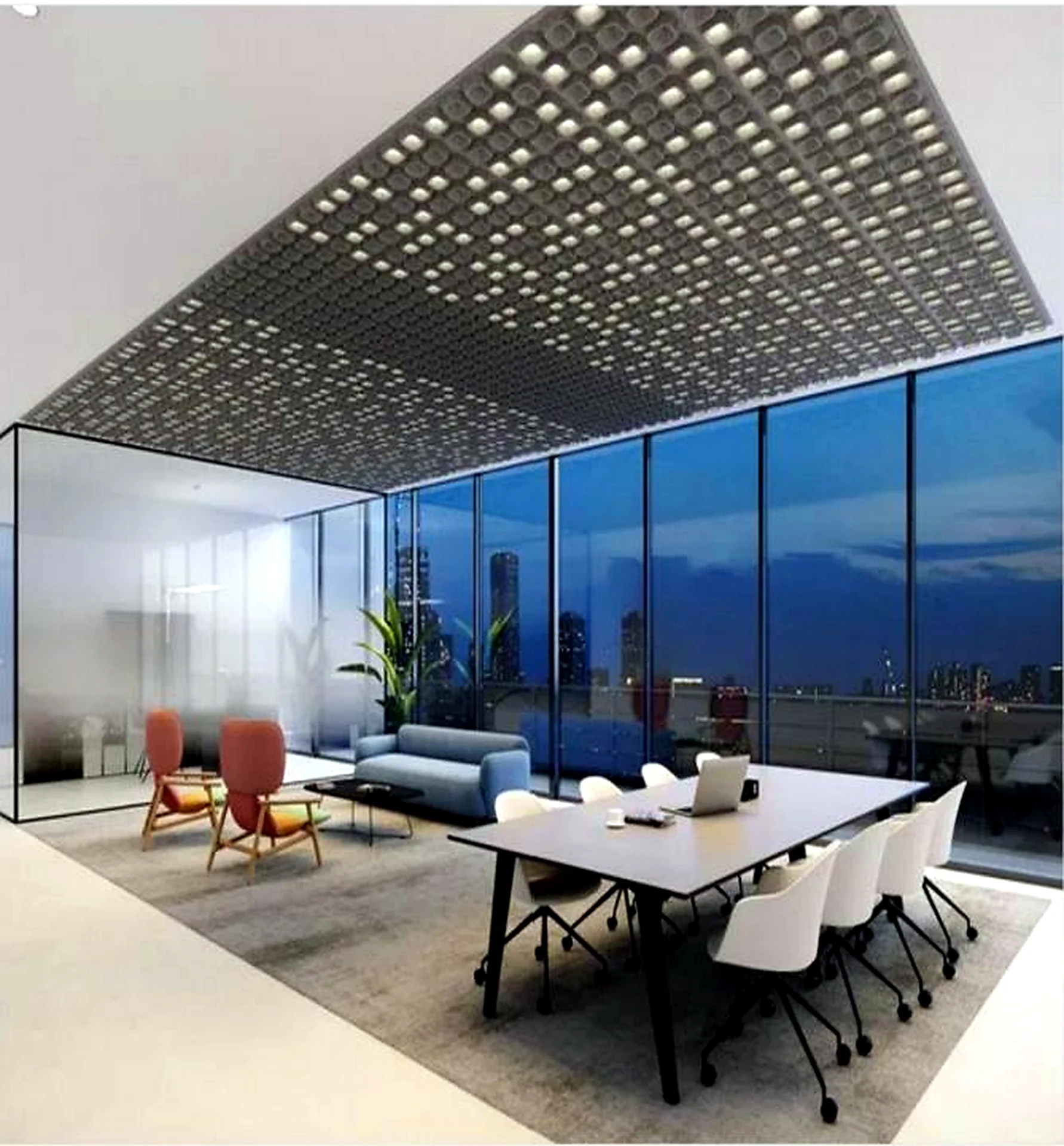
Acoustic pendant lighting is a suspended light fixture that also includes sound-absorbing material. In PET felt acoustic pendant lights, the PET felt body helps reduce sound reflections while the LED system provides light for the room.
The easiest way to understand it:
It is a pendant light with a soft acoustic jacket.
The light helps people see. The PET felt jacket catches part of the echo that would otherwise bounce around the room.
Acoustic pendant lighting can make offices, meeting rooms, restaurants, hotels, schools and public interiors feel more comfortable. But it is not soundproofing. It helps control sound inside a room; it does not block sound from traveling through walls, doors or ceilings. If you are already comparing product options, this PET felt acoustic pendant light buying guide explains the main checks before RFQ.
Why This Product Exists
Most buyers do not start by saying, "I need acoustic pendant lighting."
They usually start with a room problem:
- An open office looks modern, but every phone call travels across the floor.
- A meeting room has glass walls, but video calls sound sharp and tiring.
- A restaurant looks beautiful, but guests raise their voices because sound keeps bouncing around.
- A hotel lobby feels premium, but the space is too echoey.
These rooms often have the same issue: too many hard surfaces.
Glass, concrete, stone, metal, exposed ceilings and hard floors are like a ping-pong table for sound. When sound hits them, it bounces back. The more it bounces, the louder and harsher the room can feel.
Acoustic pendant lighting adds a softer surface into the ceiling area while also providing light. That is why it is useful in commercial interiors where the ceiling already needs lighting, sprinklers, HVAC, sensors, speakers and other building systems.
Instead of adding a separate light and a separate acoustic panel, the designer can use one product that does both jobs.
What Is a PET Felt Acoustic Pendant Light?
A PET felt acoustic pendant light is a ceiling-suspended luminaire made with a PET felt acoustic body and an integrated lighting system.
The acoustic body can be shaped as a linear baffle, dome, cone, disc, cloud, ring, shade or custom form. The lighting system usually includes an LED module or strip, driver, diffuser or optical element, suspension cable, canopy and wiring accessories.
In simple terms:
- The LED system provides task, ambient or decorative light.
- The PET felt body adds sound-absorbing surface area.
- The suspension system places the fixture where the room needs light and acoustic softening.
This dual function is the reason PET felt acoustic lighting is used in office and meeting room projects, restaurants, cafes, libraries, classrooms, coworking spaces, reception areas and hospitality interiors.
How PET Felt Helps Reduce Echo
PET felt is a porous, fibrous material. When sound reaches the felt surface, part of the sound energy enters the fiber structure instead of bouncing straight back into the room.
A simple comparison:
A bare concrete wall is like a hard mirror for sound. PET felt is more like a thick curtain. It does not stop all sound, but it softens some of the reflection.

The final acoustic result depends on more than the word "felt." Buyers should check:
- exposed PET felt surface area;
- PET felt thickness and density;
- shape of the pendant body;
- quantity and spacing of fixtures;
- ceiling height and room volume;
- how many hard surfaces are in the room;
- whether the product is used alone or with wall panels, ceiling treatment, carpets, curtains or soft furniture.
This is why a small decorative felt pendant and a large acoustic baffle-style pendant should not be treated as the same product. Both may use PET felt, but their acoustic contribution can be very different. If the room needs a long, workstation-style layout, acoustic linear lights may be easier to align with desks than round pendants.
For projects that need measurable acoustic documentation, ask whether acoustic data is available for the material or product configuration. ASTM C423 and ISO 354 are common reverberation-room methods for measuring sound absorption, but test results still need to be interpreted against the actual room design. Our guide to whether acoustic lighting really works explains how surface area, frequency, quantity, room conditions and complete-object evidence change the answer.
Sound Absorption vs Soundproofing
This is the most important concept for non-specialist buyers.
Sound absorption and soundproofing are not the same thing.
Think about a room with no curtains, no carpet and no soft furniture. When you speak, your voice feels sharp because sound reflects from hard surfaces. Adding a rug or curtain can make the room feel softer. That is sound absorption.
Now think about hearing traffic through a window or voices through a wall. A rug will not solve that. You need better windows, seals, wall construction or doors. That is soundproofing.
| User Complaint | What It Usually Means | Can Acoustic Pendant Lighting Help? |
|---|---|---|
| The room echoes. | Sound is bouncing inside the room. | Yes, it can help reduce reflections. |
| The office feels noisy. | Speech and activity reflect across the space. | Yes, as part of a broader acoustic plan. |
| The meeting room sounds harsh. | Hard walls, table and ceiling reflect speech. | Yes, especially near the table zone. |
| We hear the next room. | Sound is passing through walls, doors or gaps. | Not by itself. This is a construction issue. |
| We need soundproof lighting. | The buyer may be mixing two different acoustic needs. | Clarify whether the goal is absorption or isolation. |
Acoustic pendant lighting supports sound absorption inside a room. It does not replace soundproof construction.
This honest explanation is important. It prevents unrealistic expectations and helps buyers choose the right solution.
How the Lighting Side Works
A PET felt acoustic pendant light is still a light fixture. The acoustic material should not hide weak lighting performance.
Buyers should check the same lighting basics they would check for any commercial luminaire:
- lumen output;
- wattage;
- CCT, such as 2700K, 3000K, 3500K or 4000K;
- CRI;
- beam angle or diffuser type;
- glare control;
- LED driver specification;
- input voltage;
- dimming protocol, such as non-dimming, TRIAC, 0-10V or DALI;
- IES or LDT file availability if lighting layout calculation is required.
For example, a restaurant may need warm dimmable light. An open office may need controlled glare and stable 4000K light. A meeting room may need comfortable light for both people in the room and people on video calls.
A pendant can look attractive in a photo and still fail the project if it creates glare, is too dim, uses the wrong dimming system or does not match the room layout.
How One Product Combines Light and Acoustic Comfort
The value of acoustic pendant lighting is that it combines two systems:
- The acoustic system: PET felt body, shade, baffle, disc, cloud, linear form or custom shell.
- The lighting system: LED module, driver, diffuser, optics, wiring and controls.
When the two systems work well together, the product can support comfort, function and visual design.
Examples:
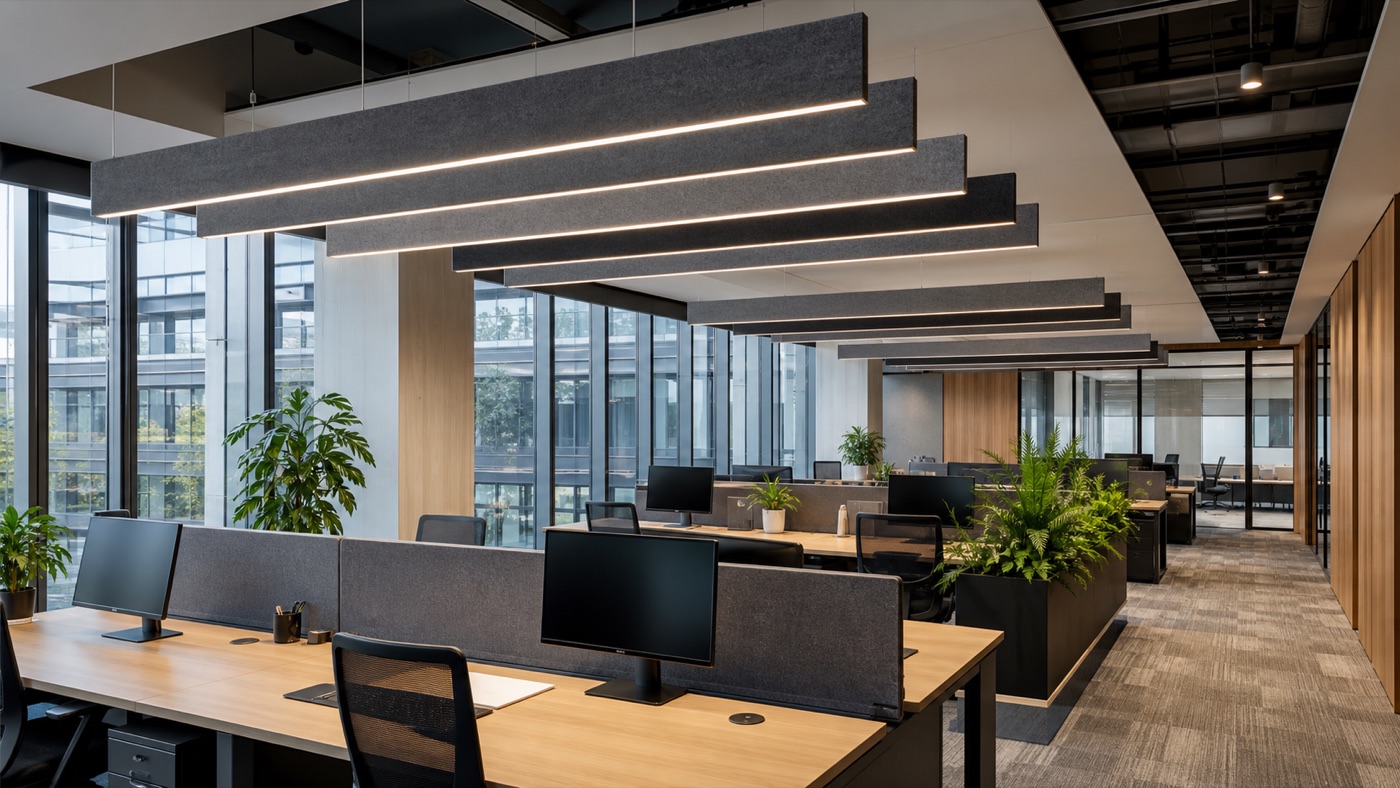
- A linear PET felt pendant above office desks can provide workstation lighting and add absorption close to where people talk and work.
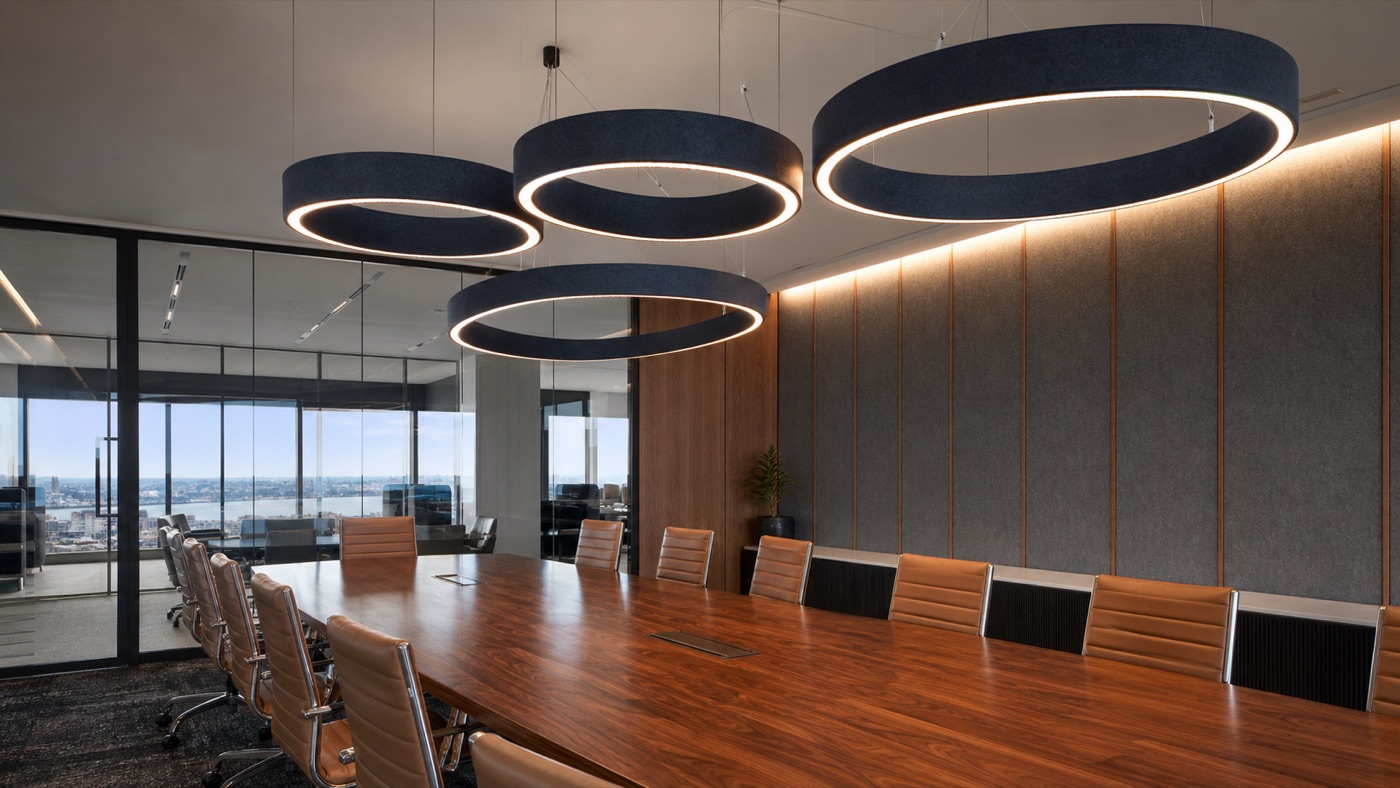
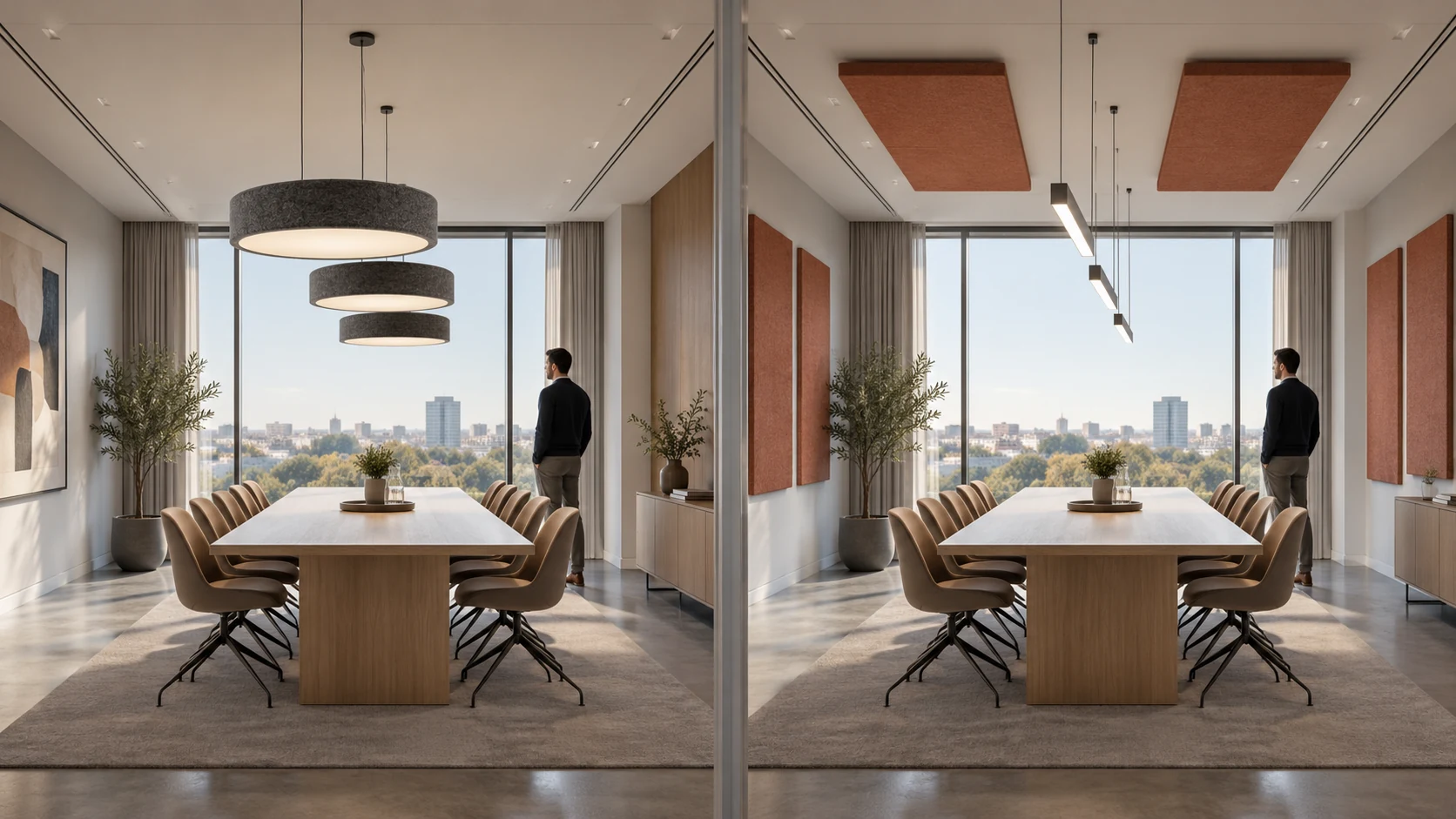
- A large circular PET felt pendant above a meeting table can soften speech reflections and create a visual center.
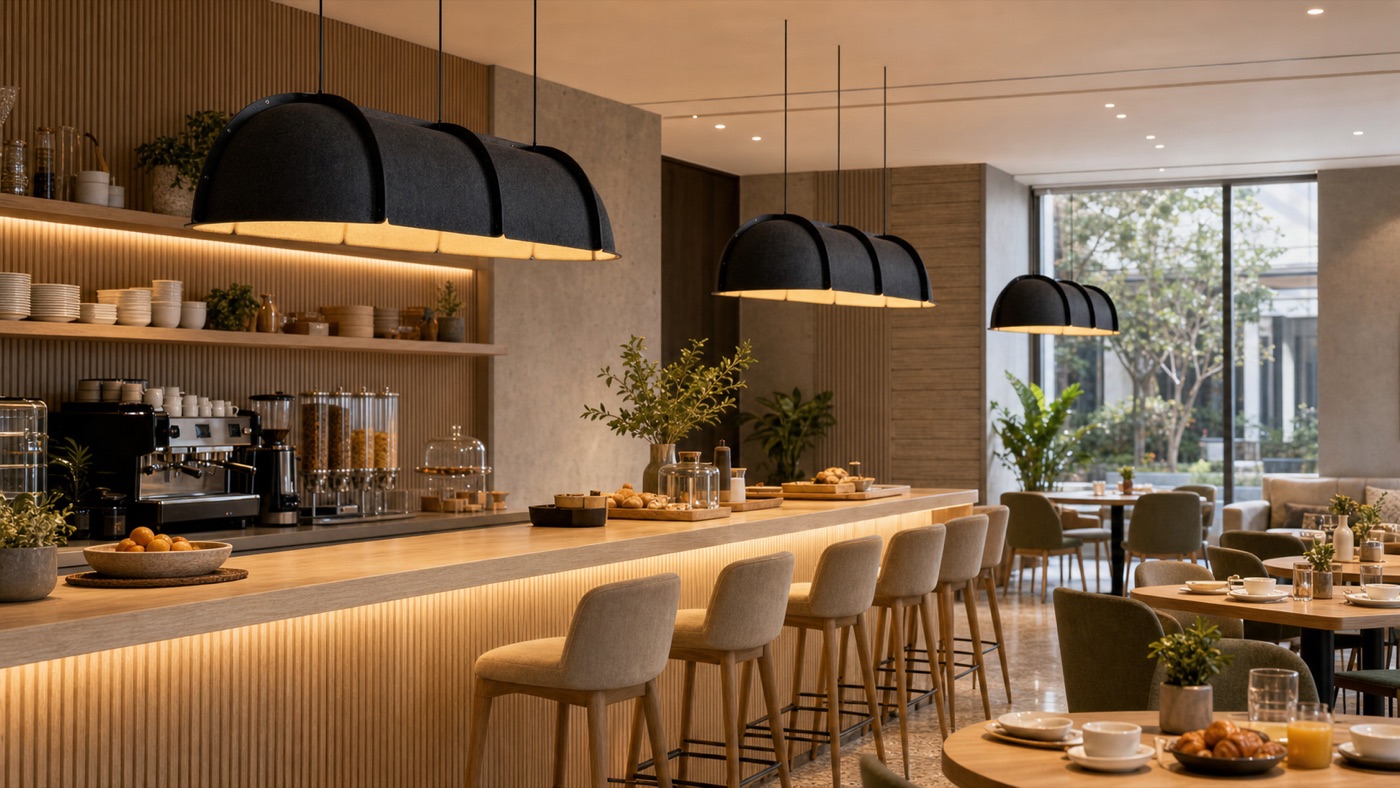
- Decorative acoustic pendants in a restaurant can support warm ambience while reducing some harsh reflections.
- Custom PET felt shapes in a hotel lobby can become both a brand feature and an acoustic support element.
When the two systems do not work well together, problems appear quickly. The felt body may block too much light. The LED system may create glare. The pendant may look good but be too small to make a useful acoustic contribution. The shape may be attractive but difficult to pack, ship, install or clean. For OEM or project-specific shapes, it is better to discuss custom acoustic lighting solutions before the design is locked.
That is why acoustic pendant lighting should be selected by room function first, not only by product photo.
Where Acoustic Pendant Lighting Works Best
Open Offices
Open offices are one of the strongest applications because they combine hard finishes, repeated workstations, phone calls and collaboration areas.
The real problem is not only "noise." It is distraction.
For workstation rows, linear PET felt acoustic pendants often work well because they can follow the desk layout. Buyers should confirm glare control, suspension height, CCT, quantity and spacing.
For a deeper office-focused comparison, see the guide to acoustic pendant lighting for open offices and meeting rooms.
Meeting Rooms and Boardrooms
Meeting rooms need clear speech and comfortable visual conditions. If the room has glass walls, a hard table and a flat ceiling, speech can feel sharp and tiring.
A PET felt acoustic pendant above the table can add absorption near the conversation zone while also providing table lighting. For video rooms, check glare, dimming and camera sightlines.
Restaurants and Cafes
Restaurants and cafes need acoustic comfort without looking like technical treatment rooms. Lighting is part of the brand atmosphere.
PET felt acoustic pendant lights can help soften the room while keeping a warm hospitality look. Buyers should check CCT, dimming, cleaning method, dust exposure, installation height and material requirements for the project.
For hospitality projects, review restaurant and hospitality acoustic lighting applications before finalizing shape, CCT and finish.
Hotels and Hospitality Interiors
Hotels, lounges and lobbies often need larger custom pieces, premium finishes and consistent color across multiple spaces.
For hospitality projects, ask early about custom size, batch color control, packing protection, installation drawings and any project-specific material documentation.
Libraries, Schools and Classrooms
Education and library spaces need acoustic comfort for learning, speech clarity and concentration.
PET felt acoustic pendant lighting can be useful when the ceiling design allows suspended products and when lighting and absorption can be coordinated together. Durability, cleaning, installation safety and documents should be reviewed early.
For school and library projects, the same product may need more attention to durability, installation safety and project documentation. The education spaces acoustic lighting page gives a useful application reference.
Quick Specs: What Buyers Should Check
| Buyer Question | Plain-English Meaning | What to Ask the Supplier |
|---|---|---|
| Does it reduce noise? | It can reduce reflected sound, not block sound between rooms. | Acoustic data if required, felt thickness, fixture size and recommended quantity. |
| Will it provide enough light? | It still needs to work as a proper light. | Lumen output, CCT, CRI, diffuser, glare control, driver and dimming. |
| Is the PET felt suitable? | Material quality affects appearance, stiffness, color and durability. | Material sheet, color card, sample and recycled-content support if needed. |
| Can it be used commercially? | Projects may need documents and installation details. | Datasheet, installation manual, available reports by exact model and destination market. |
| Can it be customized? | PET felt can often be shaped and colored, but not every idea is practical. | MOQ, sample time, tooling needs, color approval and bulk QC plan. |
This table is useful for early-stage buyers because it separates marketing claims from project checks.
Acoustic + Lighting Design Envelope
A useful way to specify PET felt acoustic lighting is to create an Acoustic + Lighting Design Envelope.
This means defining the acceptable range before asking for price. It is like drawing the lane lines on a road. Suppliers can move within the lane, but they should not drive outside it.
| Design Dimension | Define Before RFQ | Risk if It Is Not Defined |
|---|---|---|
| Room function | Office, meeting room, restaurant, hotel, classroom or retail. | Product may look right but perform poorly. |
| Acoustic objective | Comfort support or documented absorption requirement. | Buyer may expect soundproofing from an absorption product. |
| Lighting requirement | Lumens, wattage, CCT, CRI, beam, diffuser and glare control. | Fixture may be too dim, too bright or uncomfortable. |
| Control system | Non-dimming, TRIAC, 0-10V, DALI or project-specific controls. | Dimming may flicker or fail on site. |
| PET felt specification | Thickness, density, color, finish, edge quality and recycled-content support. | Color inconsistency or unsupported sustainability claims. |
| Installation plan | Ceiling height, suspension length, canopy, mounting points and driver location. | Site delays or missing accessories. |
| Project documents | Datasheet, acoustic data, photometric files, fire-related material documents if required and installation manual. | Approval delays or incomplete submittal package. |
| Packing and logistics | Carton size, protection method, labels and replacement strategy. | Felt deformation, surface damage or installation confusion. |
This structure is more useful than asking for "best price for acoustic pendant light" because it gives the supplier enough context to quote the real project scope.
If several suppliers are being compared, use the same design envelope for every quote. This makes the comparison much fairer than comparing photos and unit prices only. The PET felt acoustic lighting manufacturer comparison guide gives a fuller supplier checklist.
What Acoustic Pendant Lighting Is Not
Acoustic pendant lighting is useful when it is used correctly. It becomes risky when it is oversold.
It is not active noise cancellation. It does not use electronics to cancel sound waves.
It is not soundproofing. It cannot stop sound from passing through walls, doors or ceiling gaps.
It is not automatically a full acoustic solution. Large, noisy or highly reverberant spaces may still need acoustic wall panels, ceiling treatment, carpets, curtains, furniture changes or professional acoustic design.
It is not only decoration. If it is used in a commercial project, LED performance, installation method, maintenance and documents matter.
It is not automatically suitable for every market. Fire behavior, electrical safety, labeling and documentation depend on the destination country, building type and project requirements.
This is why buyers should treat acoustic pendant lighting as a combined commercial product, not just a decorative light.
What Documents Should B2B Buyers Request?
Before a project order, ask what documents are available for the exact model, LED configuration, PET felt material and destination market.
A useful Acoustic Lighting Project Document Set may include:
- Product datasheet with model, dimensions, material, wattage, CCT, CRI, voltage, dimming options and weight.
- PET felt material sheet with thickness, density, color options and finish information.
- Acoustic test report or sound absorption data if acoustic performance must be documented.
- Fire-related material document if the destination project requires it.
- IES or LDT photometric file if lighting layout review is required.
- LED driver datasheet with input voltage, power factor, dimming protocol and warranty information.
- Installation manual showing suspension method, canopy, wiring and driver location.
- Color card or physical sample for finish approval.
- Sample approval record before bulk production.
- Packing method, carton dimensions and accessory list.
- Bulk QC checklist covering color, size, LED test, dimming test, accessories and labels.
- Warranty terms explaining what is covered and what is excluded.
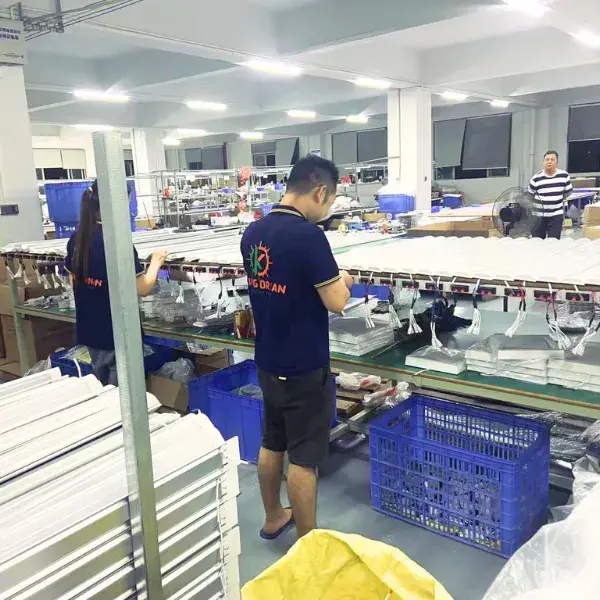
Not every project needs every document. A small decorative cafe order may need fewer files than a multi-floor office, airport lounge or government education project. But asking early prevents the most common problem: discovering missing documents after the product has already been ordered.
Common Mistakes When Buying Acoustic Pendant Lighting
Mistake 1: Asking Only for a Product Photo and Price
A photo does not tell the supplier the room size, ceiling height, acoustic goal, light level, CCT, dimming system, color requirement or installation condition. The price may be fast, but it will not be reliable.
Mistake 2: Treating "Acoustic" as a Guaranteed Result
The word acoustic does not guarantee a room result. The final effect depends on fixture quantity, material area, placement, room volume and other finishes.
Mistake 3: Ignoring Lighting Performance
Some buyers focus on felt color and shape but forget that the product must light the room. Always check lumens, wattage, beam, glare, CCT, CRI, driver and dimming.
Mistake 4: Comparing Unit Price Without Comparing Scope
One supplier may include driver quality, IES files, custom color sampling, stronger packaging and QC photos. Another may quote only a basic fixture. The cheaper price may not be the lower project cost.
Mistake 5: Forgetting Installation Details
Suspension length, canopy finish, driver location, ceiling type and accessory kits should be confirmed before production. Missing installation information can delay the site even when the product itself is correct.
Mistake 6: Approving Color by Screen Only
PET felt colors can look different on screens. For commercial projects, use a physical color card or sample before bulk production.
Mistake 7: Using the Wrong Product for the Wrong Room
A small decorative pendant may work for a cafe table but not for a large open office. A linear office pendant may not create the right atmosphere in a hotel lounge. Start with room function before choosing shape.
Example: A Poor RFQ vs a Better RFQ
A poor RFQ says:
Please quote acoustic pendant lights. Send best price.
A better RFQ says:
We are working on a 600 m2 open office with 3.2 m ceiling height. The project needs PET felt acoustic pendant lights above workstation rows and collaboration areas. Preferred CCT is 4000K for workstations and 3000K for lounge zones. Please recommend linear and decorative options with PET felt color card, IES/LDT availability, dimming options, installation method, packing details and MOQ. Destination market is Germany. Fire-related material documentation may be required by the project consultant.
The second RFQ works better because it gives the supplier a map. Without that map, the supplier is guessing.
RFQ Checklist: What to Send Before Asking for a Quote
For a practical quotation, prepare:
- Project type: office, restaurant, hotel, school, retail, distributor stock or OEM collection.
- Room size and ceiling height.
- Layout drawing, rendering or reference photo.
- Preferred product type: linear, round, dome, cone, disc, cloud or custom shape.
- Quantity and size range.
- PET felt color or color card reference.
- LED wattage or target lumen output.
- CCT requirement: 2700K, 3000K, 3500K, 4000K or custom.
- CRI requirement.
- Dimming requirement: non-dimming, TRIAC, 0-10V, DALI or other.
- Input voltage and destination country.
- Fire-related or certificate requirements, if known.
- Packaging, labeling or private-label requirements.
- Sample deadline and bulk delivery schedule.
The more clearly these details are prepared, the fewer revisions are needed later.
Need help matching acoustic pendant lights to your project?
Send room type, size, ceiling height, target quantity, PET felt color and LED requirements. We can recommend suitable acoustic lighting options and prepare a project-ready quotation.
FAQ
What is acoustic pendant lighting?
Acoustic pendant lighting is a suspended lighting fixture that includes sound-absorbing material, such as PET felt, together with an LED lighting system. It provides illumination while adding acoustic absorption into the room.
How does PET felt acoustic lighting reduce noise?
PET felt absorbs part of the sound energy that reaches its fibrous surface. This helps reduce reflections and can improve perceived acoustic comfort. The result depends on material area, thickness, fixture shape, quantity, placement and the rest of the room design.
Is acoustic pendant lighting the same as soundproof lighting?
No. Acoustic pendant lighting supports sound absorption inside a room. It does not block sound transmission between rooms. Soundproofing usually requires construction measures such as sealed walls, doors, floors or ceilings.
Can acoustic pendant lighting replace acoustic panels?
Sometimes it can reduce the need for separate acoustic panels, especially in small or moderate spaces. In larger or more demanding projects, it is usually part of a broader acoustic strategy rather than a complete replacement.
Where is acoustic pendant lighting most useful?
It is useful in open offices, meeting rooms, restaurants, cafes, hotels, coworking spaces, libraries, classrooms and reception areas where people need both light and acoustic comfort.
What is the difference between PET felt pendant lighting and normal pendant lighting?
A normal pendant light mainly provides illumination and decoration. A PET felt acoustic pendant light adds a sound-absorbing felt body, so it supports both lighting and acoustic comfort.
Is PET felt acoustic lighting eco-friendly?
PET felt is often promoted as a sustainable material because it may use recycled PET fibers. Buyers should ask for recycled-content documentation or material declarations if sustainability claims are important for the project.
What documents should I request before ordering?
Ask for a product datasheet, PET felt material sheet, acoustic data if required, IES/LDT files if needed, LED driver information, installation manual, color card, fire-related material documents if required, packing details and warranty terms.
Can PET felt acoustic pendant lights be customized?
Yes. Common custom options include color, size, shape, suspension length, LED wattage, CCT, CRI, dimming protocol, canopy finish, packaging and private-label requirements. MOQ and sample time should be confirmed early.
What information is needed for a quotation?
A supplier usually needs project type, room dimensions, ceiling height, reference image, quantity, size, PET felt color, LED requirements, dimming system, destination country, document requirements and delivery schedule.
Conclusion
Acoustic pendant lighting is best understood as a dual-function commercial fixture.
It is a light, but it is not only a light. It is an acoustic product, but it is not a full soundproofing system. When designed with PET felt, it can add useful sound absorption while providing illumination, style and ceiling-level visual structure.
For B2B projects, the strongest results come from a room-first approach. Define the room function, acoustic objective, lighting requirement, material expectation, installation condition and document needs before comparing prices.
If the supplier only talks about shape and price, the project risk remains with the buyer. If the supplier can discuss acoustic data, LED performance, PET felt material, installation details, packaging and QC, the buyer is much closer to a reliable commercial order.
Related Reading and Product Pages

Get a Recommendation
Need PET felt acoustic pendant lighting for a commercial project?
Send your project type, room size, ceiling height, preferred PET felt color, LED requirements and target quantity to request a practical recommendation.
References
- ASTM C423, Standard Test Method for Sound Absorption and Sound Absorption Coefficients by the Reverberation Room Method
- ISO 354:2003, Acoustics - Measurement of sound absorption in a reverberation room
- IES LM-79, Optical and Electrical Measurements of Solid-State Lighting Products
- IES TM-21, Projecting Long-Term Luminous, Photon, and Radiant Flux Maintenance of LED Light Sources