Introduction
Many buyers start with one simple message:
Please send price for this acoustic pendant light.
Then the supplier replies with questions: size, quantity, PET felt color, LED wattage, CCT, dimming, ceiling height, destination country, packaging and documents.
From the buyer's side, it can feel like the supplier is avoiding the answer. But in B2B acoustic lighting, a price without context is like asking, "How much does a suitcase cost?" A small carry-on, a leather travel case and a shipping trunk are all suitcases, but they are not the same product.
PET felt acoustic lighting works the same way. A product photo shows the shape, but it does not show the full scope. The same-looking pendant can have different felt thickness, different LED drivers, different dimming systems, different packaging, different documentation and very different production work behind it.
This guide explains what really affects PET felt acoustic lighting cost in a commercial project. The goal is not to give a fake universal price. The goal is to help you understand what you are paying for, what hidden costs to avoid and how to ask for a quotation suppliers can price accurately.
Key Takeaways
- PET felt acoustic lighting cost includes the acoustic body, LED system, driver, suspension kit, installation accessories, packaging, documentation, customization, MOQ, lead time and freight.
- The biggest mistake is comparing unit price without comparing scope.
- A useful B2B budget should separate factory price, landed cost and installed project cost.
- The fastest way to reduce unnecessary cost is often a clearer RFQ, not cheaper components.
- For custom PET felt acoustic pendant lights, sample cost and MOQ are normal because they cover engineering, material setup, assembly, testing and packing.
Quick Answer: What Affects PET Felt Acoustic Lighting Cost?
| Cost Driver | What It Means | Why It Matters to Buyers |
|---|---|---|
| Fixture size | Diameter, length, height and PET felt surface area. | Larger fixtures use more material, stronger structure and larger cartons. |
| PET felt material | Thickness, density, finish, recycled-content support, color and edge quality. | Better felt improves appearance, shape stability and project trust. |
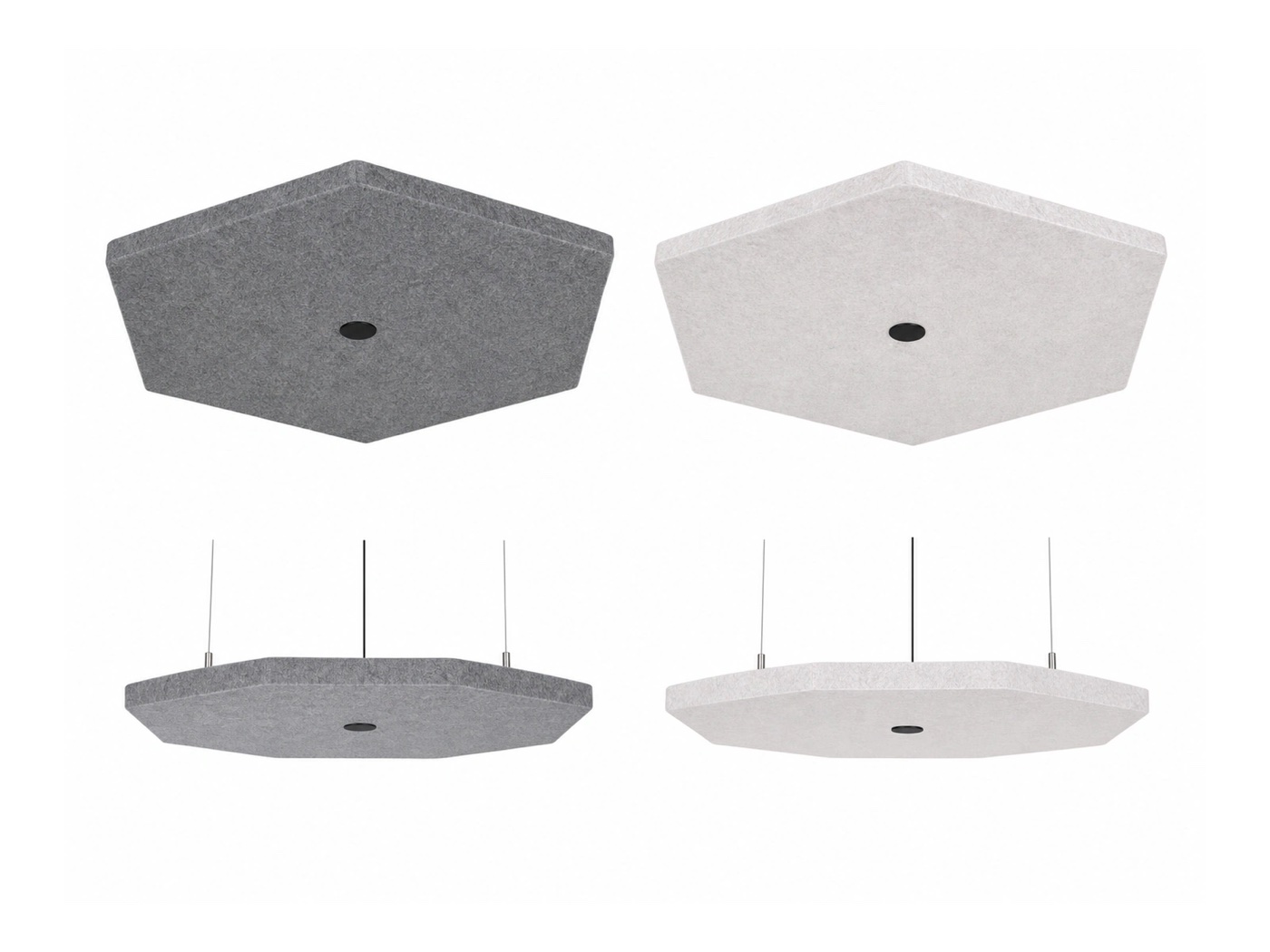
| Product shape | Round, dome, cone, linear, cloud, baffle or custom form. | Simple shapes repeat faster; complex shapes need more engineering and sample work. |
| LED system | Wattage, lumens, CCT, CRI, diffuser, glare control and beam style. | A beautiful acoustic fixture still fails if it does not light the room properly. |
| Driver and dimming | Non-dimming, TRIAC, 0-10V, DALI or project-specific control. | Wrong dimming can cause flicker, poor control or site rework. |
| Documents | Datasheet, IES/LDT, acoustic data, fire-related documents and installation manual. | Missing documents can delay project approval. |
| MOQ and setup | Quantity per model, per color and per specification. | Small orders carry more setup cost per unit. |
| Packaging and freight | Carton size, protection, labels, export packing and shipping term. | PET felt products can be light but bulky, so freight can matter more than weight. |
| Lead time | Standard order, urgent order, sample order or custom development. | Rushed production can increase cost or reduce flexibility. |
Cost Is Not One Number. It Is a Basket.
Think of a quotation like a shopping basket.
If one basket has only apples and another basket has apples, bread, cheese, coffee and wine, the second basket will cost more. But that does not mean the apples are expensive. It means the basket contains more things.
The same problem happens in acoustic lighting quotations.
One supplier may quote:
PET felt shade + basic LED + standard carton.
Another supplier may quote:
PET felt shade + specified driver + dimming test + custom color sample + suspension kit + canopy + IES/LDT file + installation manual + export carton + room labels + QC photos + spare accessories.
If you compare only the unit price, the first quotation looks cheaper. But you are not comparing the same basket. For B2B buyers, the first rule is simple: do not ask only how much the light costs. Ask what is included.
Factory Price, Landed Cost and Installed Cost
A common mistake is treating the factory quote as the whole project cost. It is not. A factory quote is like the menu price of a meal. The full bill may include tax, service charge, delivery and tips. In export projects, the full bill can include many layers.
| Cost Layer | What It Includes | Buyer Question |
|---|---|---|
| Factory price | Fixture body, PET felt, LED, driver, suspension kit, assembly, basic packing and factory QC. | What exactly is included in the unit price? |
| Landed cost | Factory price plus inland freight, export handling, international freight, insurance, duties, taxes and local delivery. | What will it cost to bring the goods to my warehouse or site? |
| Installed project cost | Landed cost plus electrician labor, lifting equipment, site coordination, replacement parts, spare drivers and installation time. | What is the real cost to make the lights work in the building? |
Incoterms matter because they define which party handles different responsibilities, risks and costs in international trade. Align quotation terms such as EXW, FOB, CIF or DDP before comparing offers.
A lower factory price may not be a lower project cost if freight is high, packaging is weak, documents are missing or installation accessories are incomplete.
The 9 Main Cost Drivers in PET Felt Acoustic Lighting
1. Fixture Size and PET Felt Surface Area
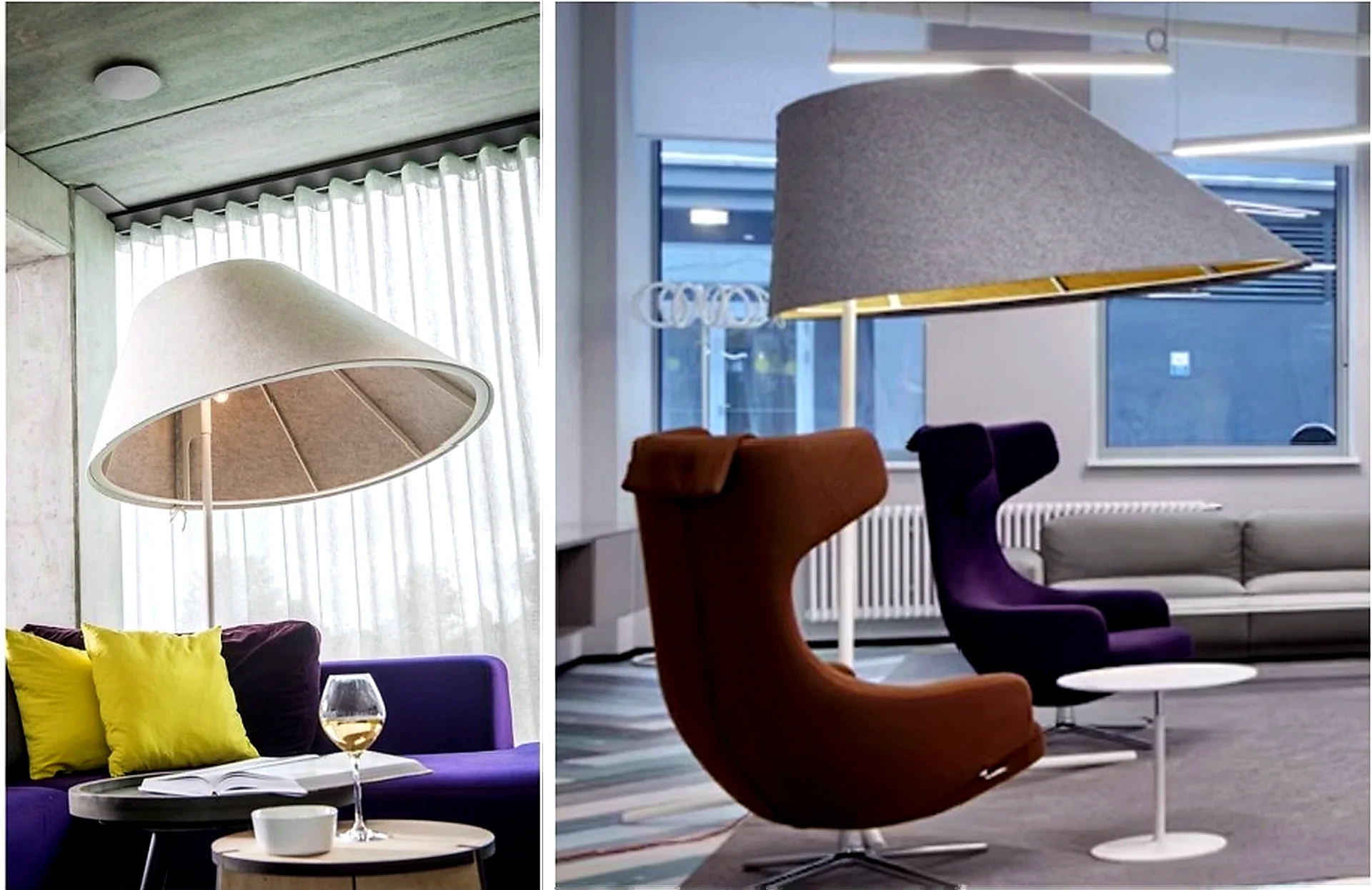
Size is one of the most obvious cost drivers. A larger acoustic pendant is not just a small pendant scaled up like a phone screen. It may need more PET felt, stronger internal support, longer suspension cables, bigger cartons and more careful packing.
A small umbrella and a large patio umbrella both provide shade, but they do not use the same amount of fabric or structure.
For acoustic value, size also matters because the exposed PET felt surface area affects how much sound-absorbing material is added to the room. If you are comparing acoustic lighting with separate panels, read Acoustic Lighting vs Acoustic Panels before making the budget decision.
2. PET Felt Thickness, Density and Finish
Not all PET felt is the same. A buyer may see "PET felt" on two quotations and assume they are equal. They may not be. Felt thickness, density, stiffness, surface finish, edge quality and color consistency can all affect cost.
Important material questions include:
- What PET felt thickness is used?
- Is the felt stiff enough to hold the product shape?
- Is the edge clean after cutting?
- Is the color standard or custom?
- Is there recycled-content support if the project asks for it?
- Is fire-related documentation required?
- Is the finish suitable for the application?
For large commercial projects, color consistency is especially important. A small color difference may be invisible in one sample. But when 80 pendants are installed in the same open office, the difference can become obvious. Physical color cards and sample approval are not decorative steps. They are cost-control steps.

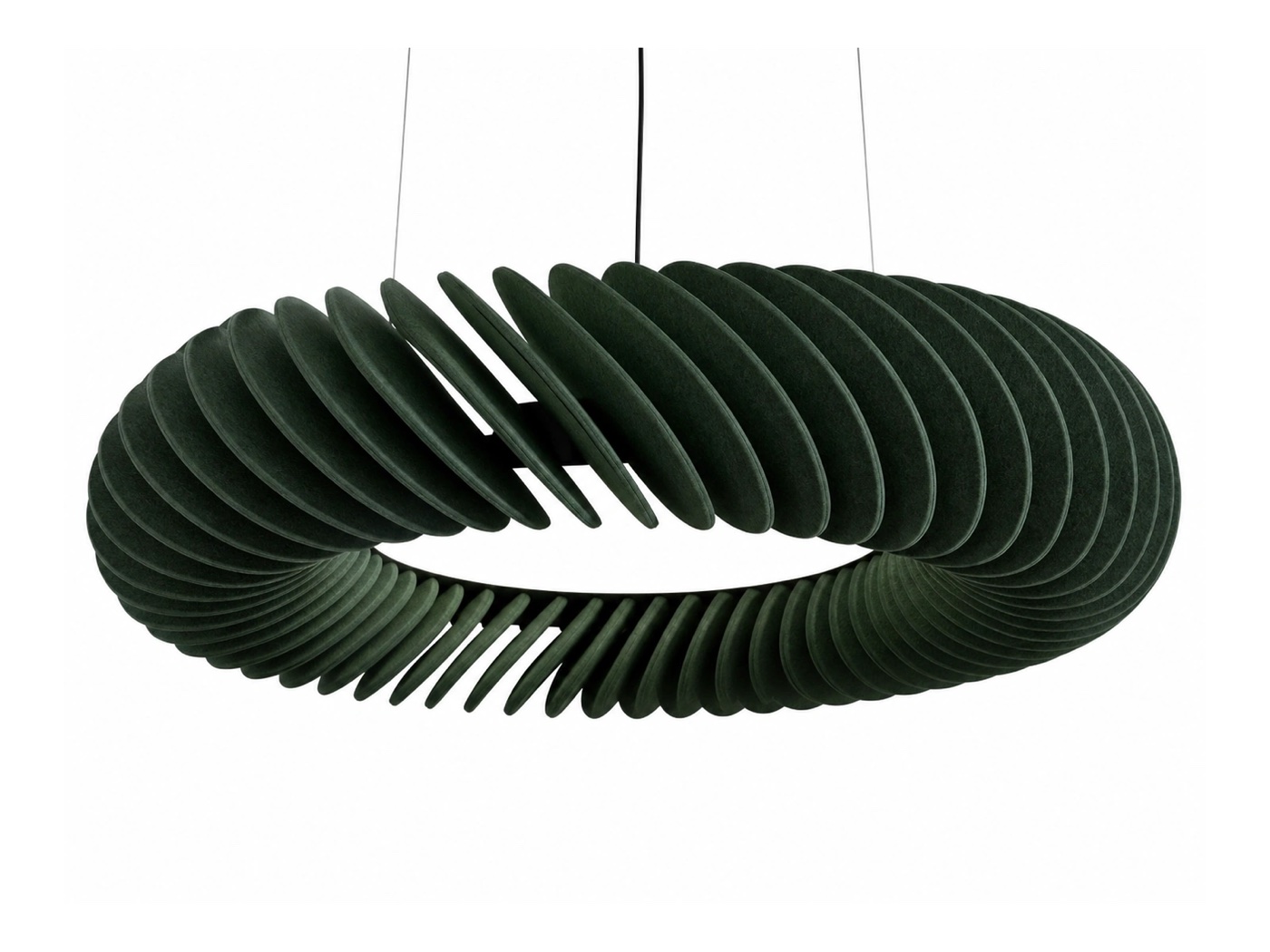
3. Shape Complexity
A simple round felt pendant is usually easier to produce than a large custom cloud, multi-layer baffle or sculptural hotel lobby feature. Custom shapes are like custom furniture: a catalog chair is easy to price, but a curved sofa made for one hotel lobby needs drawings, samples and more decisions.
Complex shapes can affect:
- cutting time;
- forming method;
- internal support;
- assembly labor;
- sample revisions;
- packaging design;
- shipping volume;
- installation method.
4. LED Wattage, Lumens and Light Distribution
PET felt acoustic lighting is not only an acoustic object. It is still a light. A low-cost fixture with weak lighting performance can become expensive later if the room is too dim, the beam is wrong or the light creates glare.
Common lighting cost drivers include:
- LED wattage;
- delivered lumens;
- color temperature, such as 3000K or 4000K;
- CRI, such as CRI 80 or CRI 90;
- diffuser or lens design;
- low-glare requirement;
- direct, indirect or mixed light distribution;
- IES/LDT file availability.
The PET felt body is the room's soft sweater. The LED system is the engine. A good sweater cannot fix a weak engine.
For offices, 4000K is commonly selected for work areas, while 3000K is often used in hospitality-style interiors such as restaurants, hotels and lounges. The best choice still depends on the lighting plan, brand atmosphere and local project standard.
5. Driver Brand and Dimming System
The LED driver is easy to ignore because users usually do not see it. But it can decide whether the light feels stable, dims smoothly and works with the control system on site.
Driver and dimming options can include:
- non-dimming;
- TRIAC dimming;
- 0-10V dimming;
- DALI dimming;
- project-specific controls;
- emergency or special driver requirements.
The driver is like the gearbox in a car. The engine may be strong, but if the gearbox is poor, the ride will not feel smooth.
For meeting rooms, boardrooms, hotels and restaurants, dimming should be confirmed early. "Dimmable" is not a complete specification. The supplier needs to know the dimming protocol and control system.
6. Acoustic Data and Test Requirements
Some projects only need acoustic comfort. Others need acoustic documentation. If the buyer or consultant asks for sound absorption data, the supplier may need to provide acoustic test reports or material data.
This does not mean a test report predicts the exact result in every real room. A room is not a lab box. Ceiling height, wall materials, furniture, glass, carpet, layout and fixture quantity all affect the final result. But documented acoustic data helps designers compare products and prevents vague claims.
7. Fire, Compliance and Project Documents
Fire-related material documents, electrical information, installation manuals and project submittal files can affect cost and lead time. A small cafe order may not need the same package as a hotel, school, public building or corporate headquarters.
Typical project documents may include:
- Product datasheet.
- PET felt material sheet.
- Acoustic data if required.
- Fire-related material report if required.
- IES or LDT photometric file.
- LED driver datasheet.
- Installation manual.
- Suspension drawing.
- Packing details.
- Warranty statement.
The key phrase is "if required." Not every market or project asks for the same documents. A careful supplier should not promise certificates that do not exist. It is better to discuss document needs before quotation than after production.
8. MOQ, Sample Cost and Production Setup
MOQ is often frustrating for buyers, but it has a reason. A factory does not only make the physical product. It prepares material, cuts PET felt, sets up assembly, checks color, tests LED function, packs accessories and manages quality control.
A bakery can sell one standard cake at a normal price. But one cake shaped like your company logo still needs design, preparation and testing.
For one sample, all of that setup is spread across one piece. For 200 pieces, the setup cost is spread across many pieces. That is why sample cost can feel high.
9. Packaging, Carton Size and Freight
PET felt pendant lights are often lighter than metal fixtures, but they can be bulky. Freight is not always about weight. Sometimes it is about volume. Shipping a large PET felt pendant can be like shipping an empty hat box: it may not be heavy, but it takes space in a carton, pallet or container.
Packaging must protect:
- PET felt surface;
- edges;
- shade shape;
- LED module;
- driver;
- suspension cables;
- canopy;
- screws and accessories;
- labels and manuals.
Weak packaging can turn a low quotation into an expensive claim. If a custom felt shade arrives crushed, replacement can take weeks.
Budget Planning by Project Type
Different projects spend money in different places. The best budget is not always the lowest price; it is the price that matches the room risk.
| Project Type | Main Budget Pressure | What to Watch |
|---|---|---|
| Distributor catalog order | MOQ, standard colors, carton size and repeatable models. | Product range consistency and packaging. |
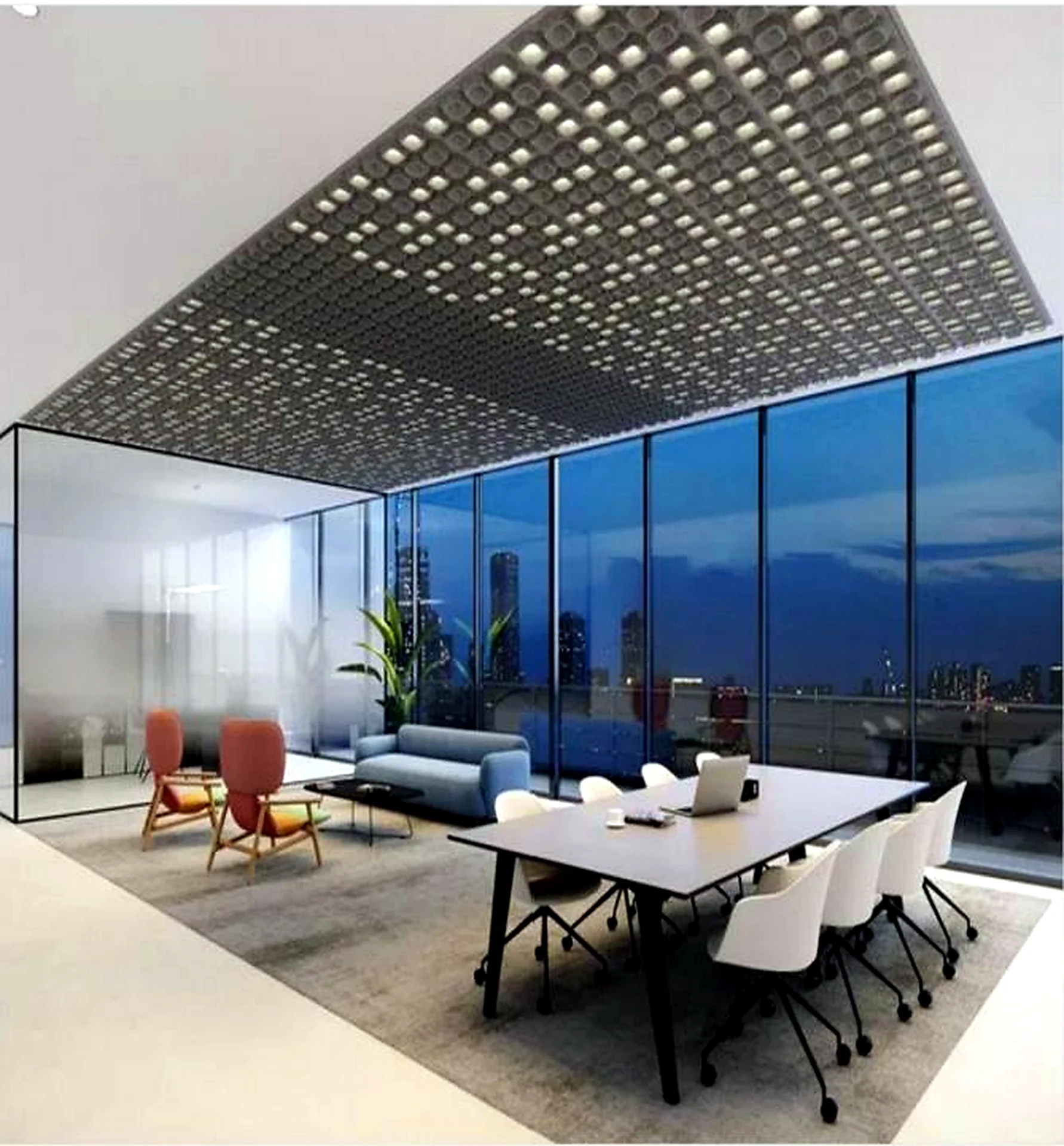
| Open office project | Quantity, layout, CCT consistency, glare control and labels by floor or room. | Wrong CCT, missing accessories and uneven installation height. |
| Meeting room or boardroom | Dimming, glare, CRI, table proportion and video-call comfort. | Dimmable without protocol confirmation. |
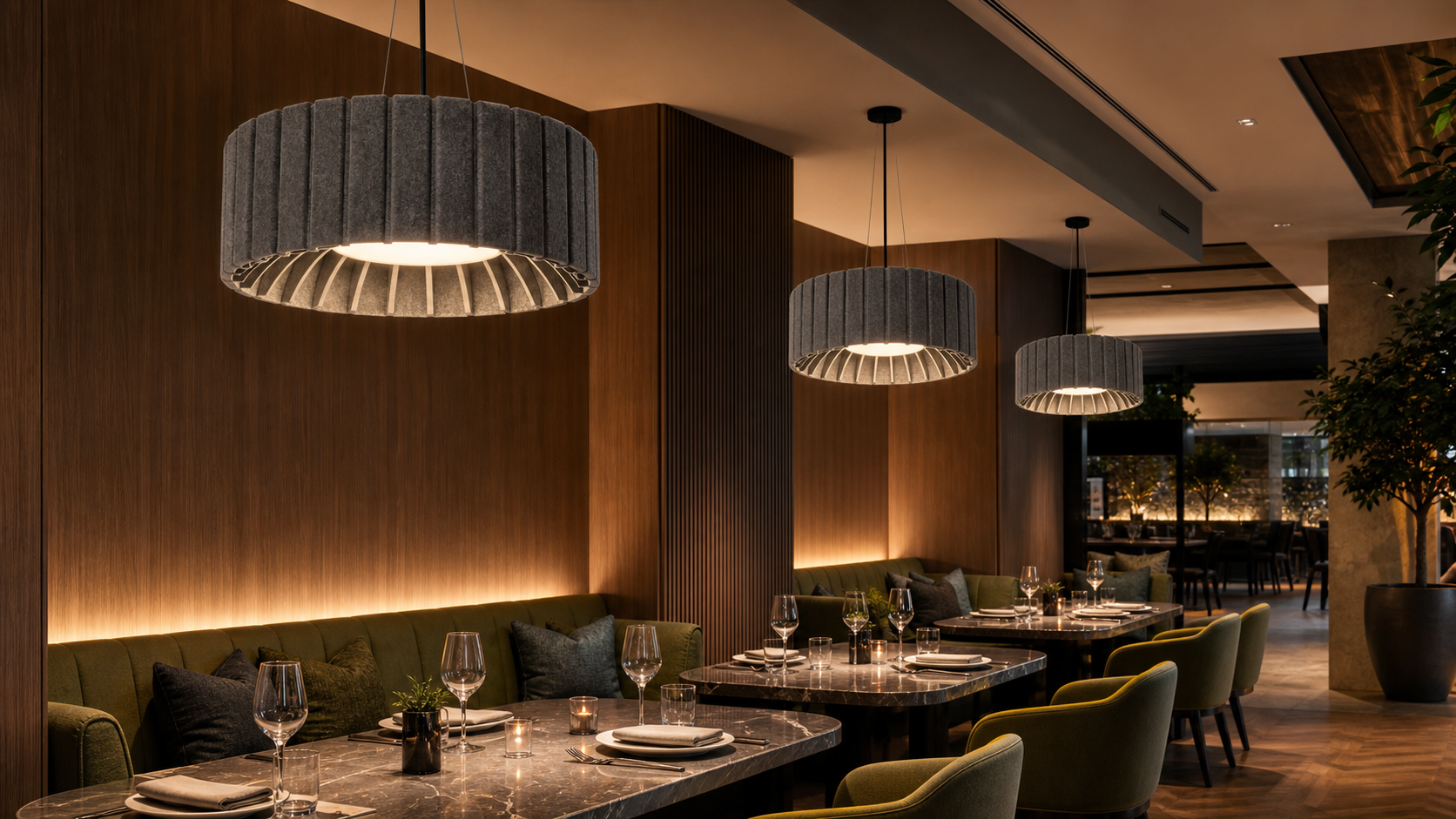
| Restaurant or cafe | Warm ambience, decorative shape, clean finish and maintenance. | Choosing a shape that looks good but is hard to clean or too dim. |
| Hotel lobby | Large custom shapes, structure, packing volume and installation planning. | Underestimating freight, assembly and site coordination. |
| OEM or private label | Sample development, packaging, labels, manuals and long-term consistency. | Comparing only product cost and forgetting brand packaging. |
| School, library or public project | Material documents, durability, cleaning and installation safety. | Missing fire-related documents or unclear mounting details. |
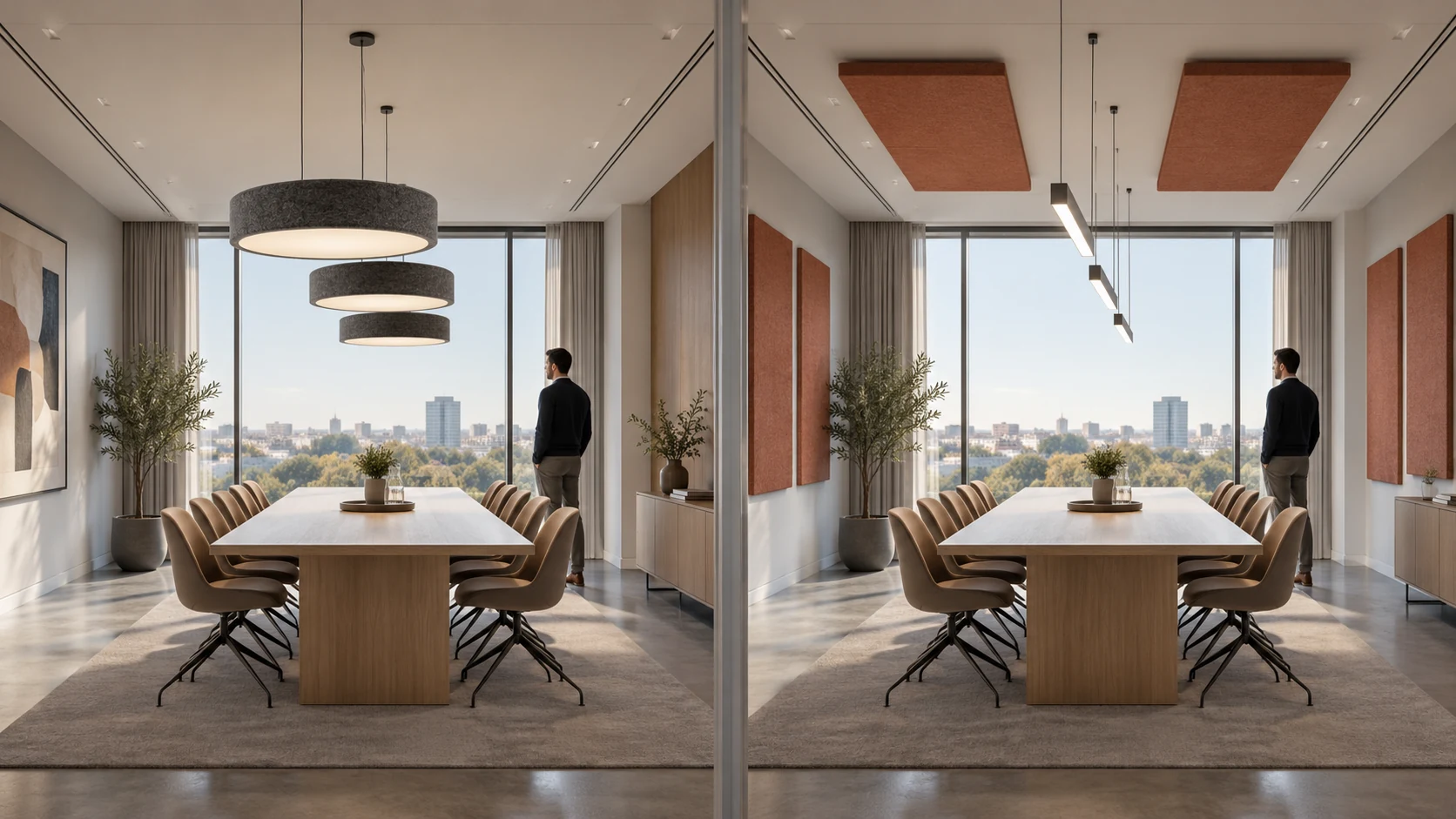
For more room-specific planning, review the office and meeting room and restaurant and hospitality application pages before locking the budget.
Why Two Similar Products Can Have Very Different Quotations
Two PET felt acoustic pendant lights can look almost the same in a photo. The quotations may still be different because the scope is different.
| Quote Item | Low-Scope Quotation | Project-Ready Quotation |
|---|---|---|
| PET felt | Basic felt, standard color only. | Confirmed thickness, density, finish and color card. |
| LED | Basic LED specification. | Confirmed wattage, lumens, CCT, CRI and light distribution. |
| Driver | Generic driver. | Specified driver with dimming option if required. |
| Dimming | Dimmable stated vaguely. | TRIAC, 0-10V, DALI or non-dimming confirmed. |
| Documentation | Simple datasheet. | Datasheet, driver info, IES/LDT, installation manual and material documents if needed. |
| Packaging | Basic carton. | Export carton with surface protection, accessory bag and labels. |
| QC | Basic visual check. | LED test, dimming test, color check, accessory check and packing photos. |
| Project support | None or limited. | Drawing review, sample approval and room-by-room labels. |
Best price is not always the best buying question. A better question is: please quote the same scope, so we can compare fairly.
What Should Be Included in a B2B Quotation?
A useful PET felt acoustic lighting quotation should be clear enough that another person on the buyer's team can understand it without a long email chain.
| Quotation Item | Why It Matters |
|---|---|
| Product model or drawing reference | Prevents confusion between similar designs. |
| Dimensions | Size affects material, lighting output, packing and installation. |
| PET felt thickness and color | Controls appearance, consistency and project approval. |
| LED wattage and lumen output | Confirms whether the product can light the room. |
| CCT and CRI | Helps match office, restaurant, hotel or retail requirements. |
| Driver and dimming | Avoids site compatibility problems. |
| Input voltage | Must match destination market and project wiring. |
| Suspension kit and canopy | Missing hardware can delay installation. |
| Quantity and MOQ | Affects unit cost and production setup. |
| Sample cost and lead time | Important for custom designs and approval schedules. |
| Packaging method | Protects felt surface and reduces shipping damage. |
| Carton size and gross weight | Helps estimate freight. |
| Required documents | Prevents late approval problems. |
| Incoterm or shipping term | Makes landed cost comparison possible. |
| Warranty terms | Clarifies responsibility after installation. |
If these items are missing, the quote may still be usable for early discussion, but it is not ready for a project purchase order. For supplier screening, use the PET felt acoustic lighting manufacturer comparison guide.
Need a project-ready PET felt acoustic lighting quotation?
Send room type, quantity, product size, PET felt color, LED requirements, dimming, destination country and required documents. We can help prepare a clearer budget scope before RFQ.
Cost of Custom PET Felt Acoustic Lighting
Custom PET felt acoustic lighting usually costs more than standard catalog products because the factory must do more than repeat an existing model.
Custom work may include:
- shape development;
- size adjustment;
- PET felt color matching;
- structural review;
- LED and driver selection;
- drawing preparation;
- sample production;
- sample revision;
- private-label packaging;
- installation instructions;
- carton testing or packing adjustment.
A small color change is usually simpler than a new shape. A longer suspension cable is usually simpler than a new internal structure. A custom printed carton is usually simpler than a new product family.
For OEM and ODM buyers, separate the quotation into:
- Sample cost.
- Tooling or development cost, if any.
- Bulk unit price.
- Packaging cost.
- Document or testing cost, if required.
- Freight estimate.
If the project needs a special shape, color or branded line, discuss custom acoustic lighting solutions before the design is locked.
Cost of Acoustic Performance: Do Not Buy Only the Word Acoustic
The word acoustic can be cheap to print on a catalog. Real acoustic value depends on the product and the room.
A small PET felt pendant may add some sound-absorbing material, but it will not perform like a room full of acoustic panels. A large baffle-style acoustic light may contribute more, but it also uses more material and occupies more ceiling space.
The acoustic side of cost is affected by:
- exposed PET felt area;
- felt thickness and density;
- fixture shape;
- number of fixtures;
- spacing;
- ceiling height;
- room volume;
- other hard or soft materials in the space;
- whether acoustic reports are required.
One towel on a tiled bathroom wall will reduce some echo. It will not turn the bathroom into a recording studio.
Acoustic lighting is useful, but the room still matters. If you are not sure whether acoustic lighting can replace panels, start with the panels vs acoustic lighting guide.
Cost of Lighting Performance: Do Not Let the Felt Hide the Light
Sometimes buyers focus so much on PET felt shape and color that they forget the product must also work as a light.
Lighting choices that can affect cost include higher lumen output, better drivers, higher CRI, low-glare diffusers, special beam angles, DALI or 0-10V dimming, IES/LDT file preparation and longer warranty component choices.
That matters because "50,000 hours" should not be treated as a simple guarantee for every component in the finished product. The LED source, driver, housing, optics, wiring and assembly quality all affect real project reliability.
If a project needs premium lighting performance, ask for the lighting data before comparing prices. If the project uses workstation rows, also compare acoustic linear lights because linear fixtures can simplify desk-zone layouts.
Hidden Costs That Buyers Often Miss
The most expensive problems are often small details that were not confirmed early.
| Hidden Cost | What Can Happen |
|---|---|
| Wrong CCT | The installed lighting looks too cold or too warm for the space. |
| Wrong dimming protocol | The lights flicker, do not dim smoothly or cannot connect to the site control system. |
| No IES/LDT file | The designer cannot confirm lighting layout properly. |
| Missing suspension accessories | Electricians stop installation while waiting for parts. |
| Color batch mismatch | Fixtures in the same room look slightly different. |
| Weak carton | PET felt shades arrive crushed or deformed. |
| No room labels | Large projects waste time sorting cartons on site. |
| Missing fire-related documents | Project approval is delayed. |
| Unclear Incoterm | Buyer and supplier disagree about who pays which shipping cost. |
| No spare parts | A small missing canopy, driver or cable delays the whole area. |
| Late sample revision | Bulk production schedule moves back. |
A good budget should include prevention, not only product price.
How to Reduce Cost Without Making the Product Cheap
Cutting cost does not always mean choosing the cheapest component. Better cost control often comes from better planning.
Use standard colors when possible
Custom colors can be valuable, but standard PET felt colors are usually faster and easier to control when the interior design does not require a special shade.
Standardize sizes
A project with ten different sizes usually costs more than a project with two or three repeated sizes. Repeated sizes reduce drawing work, production setup, packaging variation and installation confusion.
Confirm LED requirements early
Changing from non-dimming to DALI after sampling can affect the driver, wiring, quotation and lead time.
Share drawings instead of only photos
A photo shows style. A drawing shows room dimensions, ceiling height, desk layout, table size and installation points.
Plan packaging before bulk order
For large pendant lights, packaging should be discussed before production. A beautiful product in weak packaging is not a bargain.
Increase quantity per model
If possible, reduce model variation and increase quantity per specification. This helps reduce setup cost per unit.
Decide document requirements before quotation
Do not wait until after the purchase order to ask for acoustic data, fire documents or installation drawings.
Example: Poor RFQ vs Good RFQ
A poor RFQ says:
Please quote PET felt acoustic pendant lights. We need best price.
A better RFQ says:
We are working on a 750 m2 open office project with 3.2 m ceiling height. We need linear PET felt acoustic pendant lights above workstation rows and several round pendants for collaboration zones. Preferred PET felt colors are light grey and charcoal. Office areas need 4000K, CRI 80 or above, low glare and 0-10V dimming. Please quote standard size options and include suspension kit, canopy, carton size, IES/LDT availability, installation manual, sample cost, MOQ, lead time and FOB shipping term. Destination country is Australia. Fire-related material documents may be required by the project consultant.
The second RFQ does not only get a better price. It gets a more useful answer.
PET Felt Acoustic Lighting RFQ Checklist
Before asking for a quotation, prepare:
- project type: office, restaurant, hotel, school, library, retail, distributor stock or OEM line;
- destination country;
- room size and ceiling height;
- drawings, renderings or reference photos;
- quantity by model;
- preferred shape: round, dome, cone, linear, disc, cloud, baffle or custom;
- fixture size or size range;
- PET felt color;
- PET felt thickness or material requirement if known;
- acoustic goal: decorative comfort or documented acoustic performance;
- LED wattage or target lumen output;
- CCT: 2700K, 3000K, 3500K, 4000K or other;
- CRI requirement;
- dimming: non-dimming, TRIAC, 0-10V, DALI or other;
- input voltage;
- driver preference if any;
- suspension cable length;
- canopy color and size preference;
- fire-related document requirement if known;
- IES or LDT file requirement;
- packaging and labeling requirement;
- private-label requirement;
- sample deadline;
- bulk delivery date;
- shipping term preference: EXW, FOB, CIF, DDP or other;
- target budget if available.
A clear RFQ reduces the quotation gap between suppliers and helps your team compare real options.
Supplier Quotation Comparison Worksheet
Use this table when comparing suppliers. It is simple, but it can prevent expensive misunderstandings.
| Item | Notes |
|---|---|
| Product model | Are the products truly comparable? |
| Fixture dimensions | Same size or different size? |
| PET felt thickness | Same material or not? |
| PET felt color | Standard or custom? |
| LED wattage | Same power level? |
| Lumen output | Measured or estimated? |
| CCT | 3000K, 4000K or other? |
| CRI | CRI 80 or CRI 90? |
| Driver | Specified or generic? |
| Dimming | Protocol confirmed? |
| IES/LDT file | Available or not? |
| Acoustic data | Material or finished product data? |
| Fire document | Required by project? |
| Suspension kit | Included or extra? |
| Canopy | Finish and size confirmed? |
| Packaging | Export-safe or basic? |
| Carton size | Important for freight. |
| Room labels | Useful for large projects. |
| MOQ | Per model or total order? |
| Sample cost | Refunded or not? |
| Lead time | Realistic or optimistic? |
| Incoterm | EXW, FOB, CIF, DDP? |
| Warranty | What is covered? |
Common Budget Mistakes
Comparing photos instead of specifications
Two products can look similar but use different felt, drivers, LEDs and packaging. Compare specifications, not just images.
Asking for the lowest price before defining the scope
The supplier may remove important items to win the price comparison. Later, those items return as extra cost.
Forgetting freight volume
PET felt lights can be bulky. A large pendant may be light in weight but expensive in carton volume.
Treating sample cost as unfair
A sample is not only one product. It is a test of drawings, material, color, LED, assembly and packaging.
Not confirming dimming
Dimming problems usually appear on site, not in the product photo. Confirm the protocol early.
Approving color by screen
Screens lie. PET felt colors should be approved with a physical swatch or sample for serious projects.
Asking for documents too late
If the project needs fire-related documents, acoustic data or photometric files, ask before quotation.
FAQ
How much does PET felt acoustic lighting cost?
The cost depends on size, PET felt material, product shape, LED specification, dimming system, documents, MOQ, packaging and shipping term. A reliable B2B quote needs project information before it can be accurate.
Why can't a supplier give an exact price from one photo?
A photo shows the style, but not the size, felt thickness, LED wattage, driver, dimming, quantity, packaging, documents or destination country. All of these affect price.
What affects custom acoustic pendant light price the most?
The biggest cost drivers are size, shape complexity, PET felt material, LED and driver specification, custom color, MOQ, packaging and sample development.
Is PET felt acoustic lighting more expensive than normal pendant lighting?
Usually yes if compared to a basic pendant light, because it includes an acoustic material body and often more design, cutting, assembly and packaging work. But it may reduce the need for separate decorative lighting and some acoustic elements in the same ceiling area.
Can acoustic lighting replace acoustic panels and save cost?
Sometimes it can reduce the need for separate acoustic panels in small or moderate spaces. In larger or more demanding rooms, acoustic lighting is usually part of a wider acoustic strategy, not a complete replacement.
Does higher NRC always mean better value?
No. NRC or acoustic data is useful, but the real room result also depends on installed area, placement, room size, ceiling height and other materials. A small product with good material data may still provide limited total absorption.
Why is sample cost higher than bulk unit price?
The sample carries setup work that is normally spread across many units in bulk production. It may include drawing review, material preparation, LED selection, cutting, assembly, testing and special packing.
Do DALI, 0-10V and TRIAC dimming affect cost?
Yes. Different dimming systems require different drivers and sometimes different wiring or testing. Dimmable should always be defined by protocol.
What documents should I request before ordering?
Ask for a product datasheet, PET felt material sheet, LED driver data, IES or LDT file if needed, acoustic data if needed, fire-related material document if required, installation manual, packing details and warranty terms.
What is the difference between factory price and landed cost?
Factory price is the product cost at the supplier side. Landed cost includes shipping, insurance, duties, taxes and local delivery. Installed cost includes site labor, electrician work, lifting equipment and installation accessories.
Conclusion
PET felt acoustic lighting cost is not a mystery, but it is not a single magic number either. A good quotation is like a good project drawing. It shows what is included, what is excluded, what needs approval and what can change the final cost.
For B2B buyers, the safest approach is simple: define the room, define the product, define the lighting requirement, define the document needs and define the shipping term before comparing prices.
A cheap quotation with unclear scope does not remove cost. It usually moves the cost into the future, where it becomes delay, rework, freight damage, missing documents or installation problems.
Related Reading and Product Pages
- Is Acoustic Lighting Worth the Cost?
- What Is Acoustic Pendant Lighting? PET Felt Lights Explained
- Acoustic Lighting vs Acoustic Panels
- How to Choose PET Felt Acoustic Pendant Lights
- Compare PET Felt Acoustic Lighting Manufacturers
- Acoustic Pendant Lights
- Acoustic Linear Lights
- Custom Acoustic Lighting Solutions
- Office and Meeting Room Applications
- Restaurant and Hospitality Applications

Request Project Budget
Planning a PET felt acoustic lighting project?
Send your project type, drawings, quantity, PET felt color, size, LED requirements, dimming system, destination country and required documents. We can help prepare a project-ready quotation and suggest where the budget can be controlled without weakening the product.